
Best Bird Seed for Finches — 5 Picks, 2 They Actually Eat
The best bird seed for finches is nyjer or sunflower hearts, little else. 5 options compared with the feeders they need. See which fits yours.
 By
We may earn a commission when you buy through links on this page, at no extra cost to you.
On this page
Finch feeding is unusually simple and unusually easy to get wrong. The seed list is two items long. Most of the failures have nothing to do with which bag you bought.
The two seeds, and why there are only two
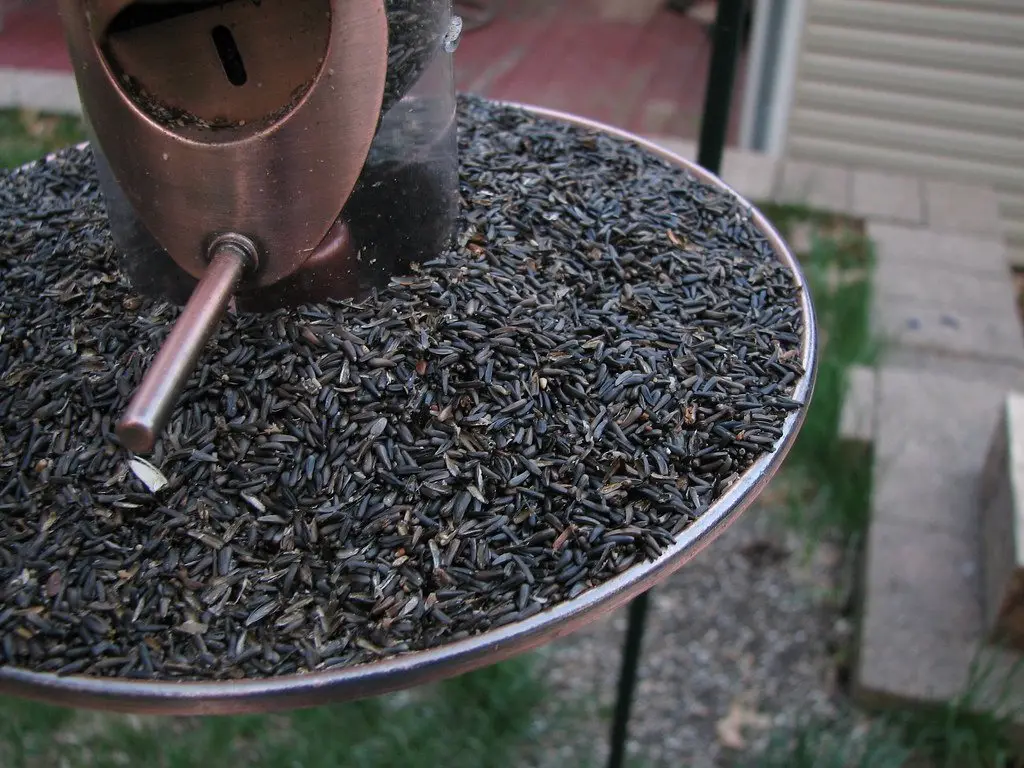
A goldfinch bill is a pair of tweezers about eight millimetres long. In the wild it works thistle, aster and goldenrod heads — small, soft-shelled, oil-rich seed. Nyjer is close enough to that to be taken immediately, which is why it works and why nothing else in a general mix does.
Hulled sunflower is the other one, for a different reason: the shell is the obstacle, and somebody has removed it. That puts a high-fat seed inside a finch’s handling ability and also makes it the only genuinely mess-free seed sold.
Everything else in a supermarket bag — millet, milo, cracked corn, wheat — is either too large or of no interest. A finch standing in a general mix is picking out the sunflower and dropping the rest.
The stale-seed problem, which is most of the problem
This is the single most common finch-feeding complaint, and it almost always has the same cause.
Nyjer is roughly 35% oil. Oil oxidises. A bag opened in April and still in use in August has turned, and finches detect it long before a person would. From the window the result is indistinguishable from “the birds have gone”: a feeder that stays full for weeks.
| What you see | Likely cause | Fix |
|---|---|---|
| Seed looks fine, feeder untouched for weeks | Rancid nyjer | Dump it, wash feeder, refill from a new bag |
| Seed level unchanged but caked near ports | Moisture plug | Empty, dry fully, refill; move to a sheltered spot |
| Birds land, probe, leave | Stale or wrong seed | Fresh nyjer; try sunflower chips if house finches |
| Busy in spring, dead in July | Normal seasonal drop | Nothing — nesting birds feed insects to young |
| Was busy, stopped suddenly, other feeders also quiet | Hawk working the yard | Wait a week or two |
Watch out
Never top up fresh seed onto old seed in a nyjer feeder. The layer at the bottom is the layer that spoils, and adding to it just means the whole tube is unappealing. Empty it out instead.
Hygiene is not optional at a finch feeder
Finches are flock feeders, and they crowd. House finch conjunctivitis — swollen, crusted eyes, birds that sit on the perch and do not fly — spreads at feeders where birds are in constant contact with the same surfaces. It is one of the few genuine ways that feeding birds can make things worse rather than better.
The routine is short:
- Every two weeks in warm weather, monthly in cold
- Hot soapy water, a brush through the tube, then a weak bleach rinse
- Dry completely before refilling — damp is what spoils the next batch
- If you see a bird with crusted eyes, take the feeder down for a week
A mesh feeder is easier to keep clean than a plastic tube with narrow ports, which is most of the argument for buying one.
Feeders, briefly
Nyjer will not stay inside a normal feeder — the ports are sized for sunflower and the seed simply runs out. The three options are a fine-mesh tube, a small-port tube sold as a finch feeder, or a mesh sock.
A sock is three or four dollars and perfectly effective for a season. It will also soak through in the first heavy rain and fray by the end of the year. If finches show up at a sock, buy a mesh tube; if nothing comes in a month, you have learned that cheaply.
Hulled sunflower works in anything you own already, including the hopper the cardinals use.
Seasonal expectations
A finch feeder is not equally busy all year, and the summer lull catches people out.
Late winter and early spring are usually the peak: wild seed is gone, natural food is at its lowest, and goldfinch flocks are hungry and visible. Midsummer is quiet, because nesting songbirds switch to insects for their young and have less need of seed. Autumn picks up again as flocks reform.
Goldfinches also moult twice a year, so the brilliant yellow bird of May is the drab olive bird of November. The same birds, in winter dress — not a different, less interesting species that has taken over the feeder.
How we picked
Picks assembled from seed composition, feeder-preference research and owner reports — nothing here was tested in our own yard. · Picks last checked October 2026.
- Seed size suits a small conical bill
- Goldfinches and siskins have tiny bills built for thistle-family seed. Anything the size of a sunflower seed in its shell is work; nyjer and hulled chips are not.
- Freshness, which matters more than brand
- Nyjer is an oil seed and goes rancid in a few months. A finch feeder that was busy in spring and dead in August is almost always full of old seed, not out of favour.
- Matches the feeder you own
- Nyjer needs small ports or mesh — it pours straight out of a sunflower feeder. Hulled chips work in almost anything.
- Mess below the feeder
- Nyjer leaves fine black husks; hulled sunflower leaves nothing. Over a patio or deck that difference decides which one you can live with.
- Who else turns up
- Nyjer is close to finch-only, which is its real advantage. Sunflower hearts feed every small bird in the yard, and squirrels.
Our picks
| # | Pick | Best for | Where to buy |
|---|---|---|---|
| 1 | Nyjer (thistle) seed | Best overall for goldfinches | Check price for Nyjer (thistle) seed → |
| 2 | Sunflower hearts / chips (hulled) | Best no-mess option | Check price for Sunflower hearts / chips (hulled) → |
| 3 | Finch blend (nyjer plus sunflower chips) | Best for a mix of finch species | Check price for Finch blend (nyjer plus sunflower chips) → |
| 4 | Nyjer sock feeder | Best cheap starter | Check price for Nyjer sock feeder → |
| 5 | Fine-mesh nyjer tube feeder | Best long-term finch feeder | Check price for Fine-mesh nyjer tube feeder → |
Best overall for goldfinches
Nyjer (thistle) seed
Buy it small, buy it often. Freshness does more for finch traffic than any other variable on this page.
- Seed
- Guizotia abyssinica, whole
- Feeder
- Mesh tube, nyjer sock or small-port tube
- Shelf life
- About 3 months once opened
- Eats it
- Goldfinches, siskins, redpolls, house finches
What we liked
- The most finch-selective seed widely sold
- House sparrows, grackles and squirrels largely ignore it
- High oil content, so it carries birds through cold weather
- Not a true thistle, and sterilised, so it will not seed your lawn
Worth knowing
- Goes rancid in a few months and birds refuse it when it does
- Needs a dedicated feeder; it pours out of ordinary ports
- Fine husks accumulate below the feeder
Best no-mess option
Sunflower hearts / chips (hulled)
The right pick if the feeder hangs over something you have to clean. Pay the premium and accept that you are feeding the whole yard.
- Seed
- Hulled black oil sunflower
- Feeder
- Any tube, hopper or tray
- Shelf life
- Shorter than in-shell — keep sealed and cool
- Eats it
- Finches, chickadees, titmice, nuthatches, cardinals
What we liked
- No shells, so nothing to sweep off a deck or patio
- Every bird that eats it eats all of it — near-zero waste
- Works in a feeder you already own
Worth knowing
- Costs noticeably more per pound than in-shell
- Spoils faster once wet; keep the feeder sheltered
- Feeds squirrels and house sparrows just as well
Best for a mix of finch species
Finch blend (nyjer plus sunflower chips)
A good single-feeder answer when you have both goldfinches and house finches. Check for clogging more often than with straight nyjer.
- Seed
- Nyjer with hulled sunflower, sometimes canary seed
- Feeder
- Small-port tube
- Shelf life
- Governed by the nyjer in it
- Eats it
- Goldfinches, house finches, chickadees
What we liked
- Covers house finches, which prefer sunflower, and goldfinches, which prefer nyjer
- No millet or milo filler
- One feeder instead of two
Worth knowing
- Dearer than either seed bought straight
- Chips can bridge and clog fine nyjer ports
Best cheap starter
Nyjer sock feeder
The cheapest way to test for finches before buying a proper feeder. Treat it as a season's consumable, not a fixture.
- Type
- Fine mesh sock, often sold filled
- Capacity
- Around 1 lb
- Feeder
- Self-contained, hangs anywhere
- Eats it
- Goldfinches, siskins
What we liked
- A few dollars to find out whether finches are in your area
- Birds cling directly to the mesh, which suits them naturally
- Several birds feed at once, unlike a four-port tube
Worth knowing
- Wets through in rain and the seed inside spoils
- Mesh tears and frays within a season or two
- No roof, so it needs a sheltered spot
Best long-term finch feeder
Fine-mesh nyjer tube feeder
The upgrade once you know finches are coming. The mesh design is what lets a flock feed at once rather than four birds at a time.
- Type
- Metal mesh tube
- Capacity
- 1–3 lb typical
- Cleaning
- Dismantles for washing
- Eats it
- Goldfinches, siskins, redpolls
What we liked
- Birds feed from anywhere on the mesh, in any orientation
- Metal resists squirrel chewing far better than plastic ports
- Dries out faster than a plastic tube, so less spoilage
Worth knowing
- Costs several times a sock
- Still needs washing every couple of weeks in warm weather
Which should you buy?
Our verdict
- Best overall:
- Nyjer (thistle) seed
- Best value:
- Nyjer sock feeder
Fresh nyjer in a mesh tube is the goldfinch setup, and freshness matters more than which bag you buy. Test whether finches are even in your area with a three-dollar sock before spending on a proper feeder.
| If you… | Buy | Because |
|---|---|---|
| You want goldfinches specifically | Fresh nyjer in a mesh or small-port tube | It is the closest thing to a species-selective seed. House sparrows and squirrels mostly leave it alone. |
| The feeder is over a deck or patio | Sunflower hearts or chips | No shells at all, so nothing to sweep and nothing to stain decking. Finches take them readily. |
| Nothing has ever used your nyjer feeder | A new, small bag of nyjer and a scrub of the feeder | Stale seed and a clogged port are the two usual causes, and both look identical from the window — a full feeder with no birds. |
| Mixed small birds, one feeder | A finch blend of nyjer plus sunflower chips | Covers goldfinches, house finches, chickadees and siskins from one tube without the millet filler of a general mix. |
When not to buy at all
Do not buy a 20 lb sack of nyjer for one feeder. Finches eat it slowly, it is rancid in roughly three months, and the saving per pound is wiped out by the half-sack you throw away. Two or three pounds at a time is the right unit.
Common questions
What seed do finches like best?
Why are no birds eating my nyjer seed?
Is nyjer the same as thistle?
Do finches eat sunflower seeds?
How often should I clean a finch feeder?
When do finches come to feeders?
Backyard Weekly
Know what to plant, week by week
Join the weekly email for seasonal jobs, fixes for what is going wrong, and gear worth buying.
Not ready to subscribe? The planting calendar is free and needs no email.
By subscribing you agree to our privacy policy. Grow In Backyard will never sell your address.
Keep reading
Best Bird Baths — 2 Inches Deep Is the Whole Secret
The best bird baths are 2 inches deep with a rough bottom. 6 picks compared on grip, depth and winter use. See which one birds will actually use.
Squirrel-Proof Bird Feeders — 5 Measures That Stop Them
Squirrel-proof bird feeders work on distance and mechanism, not claims. 5 measures compared on cost and success. See which suits your yard.
Best Bird Seed for Cardinals — 5 Picks, Safflower First
The best bird seed for cardinals is safflower, which squirrels leave alone. 5 seeds compared on pull, cost and mess. See which suits your feeder.
How to Keep Doves Off Bird Feeders — 3 Changes
How to keep doves off bird feeders is a perch and seed question. 3 changes compared, plus the ground problem underneath. See which suits your setup.