
Wireless Bird Feeder Camera — 5 Checks Before Buying
A wireless bird feeder camera lives or dies on power and Wi-Fi reach. 5 picks compared on both, plus hummingbird use. See which fits your yard.
 By
We may earn a commission when you buy through links on this page, at no extra cost to you.
On this page
Smart feeder cameras are genuinely one of the nicest things you can put in a garden. They are also sold on their camera specification, and the things that decide whether one works are almost all elsewhere: Wi-Fi reach, solar charging in shade, perch size, and what the subscription costs.
The Wi-Fi problem is structural, not bad luck
This is the single commonest reason a feeder camera ends up in a drawer, and it follows from something true about birds rather than anything about the product.
Birds will not feed comfortably in the open. A feeder needs to be within roughly ten feet of a shrub, hedge or tree so a bird can reach cover in one flight. In most gardens that puts it at the far end, often with a wall, a shed or a fence between it and the house.
Meanwhile nearly every feeder camera uses 2.4 GHz Wi-Fi only — which is the right choice, because 2.4 GHz travels further than 5 GHz — and it still may not reach.
Tip
Before you order: stand exactly where the feeder will hang, with a phone on your home Wi-Fi, and run a speed test. If it is poor there, buy a mesh node or an outdoor access point first. No camera overcomes a signal that is not present.
What the subscription actually covers
The appeal of these feeders is not really the video. It is the notification that says Red-breasted nuthatch with a photograph attached. That identification is machine learning, and on several models it is a recurring cost after a trial.
Terms vary between manufacturers and change, so the only reliable approach is to read the current subscription page before ordering and do the arithmetic:
| Camera | ID / cloud per year | 3-year total | |
|---|---|---|---|
| Model with ID included | Higher | — | Just the camera |
| Model with ID subscription | Lower | Annual fee | Camera + 3 years of fees |
| Existing feeder + Wi-Fi camera | Lowest | Usually optional | Lowest, no ID |
| Trail camera | Low | None | Lowest, no ID, no Wi-Fi |
A model that costs more with identification included is frequently cheaper over three years than the one with the attractive sticker price. Check before, not after.
Perch size decides which birds you see
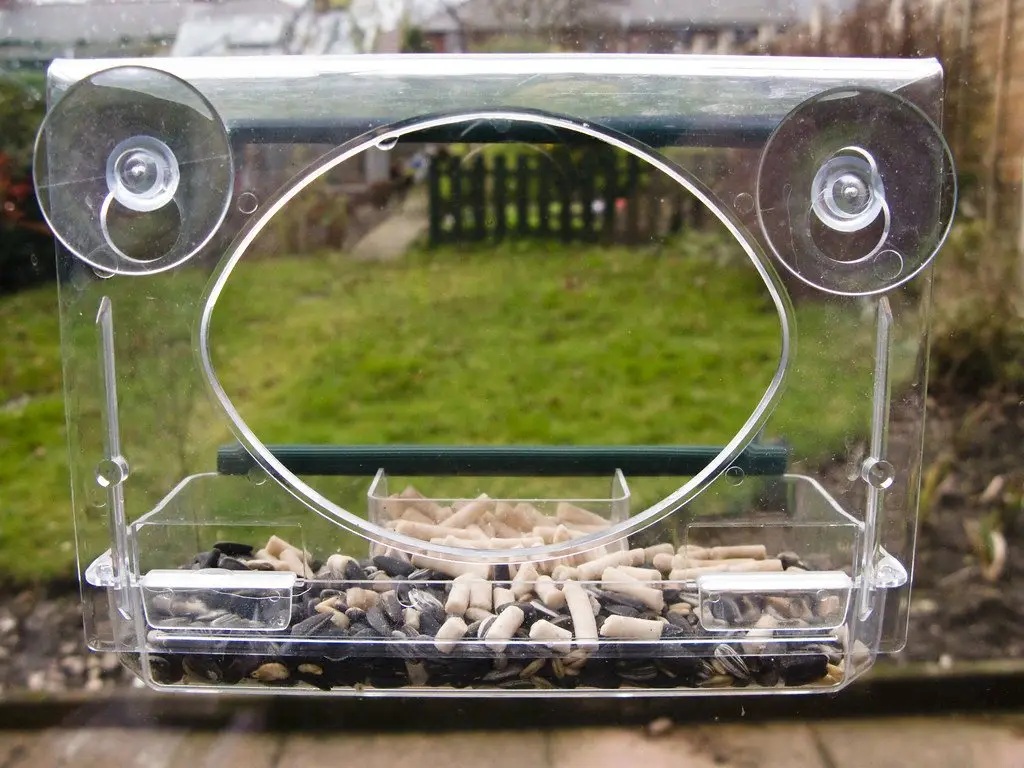
A smart feeder is a small plastic box with a short perch and a shallow seed tray. That shape suits the clinging and perching birds — chickadees, titmice, nuthatches, house finches, goldfinches — and it is genuinely lovely footage of them.
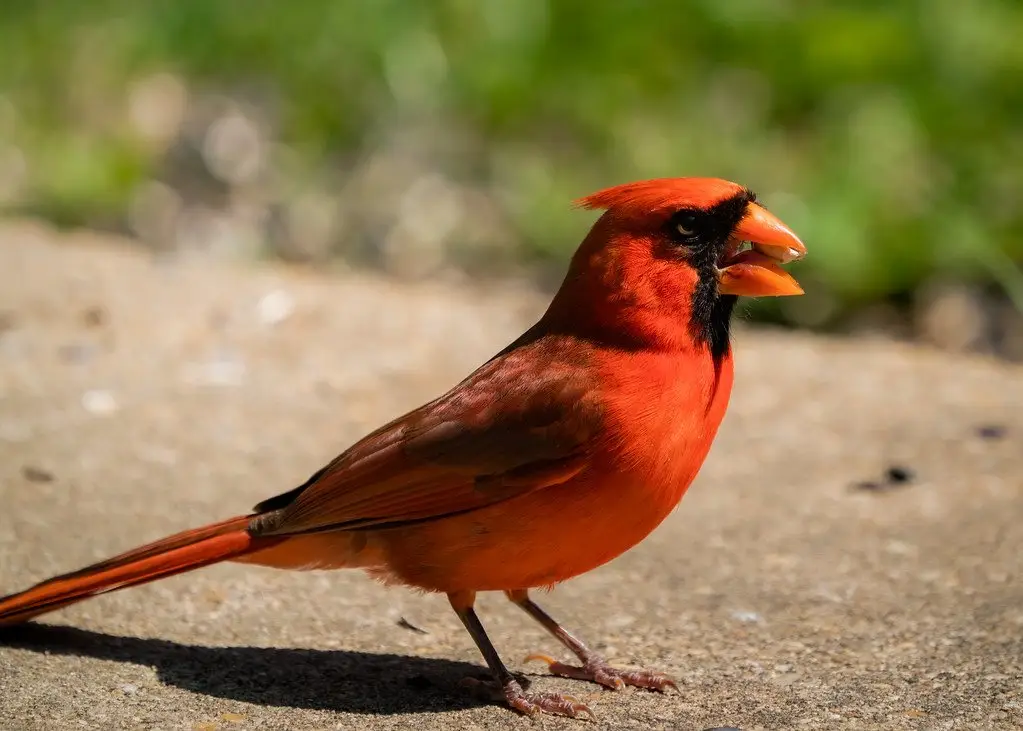
It does not suit a cardinal. A cardinal weighs around 45 grams, cannot cling, and needs a ledge wide enough to sit across. The same goes for jays and doves.
So if the birds you pictured yourself watching are cardinals or jays, the feeder shape has already decided the answer before the camera matters. The fix is an outdoor camera aimed at a hopper or platform feeder, which is both cheaper and gets the birds you wanted.
Solar, shade and the winter gap
A solar roof genuinely reduces the chore of taking a feeder down to charge it. It is also being asked to work in the worst possible place.
The feeder belongs near cover. Cover means a tree or a shrub. A panel under dappled shade, in December, at a northern latitude, with a battery that holds less charge when cold, can simply not keep pace with a camera triggering all day.
So the specification to look for is a removable battery. Being able to swap or charge a battery indoors, without dismantling the feeder, turns a mid-winter failure into a two-minute job.
The squirrel question
A smart feeder is a plastic box containing food, hung from a branch, with an electronics module in it. Squirrels chew plastic, and they are strong enough to detach a feeder and drop it.
The protections are the ordinary ones and they work: hang it on a pole with a wide baffle rather than from a branch, keep it ten feet from anything jumpable, and consider filling it with safflower, which squirrels largely refuse and most of the small birds take happily.
A feeder camera on a branch within a squirrel’s reach is an expensive thing to leave accessible.
What a trail camera does better
Worth mentioning because it answers a question people often actually have.
If what you want to know is what is emptying my feeder, a trail camera on a stake is better than any of this. No Wi-Fi, months of battery, infrared at night, timestamped stills. It shows you the raccoon at 2am and the squirrels working through the afternoon — the information you need to fix the problem.
A feeder camera shows you the chickadee in daylight, beautifully. They are different tools, and people searching for the second sometimes need the first.
How we picked
Judged on published camera and connectivity specifications, the subscription terms each manufacturer sets, and what owners report about range, charging and squirrels over a full season. · Picks last checked October 2026.
- Wi-Fi reach to where the feeder goes
- This is the number one failure, and it is not on any box. A feeder needs to be near cover, which is usually the far end of the garden, and 2.4 GHz from a house router often will not carry.
- Whether species ID needs a subscription
- The AI identification is the main selling point and on most models it is a paid tier after a trial. Price the camera plus several years of subscription, not the camera.
- Solar, and whether it actually keeps up
- A solar roof in dappled shade under a tree — exactly where birds want the feeder — can fail to keep pace in winter. Check whether the battery is removable.
- Seed capacity, which is tiny
- Most hold one to two pounds. It is a camera that holds seed, not a feeder with a camera, and it needs filling every few days in a busy garden.
- What the perch excludes
- Small perches and a shallow tray exclude cardinals, jays and doves. If those are the birds you wanted to watch, the feeder shape decides it before the camera does.
Our picks
| # | Pick | Best for | Where to buy |
|---|---|---|---|
| 1 | Smart feeder camera with solar roof | Best overall | Check price for Smart feeder camera with solar roof → |
| 2 | Outdoor Wi-Fi camera aimed at an existing feeder | Best value | Check price for Outdoor Wi-Fi camera aimed at an existing feeder → |
| 3 | Dedicated hummingbird camera feeder | Best for hummingbirds | Check price for Dedicated hummingbird camera feeder → |
| 4 | Trail camera on a stake | Best for a record without Wi-Fi | Check price for Trail camera on a stake → |
| 5 | Mesh Wi-Fi node or outdoor access point | The fix for the real problem | Check price for Mesh Wi-Fi node or outdoor access point → |
Best overall
Smart feeder camera with solar roof
Buy it for the experience, with eyes open about the subscription and the Wi-Fi. Check the signal at the hanging spot before ordering.
- Camera
- 1080p or higher, with night capability on some
- Power
- Rechargeable battery with solar roof
- Connectivity
- 2.4 GHz Wi-Fi only on most models
- Capacity
- 1–2 lb of seed
- Species ID
- AI, often subscription after a trial
What we liked
- Close-up photographs and video you would never otherwise get
- Notifications when a bird arrives, with the species named
- Solar roof means far less taking it down to charge
- Genuinely delightful, and children are captivated by it
Worth knowing
- Tiny seed capacity; refilled every few days in a busy garden
- Small perch excludes cardinals, jays and doves
- Species ID is a subscription on several models
- Solar underperforms in winter shade, which is where feeders go
Best value
Outdoor Wi-Fi camera aimed at an existing feeder
What we would do first. It answers 'what is visiting my feeder' for a quarter of the money, minus the species names.
- Camera
- 1080p–2K, many with colour night vision
- Power
- Mains, battery or solar panel
- Mount
- Post, fence, wall, or a stake near the feeder
- Capacity
- n/a — your own feeder
- Species ID
- None automatic
What we liked
- A fraction of the price of a smart feeder
- Your existing feeder already attracts the birds you have
- No capacity compromise and no perch restriction
- Doubles as a general garden camera
Worth knowing
- No automatic species identification
- Framing and focus take trial and error to get right
- Motion alerts trigger on wind and shadows
Best for hummingbirds
Dedicated hummingbird camera feeder
A genuine specialist tool rather than a gimmick — standard feeder cameras do struggle with hummingbirds. Seasonal, so price it accordingly.
- Camera
- Close-focus, fast trigger
- Power
- Battery, often with solar
- Holds
- Nectar rather than seed
- Season
- Spring to first frost in most of the US
- Species ID
- Varies by model
What we liked
- Close focus and fast capture suited to a bird that never settles
- Hummingbirds at this magnification are extraordinary
- Nectar reservoirs are easy to clean, which matters here
Worth knowing
- Seasonal across most of the country
- Nectar must be changed every one to two days in heat regardless
- Narrow use case for the money
Best for a record without Wi-Fi
Trail camera on a stake
Not what people searching for a feeder camera usually mean, but often what they actually need — especially to find out what is emptying the feeder at night.
- Camera
- Stills and video, timestamped
- Power
- AA batteries, months of life
- Connectivity
- None needed — SD card
- Night
- Infrared
- Species ID
- None
What we liked
- No Wi-Fi required at all, which solves the main failure mode
- Months of battery life rather than days
- Captures what visits overnight, including the raccoon
- Cheapest way to find out who empties the feeder
Worth knowing
- No live view and no notifications
- You walk out to swap the card
- Wide-angle lens, so birds are small in frame
The fix for the real problem
Mesh Wi-Fi node or outdoor access point
If the speed test at the hanging spot is poor, buy this before the camera. No feeder camera overcomes a signal that is not there.
- Purpose
- Extends 2.4 GHz to the end of the garden
- Placement
- A window facing the feeder, or an outdoor-rated unit
- Needed when
- Speed test at the feeder spot is under a few Mbps
- Note
- Most feeder cameras are 2.4 GHz only
What we liked
- Fixes the commonest cause of a feeder camera being abandoned
- Useful for everything else outdoors too
- Cheaper than replacing a camera that was never the problem
Worth knowing
- Another device to power and manage
- An outdoor-rated unit needs cabling
Which should you buy?
Our verdict
- Best overall:
- Smart feeder camera with solar roof and included species ID
- Best value:
- Outdoor Wi-Fi camera aimed at your existing feeder
If you want the experience these are sold on — a notification that a nuthatch has arrived, with a photograph — buy a smart feeder with a solar roof, and check the Wi-Fi at the exact spot before you order. The honest value answer is different: an outdoor Wi-Fi camera pointed at the feeder you already own costs a fraction, holds no seed, and does not exclude cardinals the way a small-perch smart feeder does. What you lose is automatic species identification, which is also the thing most likely to sit behind a subscription.
| If you… | Buy | Because |
|---|---|---|
| You want the best species identification | A model with on-device or included AI ID | Identification is the actual appeal. Check whether it is included permanently or behind a subscription after a trial period, because that changes the real price substantially. |
| The feeder will sit far from the house | Check your Wi-Fi at the exact spot first, then buy | Stand there with a phone and run a speed test. Below a couple of Mbps, no camera will work reliably and you need a mesh node or an outdoor access point first. |
| You already have a feeder you like | An outdoor Wi-Fi camera aimed at it | A fraction of the price, no seed capacity compromise, and your existing feeder already attracts the birds you have. No automatic species ID. |
| Hummingbirds specifically | A dedicated hummingbird camera feeder | Standard feeder cameras focus and trigger for perched birds. Hummingbird models have closer focus and faster capture. |
| You want a record of what visits, not a livestream | A trail camera on a stake | Far cheaper, months of battery, no Wi-Fi needed at all. Timestamped stills rather than video you watch live. |
When not to buy at all
Do not buy one until you have tested Wi-Fi at the spot the feeder will actually hang — not at the back door. Birds need the feeder within about ten feet of cover, which in most gardens is the far corner, and a weak 2.4 GHz signal there is the most common reason these end up in a drawer. Price the subscription over three years before deciding, because on several models the species identification that sells the product is a recurring cost. And if cardinals, jays or doves are the birds you want to watch, check the perch and tray: most smart feeders are sized for chickadees and finches and will simply not get the visitors you bought it for.
Common questions
Do bird feeder cameras need a subscription?
Why does my bird feeder camera keep disconnecting?
Will a smart bird feeder attract cardinals?
Do solar bird feeder cameras work in winter?
How much seed does a camera feeder hold?
Can I just point a security camera at my bird feeder?
Backyard Weekly
Know what to plant, week by week
Join the weekly email for seasonal jobs, fixes for what is going wrong, and gear worth buying.
Not ready to subscribe? The planting calendar is free and needs no email.
By subscribing you agree to our privacy policy. Grow In Backyard will never sell your address.
Keep reading
Best Bird Seed for Cardinals — 5 Picks, Safflower First
The best bird seed for cardinals is safflower, which squirrels leave alone. 5 seeds compared on pull, cost and mess. See which suits your feeder.
Squirrel-Proof Bird Feeders — 5 Measures That Stop Them
Squirrel-proof bird feeders work on distance and mechanism, not claims. 5 measures compared on cost and success. See which suits your yard.

Best Binoculars for Backyard Bird Watching — 6 Picks
For the best binoculars for backyard bird watching, close focus beats magnification. 6 pairs compared across budgets. See which hits yours.
The Great Backyard Bird Count: How to Take Part in 15 Minutes
A four-day global bird count each February, free and open to anyone. What to do, which app to use, and how to count without double-counting birds.