
Why Does My Lawn Have Mushrooms? Something Is Rotting
Mushrooms mean fungi are digesting buried wood or thatch — a sign of healthy soil, not disease. They vanish on their own when the food runs out.
 By
On this page
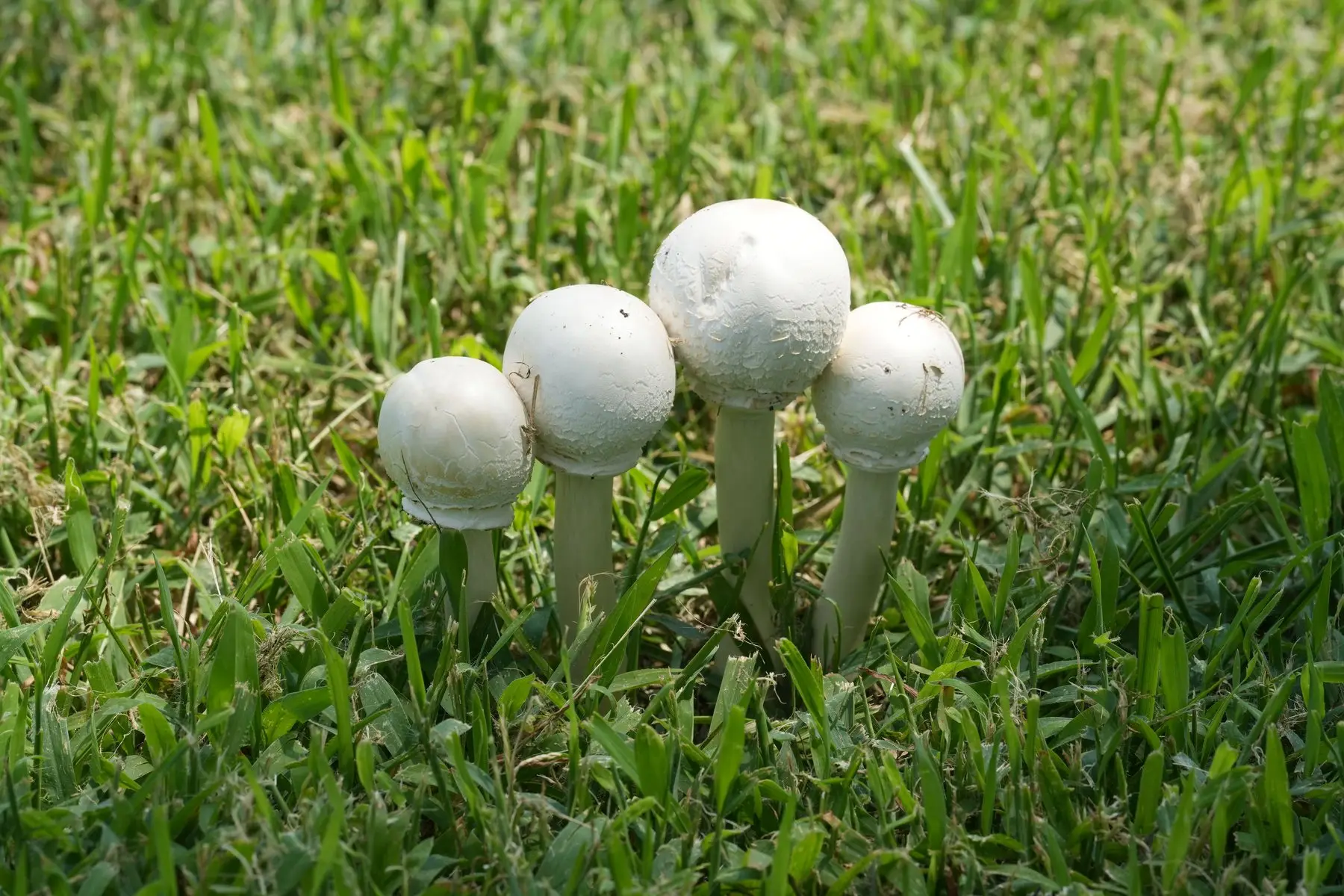
Because something buried is rotting, and fungi are eating it. The mushroom is just the fruiting body of a network that was already down there — and it is a sign of living soil, not disease.
What they are eating
| Source | Notes |
|---|---|
| An old stump or buried roots | Commonest after a tree was removed |
| Construction timber buried during building | Can surface years later |
| A thick thatch layer | Over ½ inch feeds them |
| Buried organic debris | Old mulch, dug-in woody waste |
They appear overnight after rain because warmth and moisture together trigger fruiting — not because the rain brought them.
Why no spray works
The mushroom is not the organism
The fungus is a large network threaded through the soil. A mushroom is its fruiting body, in the same way an apple is not the tree.
There is no fungicide that resolves this, and any product sold for it is treating the symptom.
What actually ends it:
- Dig out buried wood or a rotting stump, where you can find it
- Dethatch if the thatch layer is over about half an inch
- Improve drainage
- Or simply wait. They stop when the food is consumed — a season, sometimes several years
Removing them anyway
It changes nothing underground, but it is still worth doing:
- Knock them over before they release spores, which limits new colonies elsewhere in the lawn
- Pick rather than mow. A mower scatters spores very efficiently
- Get them away from children and pets
The safety point
Assume any unidentified lawn mushroom is toxic
Identification is genuinely difficult even for experienced people, and some common lawn species are seriously poisonous.
- Remove them promptly where children or dogs use the lawn
- Wear gloves, and bag them rather than composting
- If one is eaten, keep a specimen and contact a vet or poison service — identification changes the treatment substantially
Fairy ring, the real exception
A circle or arc of mushrooms, produced by a network growing outward evenly from a central point. This one can genuinely damage the grass.
The dense fungal mat makes soil water-repellent, so you get a ring of dead or drought-stressed turf even in wet weather.
- Aerate the ring heavily
- Water deeply with a wetting agent to get moisture back through
- In severe cases, excavate and replace the soil
It is the one lawn fungus worth actually treating.
Common questions
Why does my lawn have mushrooms?
Are mushrooms in a lawn bad for the grass?
How do you get rid of lawn mushrooms?
Should you kick or mow mushrooms off the lawn?
Are lawn mushrooms poisonous to dogs or children?
What is a fairy ring and is it different?
Backyard Weekly
Know what to plant, week by week
Join the weekly email for seasonal jobs, fixes for what is going wrong, and gear worth buying.
Not ready to subscribe? The planting calendar is free and needs no email.
By subscribing you agree to our privacy policy. Grow In Backyard will never sell your address.
Keep reading
What to Do After Aerating a Lawn: The First Two Weeks
Leave the cores where they fall, overseed within 48 hours, top-dress with compost, and hold off mowing. The order matters more than the tasks.
Growing Mushrooms at Home: Which Method, and Why
Oyster mushrooms on a kit crop in three weeks. Substrates, sterile versus pasteurised, humidity, and the contamination that ends most attempts.
Powdery Mildew: Why It Spreads and What Actually Stops It
Powdery mildew is the one fungus that does not need wet leaves — it thrives in humid air and dry foliage. How to spot it early and what treatments hold up.
Why Does My Lawn Mower Backfire? Fuel Burning Too Late
A bang when you shut the mower off is unburnt fuel igniting in the exhaust. When it happens tells you whether it is normal or something to fix.