
Growing Mushrooms at Home: Which Method, and Why
Oyster mushrooms on a kit crop in three weeks. Substrates, sterile versus pasteurised, humidity, and the contamination that ends most attempts.
 By
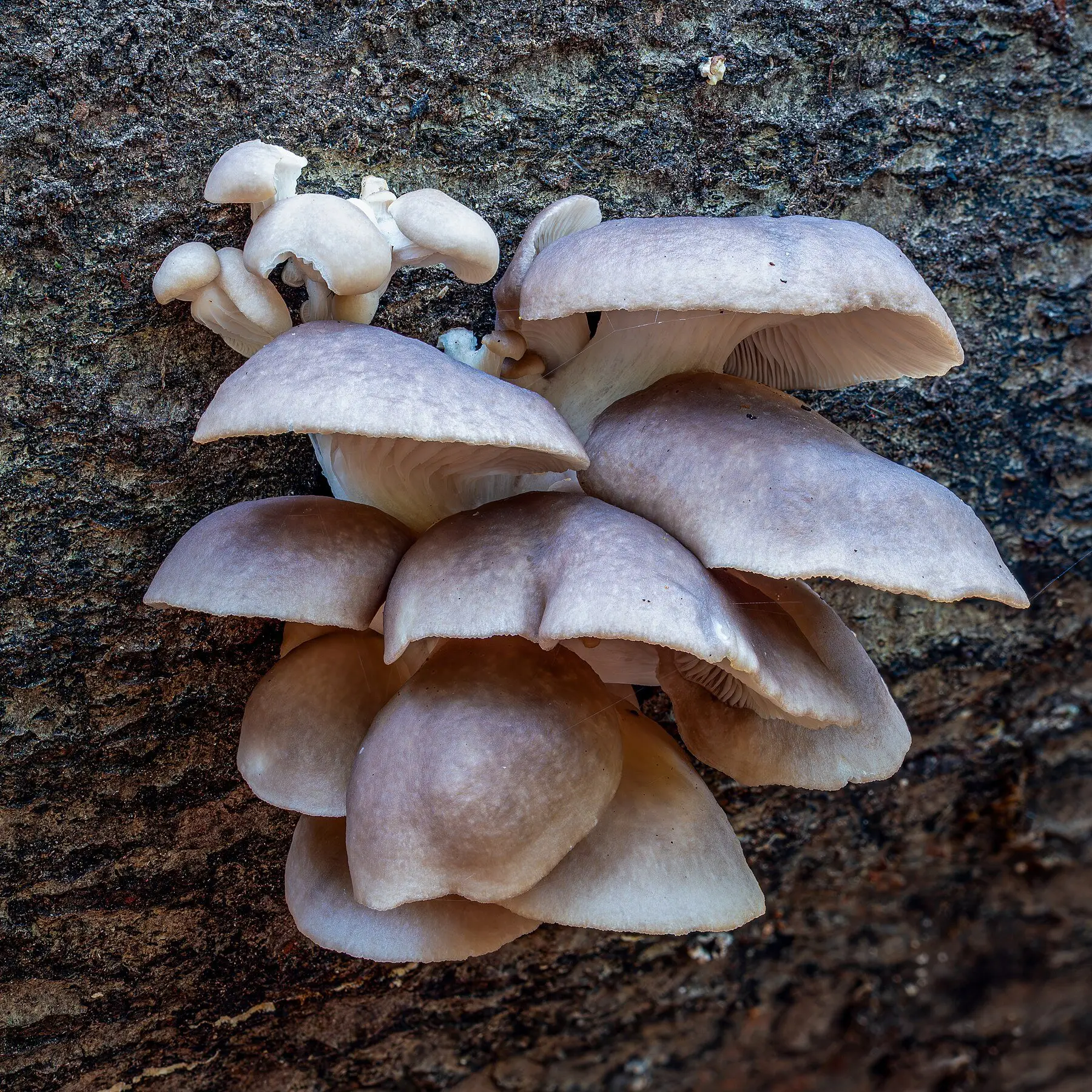

On this page
The plant rules do not apply. No light needed to grow, no soil, no watering can — and the thing that ends most attempts is mould, not neglect.
Pick the species before anything else
| Mushroom | Difficulty | Substrate | Time to fruit |
|---|---|---|---|
| Oyster | Easiest | Straw, coffee, cardboard, sawdust | 2–3 weeks |
| Lion’s mane | Easy–moderate | Supplemented sawdust | 3–5 weeks |
| Shiitake | Moderate | Hardwood sawdust or logs | 2–3 months |
| Wine cap | Easy, outdoors | Wood chips, in a bed | Months |
| Button / portobello | Hard | Composted manure + casing | 6–10 weeks |
Button mushrooms are the ones everyone asks about and the wrong place to start
Agaricus bisporus — the supermarket mushroom — needs properly composted manure and a casing layer of peat over the colonised substrate, both of which are fiddly and smelly at home.
Oyster mushrooms are forgiving of nearly everything button mushrooms are fussy about. Start there, and come back to buttons if you still want to.
The three routes in
1. A ready-to-fruit kit. A block already colonised; cut the bag, mist, wait. One to three weeks to mushrooms, essentially no failure modes. Genuinely worth doing once to see what healthy fruiting looks like before you try to produce it yourself.
2. Spawn into a bulk substrate. Buy grain spawn, prepare straw or coffee grounds yourself, mix and colonise. The real entry point — cheap per flush, and where most of the skill lives.
3. From a culture or spores. Agar work, sterile technique, a still-air box. A different hobby rather than a harder version of the same one.
Substrate, and the rule that governs it
The more nutritious the substrate, the more thoroughly it must be sterilised — because everything else wants it too.
| Substrate | Treatment | Notes |
|---|---|---|
| Straw | Pasteurise 150–160°F, 1–2 hrs | Classic oyster substrate |
| Coffee grounds | Already pasteurised by brewing | Use within a day. Mix 50/50 with straw or cardboard |
| Cardboard | Soak in hot water | Cheap, slow, forgiving |
| Hardwood sawdust, supplemented | Sterilise, 15 psi, 2+ hrs | Lion’s mane, shiitake |
| Grain (spawn) | Sterilise, 15 psi, 90+ min | Sterile technique required |
| Wood chips | None, outdoors | Wine cap beds |
Pasteurising leaves a surviving community of harmless organisms that compete against mould on the mushroom’s behalf. Sterilising removes everything, which is necessary on rich substrates and means any contaminant introduced afterwards has the whole block to itself.
Running a supplemented sawdust block on pasteurisation alone is the single most common reason a bag turns green.
Colonising
- Mix spawn through the substrate at roughly 10 to 20 percent by weight. More spawn means faster colonisation and fewer failures — this is the cheapest insurance available
- Pack into a filter-patch bag or bucket with small holes
- Somewhere dark, at the species’ preferred temperature — around 70–75°F for oysters
- Do not open it. No light, no misting, no fresh air needed at this stage
- Two to five weeks until the substrate is uniformly white
White, fluffy and spreading is right. Green, black, orange, pink or wet and slimy is not.
Green means bin it
Trichoderma starts white and turns green as it spores, and by the time it is green it has already spread through the block. It cannot be cut out.
Bag it, bin it, and keep it away from other grows — the spores travel. Then raise the spawn rate and tighten the sterilisation next time. A block lost at this stage is a lesson, not a disaster.
Fruiting
Everything changes once the block is colonised.
| Colonising | Fruiting | |
|---|---|---|
| Light | None needed | Indirect light |
| Air | Sealed | Fresh air exchange |
| Humidity | Ambient | 85–95% |
| Bag | Closed | Cut open |
| Temperature | ~70–75°F | Often slightly cooler |
- Cut a slit or an X in the bag, or fold the top open
- Mist two or three times a day — the surface must not dry out
- Fan it or leave it somewhere with air movement. A sealed humid box without air exchange produces deformed mushrooms
- Pins appear in days, then double in size daily
- Harvest just before the caps flatten, twisting the whole cluster off at the base
- Soak the block and wait — a second flush usually follows in one to two weeks, and sometimes a third
Long stems and tiny caps mean one thing
Not humidity, not temperature, not light — carbon dioxide. The mushroom is stretching upward looking for fresh air.
More air exchange fixes it, and the next flush comes out normally. Nothing else produces that particular deformity.
Common failures
| Symptom | Cause |
|---|---|
| Green or black patches | Trichoderma. Bin the block |
| Long stems, small caps | Not enough fresh air |
| Dried, cracked pins | Humidity too low |
| Slimy, sour smell | Bacterial contamination — too wet, or anaerobic |
| Nothing after full colonisation | Needs a cold shock or more light; some species need a temperature drop to trigger |
| Cobweb-like grey growth | Cobweb mould. Sometimes treatable with salt, often not |
Outdoors, which is the easy version
Wine cap (Stropharia rugosoannulata) in a wood-chip bed is the lowest-effort mushroom there is: spread spawn through fresh hardwood chips in a shaded bed, keep it damp, and wait. It crops for two or three years, improves the soil underneath, and needs no sterilisation, no bags and no humidity control.
Shiitake on logs is the other outdoor classic: drill a freshly cut hardwood log, hammer in spawn plugs, seal with wax, and wait six to eighteen months. Then it crops for years.
Both are much slower than indoor bags and much harder to fail at.
Common questions
What is the easiest mushroom to grow at home?
Do I need to sterilise the substrate?
How long does it take to grow mushrooms?
Why is my mushroom substrate turning green or black?
Can I grow mushrooms in used coffee grounds?
What conditions do mushrooms need to fruit?
Backyard Weekly
Know what to plant, week by week
Join the weekly email for seasonal jobs, fixes for what is going wrong, and gear worth buying.
Not ready to subscribe? The planting calendar is free and needs no email.
By subscribing you agree to our privacy policy. Grow In Backyard will never sell your address.
Keep reading
Mushroom Compost — 3 Uses and Where It Does Harm
Mushroom compost is alkaline and salty, which rules out some beds. 3 uses compared, plus what to use on acid-lovers. See where it fits your soil.
How to Grow Lettuce: Beating the Bolt and the Bitterness
Lettuce turns bitter and runs to seed in heat. Sowing windows, cut-and-come-again, shade in summer, and why germination fails in warm soil.
What Are Worm Castings, and Are They Worth Buying?
Worm castings are worm manure — a mild fertiliser whose real value is microbial, not nutritional. What the numbers mean and how much you actually need.
How Deep to Plant Potatoes (And Why Hilling Matters More)
Four inches at planting, then hill as they grow. Why planting deep in cold spring soil backfires, and how depth differs in containers and no-dig beds.