
Why Does My Lawn Have Brown Patches? Dig One Up First
Lifting the edge of a brown patch tells you more than any photo guide: roots that hold, roots that lift, and grubs underneath mean three different causes.
 By
On this page
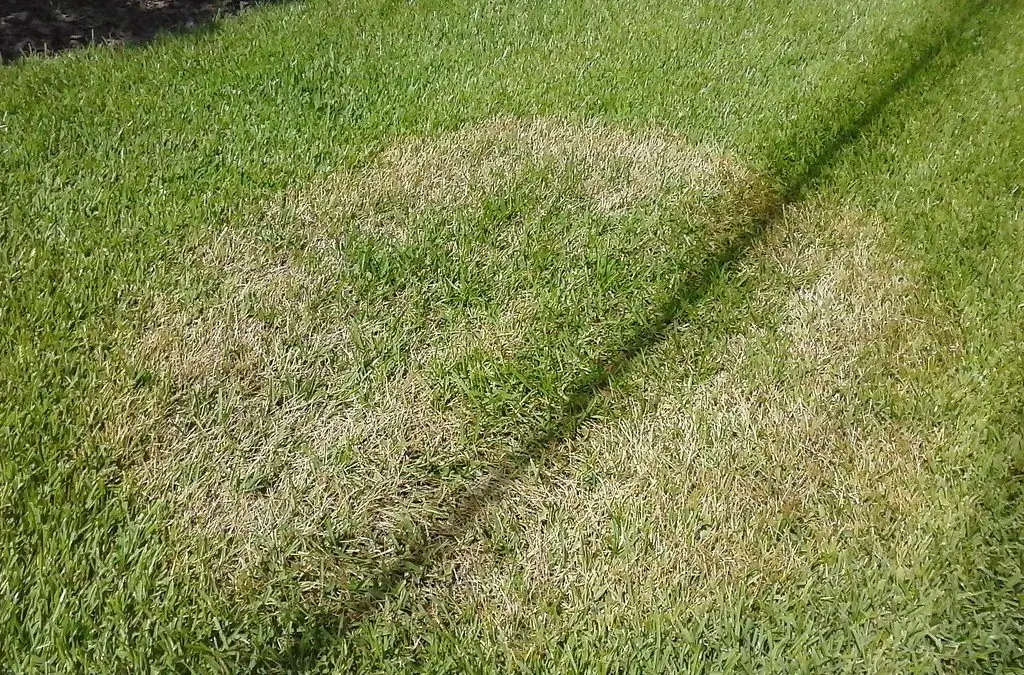
Do not diagnose a brown patch from the top. Crouch down, take hold of the edge of the dead grass and pull. What happens next splits the causes into three groups before you have looked at a single photo guide.
The three tests, in order
| Test | Result | Cause |
|---|---|---|
| Pull the edge | Peels away, no roots | Grubs |
| Screwdriver into the soil | Will not go in; soil dry | Drought / dry spot |
| Screwdriver into the soil | Goes in; soil wet | Disease or compaction |
| Look at the outline | Circle with a darker ring | Dog urine |
| Look at the outline | Straight strips | Mower |
A long screwdriver is the best lawn diagnostic tool you own
Push it into healthy turf, then into the patch. Resistance tells you about compaction, and the soil that comes out tells you about moisture — both in about five seconds.
Grubs
Pale C-shaped larvae in the top few centimetres, and turf you can roll back. A rough working threshold is more than five to ten per square foot before you treat — a few are normal in any lawn and do no measurable damage.
Birds, foxes and skunks tearing holes in the lawn are a second-hand symptom: they are digging for the grubs, and their excavation often shows up before the brown does.
Drought and dry spots
Brown that follows the shape of the ground rather than a neat outline — high points, the strip along a hot path, the patch over buried rubble.
Some soils also go hydrophobic after a long dry spell: water beads and runs off instead of soaking in, so the patch stays dry through rain. Spiking the area with a fork before watering, or a wetting agent, gets water past the surface.
Disease on wet ground
Moist soil plus defined circular or ring-shaped patches points to a fungal problem. The durable responses are cultural rather than chemical:
- Water deeply and early in the day, so the lawn is dry before nightfall
- Aerate if the screwdriver struggles — compaction keeps soil wet and roots shallow
- Feed a hungry lawn. Several common turf diseases are worst in low-nitrogen grass
Dog urine
The dark green ring is the tell
It is a nitrogen overdose, not a burn. The centre gets too much and dies; the diluted edge gets a useful dose and grows darker and faster. No disease does that. Soaking the spot with water within a few hours prevents most of the damage.
Reseeding, and when it is needed
Grasses that spread by rhizomes or stolons will close small patches themselves over a season. Bunch-forming types — tall fescue, perennial ryegrass — do not travel sideways, so a dead patch stays bare until you seed it.
Either way: fix the cause first. Seed sown into grub-infested or compacted ground is a second round of the same problem.
Common questions
Why does my lawn have brown patches?
How do I know if grubs are causing my brown patches?
Why does dog urine make round brown spots?
Will brown patches in a lawn grow back?
Can overwatering cause brown patches?
What is the difference between drought patches and disease patches?
Backyard Weekly
Know what to plant, week by week
Join the weekly email for seasonal jobs, fixes for what is going wrong, and gear worth buying.
Not ready to subscribe? The planting calendar is free and needs no email.
By subscribing you agree to our privacy policy. Grow In Backyard will never sell your address.
Keep reading
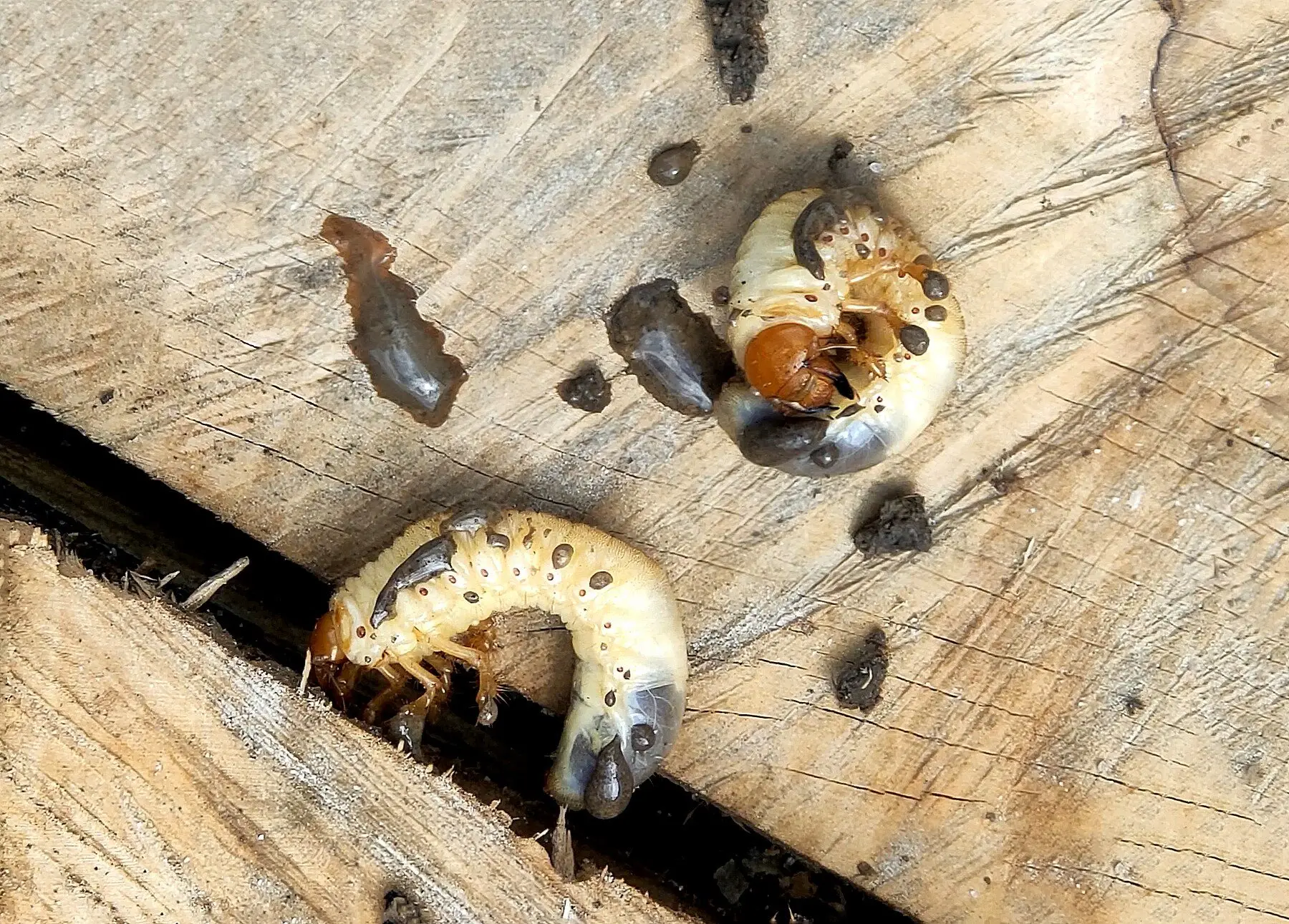
Grub Worm: How to Tell If You Have Them, and When to Treat
Most lawns carry grubs harmlessly. The threshold is 6 to 10 per square foot — how to count them, and why timing matters more than the product.
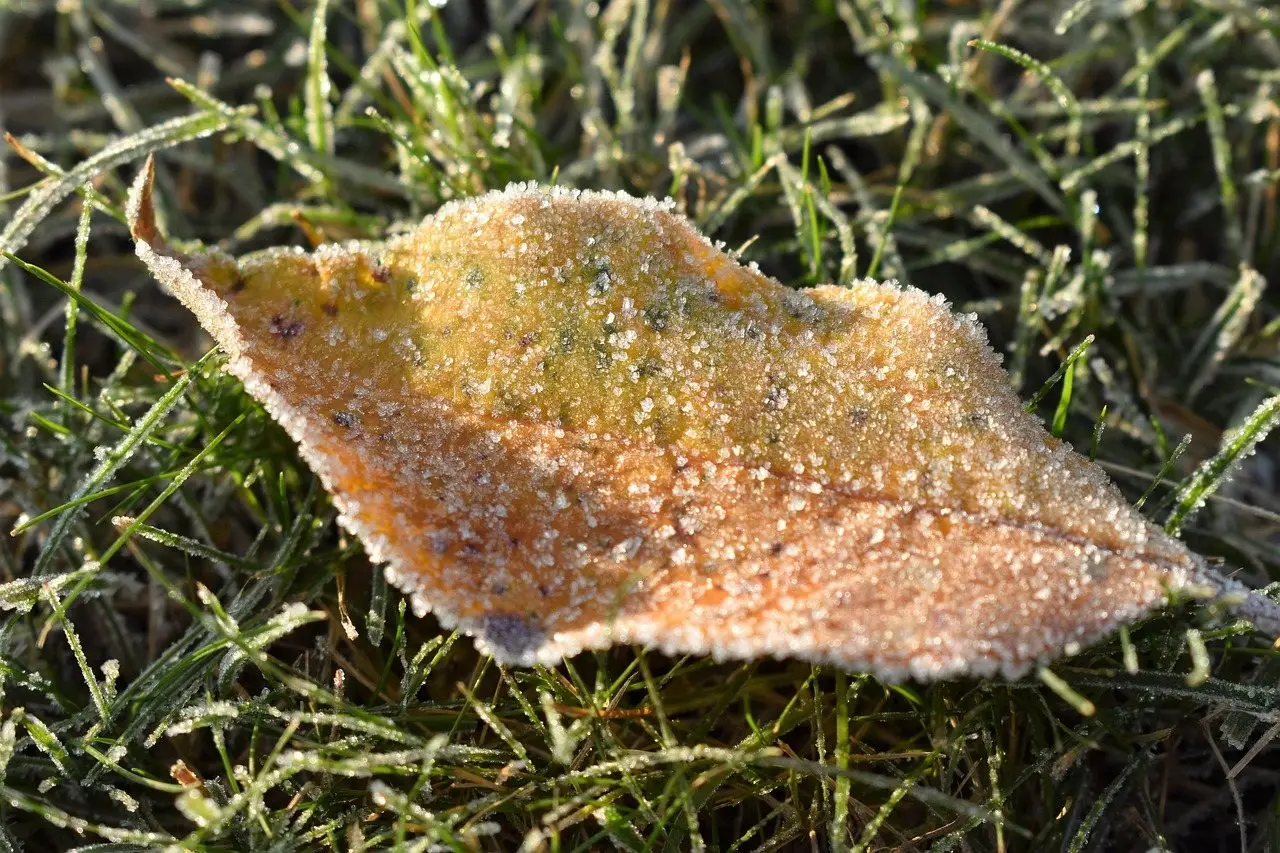
Why Is My Grass Turning White? Four Causes, One Test Each
Powdery mildew, dollar spot, frost scald and mower scalping all bleach turf white. Each has a test that rules it in or out in under a minute.
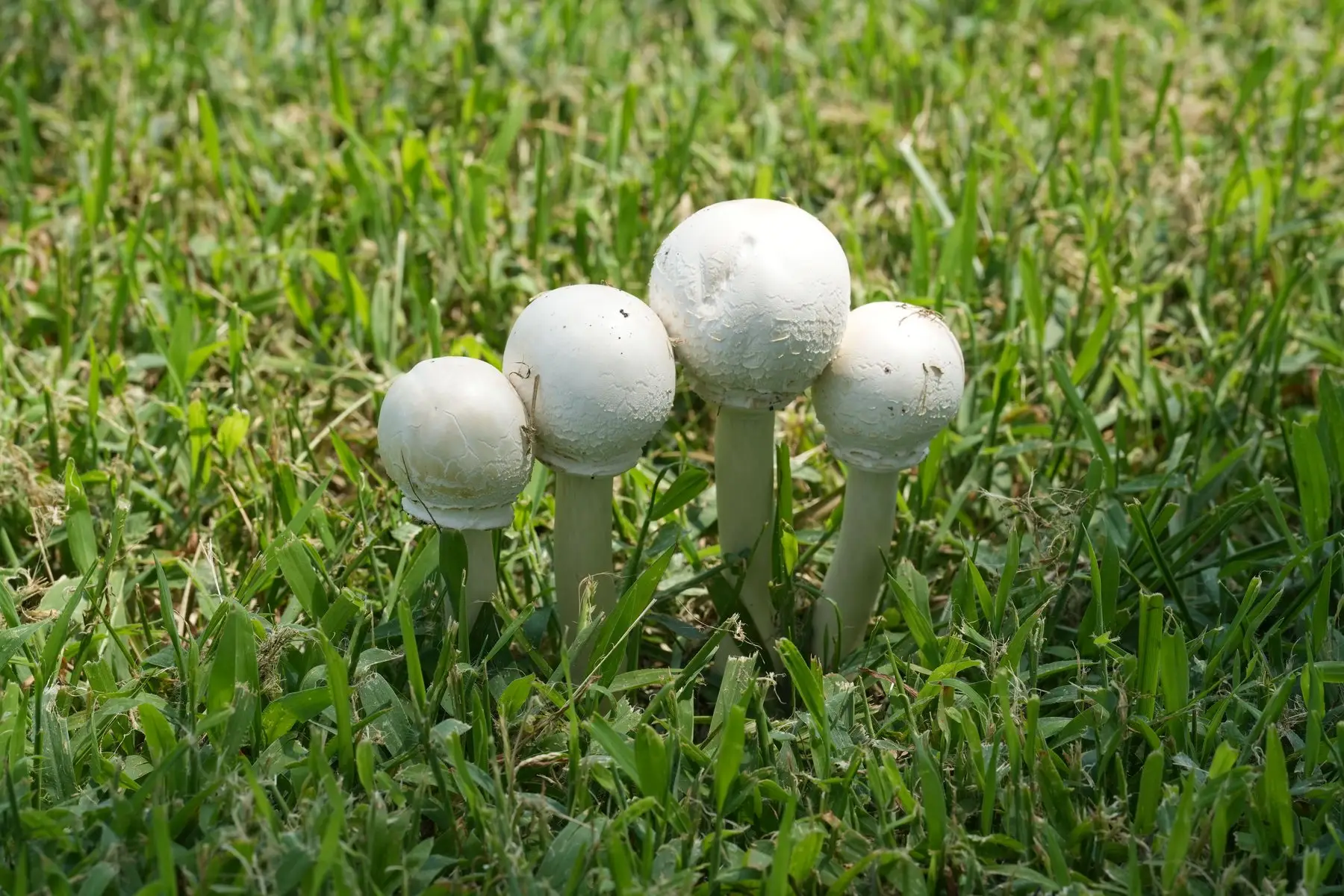
Why Does My Lawn Have Mushrooms? Something Is Rotting
Mushrooms mean fungi are digesting buried wood or thatch — a sign of healthy soil, not disease. They vanish on their own when the food runs out.
Why Does My Lawn Mower Backfire? Fuel Burning Too Late
A bang when you shut the mower off is unburnt fuel igniting in the exhaust. When it happens tells you whether it is normal or something to fix.