
Why Are My Radishes Growing Above Ground? Usually Normal
Radishes pushing their shoulders out of the soil is how most varieties grow, not a fault. Here is when it is normal and when it means a real problem.
 By
On this page
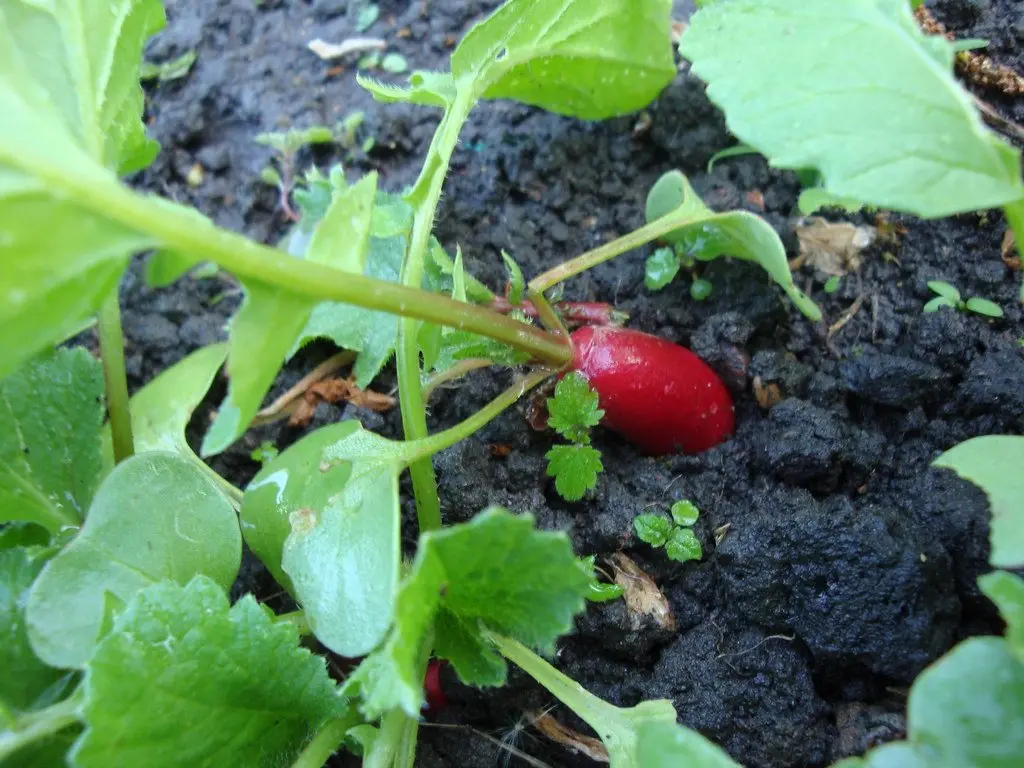
Most of the time this is not a problem at all. The round salad radish is built to sit with its shoulders out of the ground — a good third to half of the radish above soil level is normal and needs nothing done about it.
Why they sit high by design
The edible part of a salad radish is not purely root. A large share of it is hypocotyl — the short length of stem between the seed leaves and the true root — and that section of the plant naturally sits at or just above soil level. Long types such as daikon behave differently and sit much deeper.
So a tidy row of radishes with their red tops showing is a row of radishes doing what they do.
The test that matters is the pull, not the look
Lift one. If it is firm, round and the right size for the variety, nothing is wrong no matter how much of it was showing.
When it is actually a problem
| What you see | Cause | Fix |
|---|---|---|
| Top third showing, good bulb | Normal | Nothing |
| Long bare neck, small bulb | Crowding or low light | Thin to 2.5 cm / 1 in; full sun |
| Big leaves, no bulb | Too much nitrogen | Do not feed; sow in unfed ground |
| Whole radish lying on the surface | Sown too shallow / washed out | Sow 1 cm / ½ in; water with a fine rose |
| Pithy, hollow, hot | Left too long | Pull at 25–30 days |
Thinning is the thing people skip
A radish needs about 2.5 cm / 1 inch of its own space. Sown from the packet without thinning, every plant competes, every plant stretches, and you get a bed of leaves on thin necks.
Thin as soon as the seedlings can be handled. It feels wasteful and it is the single biggest difference between a good row and a disappointing one.
Do not feed radishes
In any reasonable soil they need nothing. Nitrogen pushes them into leaf, and a bed that was recently fed for a leafy crop will give you magnificent tops and nothing underneath.
Getting the sowing right
- 1 cm / half an inch deep — shallow, but covered
- Firm the soil lightly after sowing so the seed has contact and anchorage
- Water with a fine rose, not a jet, so the seed is not moved
- Full sun, and the cooler ends of the season — heat makes them bolt rather than bulb
- Sow a short row every two weeks rather than one long row you cannot eat in time
Common questions
Why are my radishes growing above ground?
Should I cover radish shoulders with soil?
Why are my radishes long and thin instead of round?
Why do my radishes have big leaves but no bulb?
Can you eat a radish that is growing above the soil?
How deep should radish seed be sown?
Backyard Weekly
Know what to plant, week by week
Join the weekly email for seasonal jobs, fixes for what is going wrong, and gear worth buying.
Not ready to subscribe? The planting calendar is free and needs no email.
By subscribing you agree to our privacy policy. Grow In Backyard will never sell your address.
Keep reading
How to Grow Lettuce: Beating the Bolt and the Bitterness
Lettuce turns bitter and runs to seed in heat. Sowing windows, cut-and-come-again, shade in summer, and why germination fails in warm soil.
Why Are My Peppers So Small? Usually Heat or Nitrogen
Small peppers are almost always heat stress, too much nitrogen, or a plant carrying more fruit than it can size. Each has a different fix.
What Is Silt Soil? The One That Grows Well and Compacts
Silt holds water and nutrients like clay but drains better, and turns to concrete underfoot. How to identify it by feel and work it without ruining it.
Why Are My Tomatoes Splitting? Water, Almost Always
Tomatoes split when a dry spell is followed by heavy water — the inside grows faster than the skin. How to read the crack, and how to stop it happening.