
Why Are My Peppers So Small? Usually Heat or Nitrogen
Small peppers are almost always heat stress, too much nitrogen, or a plant carrying more fruit than it can size. Each has a different fix.
 By
On this page
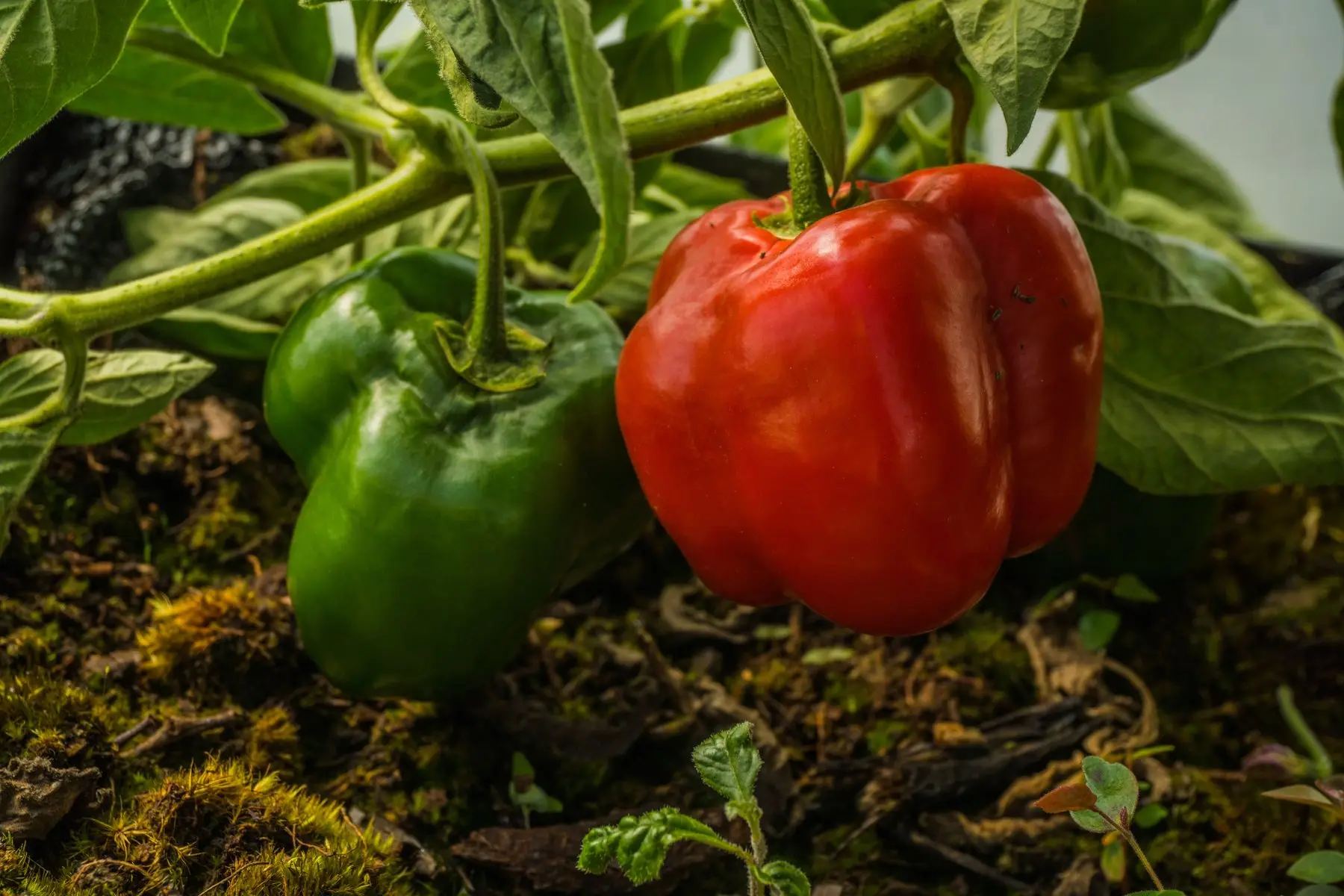
Almost always one of three things: heat disrupting pollination, too much nitrogen, or a plant carrying more fruit than it can size. Each has a different fix, and the plant tells you which.
Work through it in this order
| Plant looks like | Likely cause | Fix |
|---|---|---|
| Healthy, uniform small fruit | The variety | Nothing to fix |
| Large, lush, dark green, few fruit | Too much nitrogen | High-potash feed |
| Flowers dropping; fruit lopsided | Heat | Afternoon shade, steady water |
| Many fruit, all small | Overcropping | Thin them |
| Wilting between waterings | Irregular water | Mulch, water deeply |
Check the variety before troubleshooting
Plenty are naturally small — shishito, padrón, many ornamental and hot types.
And seed saved from a hybrid will not come true, often giving smaller, more variable fruit than the parent plant.
If the plant looks healthy and the fruit is uniform rather than misshapen, the variety is the answer.
Heat, and why it makes fruit small
Seed count drives pepper size
Pepper pollen goes unviable above roughly 90°F by day or 75°F at night, so flowers drop or set poorly.
A fruit formed from partial pollination has fewer seeds — and fewer seeds means a smaller, often lopsided pepper. That is why heat-stressed peppers look misshapen rather than just small.
What to do: afternoon shade and consistent watering through the heat. It resumes when the weather does.
Nitrogen
The most common avoidable cause. Nitrogen drives leaf and stem growth, so the plant looks magnificent and fruits poorly.
- Switch to a high-potash feed — a tomato fertilizer is ideal — once the first flowers appear
- Stop any general-purpose or lawn-type feed
The plant will not shrink back, but subsequent fruit sizes better.
Thinning
A pepper plant has finite energy and divides it among whatever it is carrying. Twenty small peppers and eight large ones are roughly the same total.
Remove the first one or two fruits on a young plant
Early fruiting stunts the plant, and everything that follows is small. Taking the first fruits off costs you two peppers and improves the whole season.
Watering
Underrated as a cause. Peppers are shallow-rooted, and a plant that dries out then gets soaked repeatedly stops sizing fruit — and is far more prone to blossom end rot.
- Mulch
- Water deeply rather than little and often
- Container peppers need this most — pots dry fastest
Common questions
Why are my peppers so small?
Does too much nitrogen make peppers small?
How does heat make peppers small?
Should you thin peppers to get bigger fruit?
Do peppers need consistent watering to size up?
Could my peppers just be a small variety?
Backyard Weekly
Know what to plant, week by week
Join the weekly email for seasonal jobs, fixes for what is going wrong, and gear worth buying.
Not ready to subscribe? The planting calendar is free and needs no email.
By subscribing you agree to our privacy policy. Grow In Backyard will never sell your address.
Keep reading
How to Grow Peppers: Start Early, Then Keep Them Warm
Peppers need more heat than tomatoes and stall in cool nights. When to sow, the temperature range that makes flowers drop, and why to feed them less than you think.
When to Plant Jalapeños: 8 Weeks Before Your Last Frost
Start jalapeño seed indoors 8 to 10 weeks before last frost and transplant only once nights hold above 55°F. Cold soil stalls them for weeks.
Why Are My Hydrangeas Dying? Usually Water, Not Disease
Wilting in afternoon sun that recovers overnight is normal. Browning leaf edges, sudden collapse and bare stems each point somewhere different.
Why Are My Radishes Growing Above Ground? Usually Normal
Radishes pushing their shoulders out of the soil is how most varieties grow, not a fault. Here is when it is normal and when it means a real problem.