
What Do Professional Landscapers Use for Edging? Steel
Steel edging is the trade default because it is thin, bends to curves and stays put for decades. Plastic is the budget option and the one that lifts.
 By
On this page
Steel, mostly — thin enough to disappear, bends to curves, stays put for decades. The other professional answer is no product at all: a maintained spade-cut edge, which costs nothing and looks better than most manufactured edging.
The options
| Edging | Lifespan | Curves | Visibility | Maintenance |
|---|---|---|---|---|
| Steel | Decades | Excellent | Nearly invisible | None |
| Aluminium | Decades | Excellent | Nearly invisible | None |
| Spade-cut edge | Indefinite | Any shape | None — it is the edge | Recut 1–2× a season |
| Brick / sett, mortared | Indefinite | Gentle curves | Deliberate feature | None |
| Timber board | 5–15 years | Straight only | Visible | Replace eventually |
| Plastic | A few years | Good | Visible bulk | Lifts |
Most complaints about edging are complaints about plastic
It is thicker, so it reads as a line across the garden; it goes brittle in cold and UV; and it lifts out over a few freeze-thaw cycles. The category has a poor reputation largely because of one material in it.
Why edging lifts, and how to stop it
Three causes, all avoidable:
- Frost heave. Water in soil expands and pushes shallow edging upward.
- Not deep enough. Most of the height should be below ground.
- Too few stakes. Use the manufacturer’s full complement, not a sample of it.
Drive stakes at a slight angle away from vertical, so they resist being pulled straight up.
The spade edge
A clean vertical cut between lawn and border with a half-moon edging iron, leaving a shallow trench the grass cannot creep across.
- Free
- Any shape you like
- Looks crisp and suits informal and traditional gardens particularly well
- Needs recutting once or twice a season — that is the whole trade-off
Many professionals prefer it, and on a traditional border it genuinely looks better than a manufactured product.
For gravel specifically
The edge must stand proud of the gravel
Gravel migrates relentlessly. If the edge finishes level with the stone, the stone simply travels over the top into the lawn. Set the finished gravel slightly below the top of the edge.
Steel at a decent depth, a timber board set outside the gravel zone, or a mortared brick course all work. Low flexible products do not.
Brick, and the mowing strip advantage
A soldier course bedded in mortar on concrete haunching lasts indefinitely — and crucially it doubles as a mowing strip, so the mower wheel runs along it and there is no strimming to do afterwards.
The cost is labour rather than materials. Considerably more work than steel, for a similar lifespan, bought for the look and the mowing strip.
Common questions
What do professional landscapers use for edging?
Is steel or plastic edging better?
Why does garden edging keep lifting out of the ground?
What is a spade cut edge and is it good enough?
What edging works best for gravel?
Is brick edging worth the extra work?
Backyard Weekly
Know what to plant, week by week
Join the weekly email for seasonal jobs, fixes for what is going wrong, and gear worth buying.
Not ready to subscribe? The planting calendar is free and needs no email.
By subscribing you agree to our privacy policy. Grow In Backyard will never sell your address.
Keep reading
What to Put Under Decorative Stones: Fabric, Not Plastic
Woven landscape fabric lets water through and holds stones clear of soil. Plastic sheeting traps water and kills the ground beneath it.
How Much Does Backyard Landscaping Cost? Phase It
Hard landscaping dominates every quote — paving, walls and drainage. Planting is the cheap part, which is why phasing the work changes the total so much.
Rock Garden Ideas That Look Like They Belong There
The difference between a rockery and a pile of stones is drainage and burial. How to set rock so it reads as outcrop, and what actually survives in it.
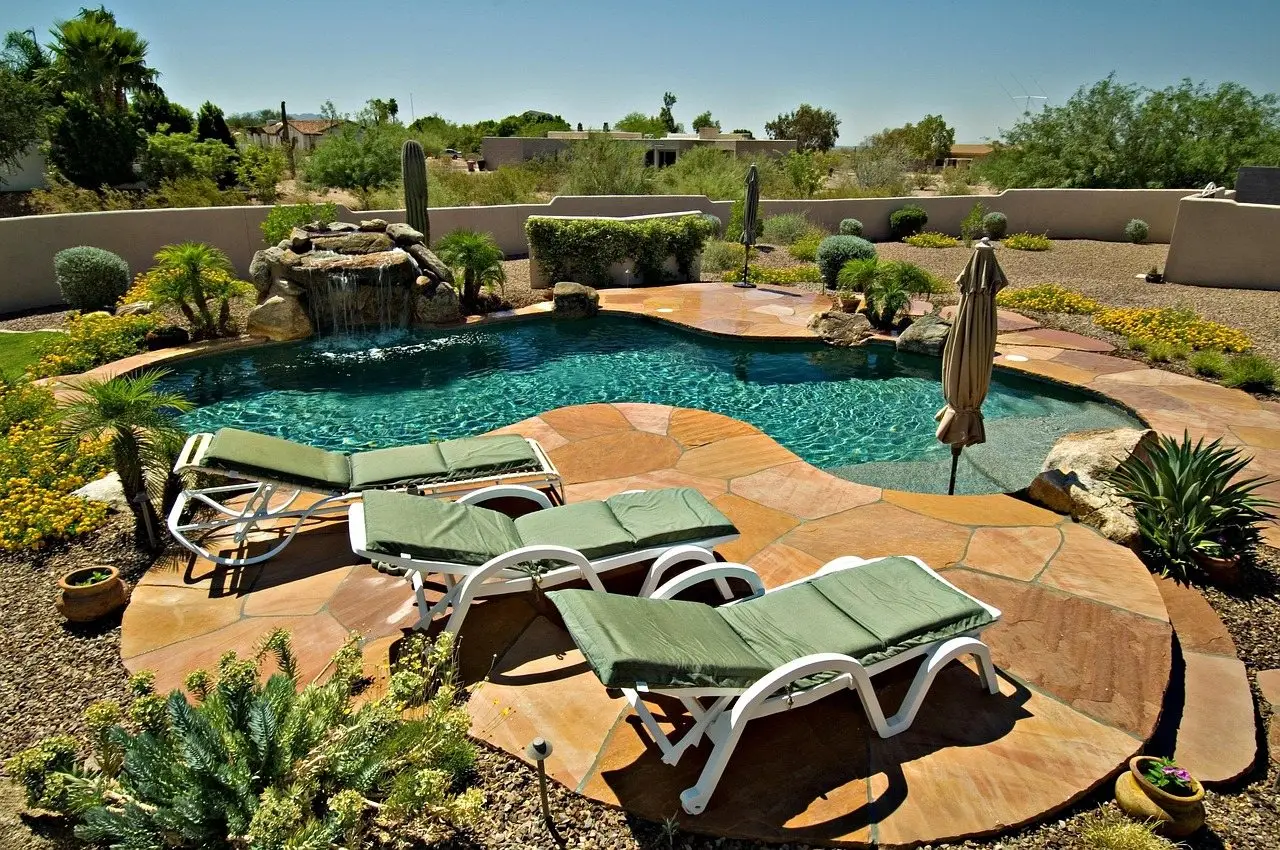
What Is a Good Size Pool for a Small Backyard?
Around 10 by 20 feet is the usual sweet spot, but the deciding number is what is left over — a pool needs a metre of deck on every side to be usable.