
Yellow Fungus in Grass: Slime Mould, and It Is Harmless
Yellow fungus in grass is almost always dog vomit slime mould, which harms nothing. How to tell it from the 2 lawn diseases that do need action.
 By

On this page
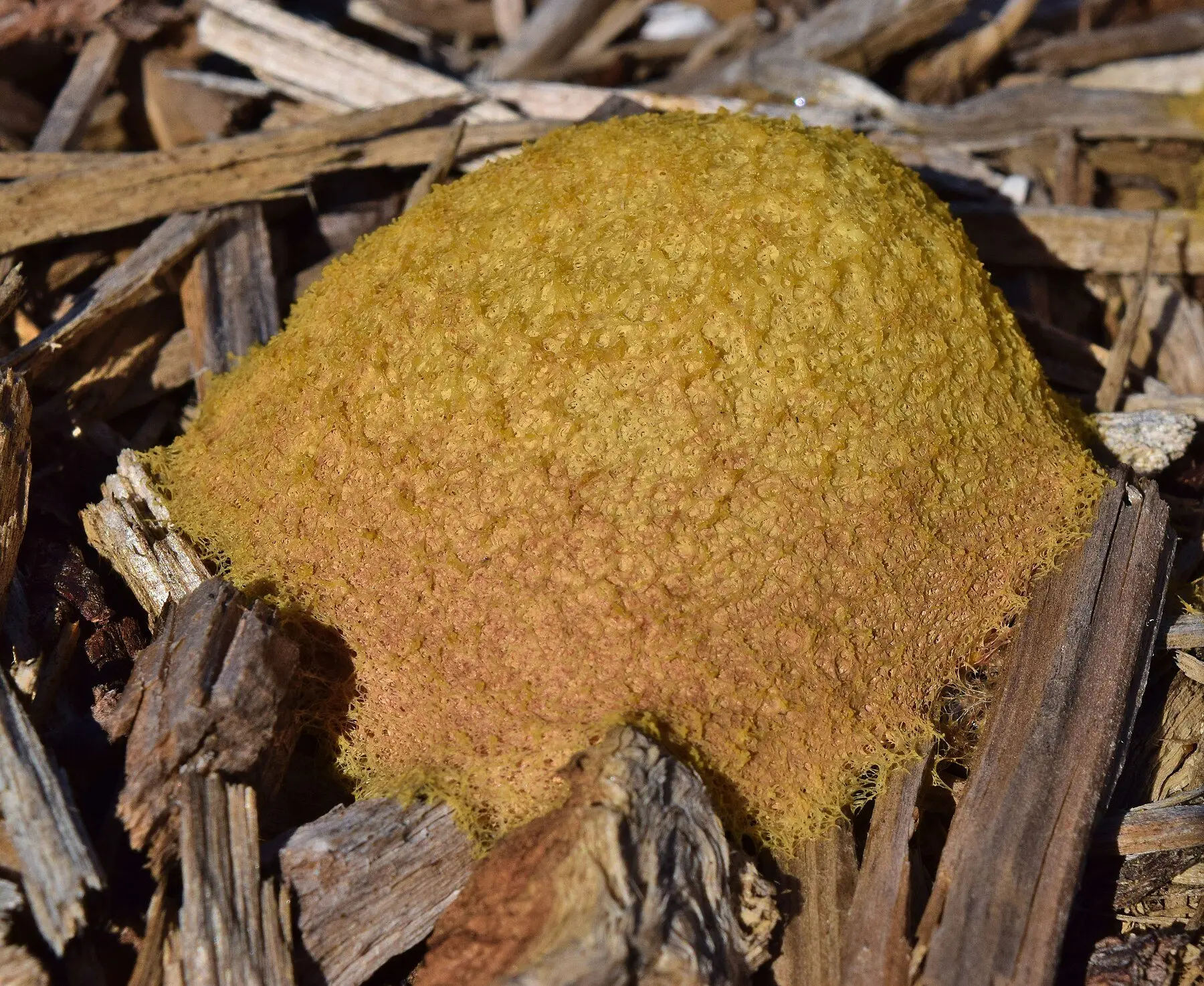
Bright yellow froth that appeared on the lawn overnight after warm wet weather is almost certainly dog vomit slime mould, Fuligo septica. It looks alarming, it is not a disease, and it is not harming the grass.
Telling the three apart
| Slime mould | Rust | Dollar spot | |
|---|---|---|---|
| Where | On top of blades | In the blade | In the blade |
| Looks like | Yellow froth, turns grey | Orange pustules, powder | Straw patches 1–3 in |
| On your shoes | Nothing | Orange dust | Nothing |
| Wipes off | Yes, cleanly | Smears | No |
| Harms grass | No | Yes, weakens it | Yes |
| Fix | Nothing needed | Nitrogen, water | Nitrogen, water |
What slime mould actually is
Not a fungus, despite the name. Slime moulds are amoeboid organisms that spend most of their life as microscopic single cells in soil and thatch, feeding on bacteria and decaying matter.
When conditions are right — warm, humid, usually a day or two after rain — those cells aggregate into the visible mass that appears on the lawn. It climbs onto grass blades not to feed on them but because it needs height to release spores.
It will go bright yellow, then dull, then grey and crusty as it dries and sporulates, over a few days. Then it is gone.
Note
The only harm it does is shading. A dense patch sitting on grass for several days can leave the blades underneath slightly pale, and they recover within a week of the mould being removed or drying out. That is the entire extent of it.
If you want it gone
Any of these work, and none of them are necessary:
- Rake or brush it — breaks the mass up and it dries
- Hose it off — disperses it into the thatch
- Mow — though it does spread spores around, which does not matter
- Nothing — it disappears by itself within a week
Do not use fungicide. It is not a fungus, fungicides do not target it, and you would be treating a lawn that has nothing wrong with it.
It recurs in the same places because the food source is there: buried wood, an old root, a spot where mulch sat, or heavy thatch. Dethatching reduces it. Given that it does no damage, that is usually effort better spent elsewhere.
The two that do need something
Rust. Fine orange-yellow pustules on the blades, and the giveaway is orange powder on shoes and mower wheels. Rust appears when grass is growing too slowly to outgrow it — low nitrogen, drought stress, heavy shade, or late season. The correction is to get it growing: feed, water properly, and mow regularly to remove infected tissue. Fungicide is rarely justified on a home lawn.
Dollar spot. Small straw-coloured patches one to three inches across, often merging, with distinct pale lesions banded across individual blades. Also strongly associated with low nitrogen, and also corrected mainly by feeding. Watering deeply in the morning rather than lightly in the evening helps, because it thrives on long periods of leaf wetness.
Both are conditions problems that present as disease. A lawn fed and watered properly largely stops getting them.
Common questions
Is yellow slime mould in grass harmful?
How do I get rid of slime mould on my lawn?
What is the difference between slime mould and lawn rust?
What yellow lawn problems do need treating?
Why does slime mould keep coming back in the same place?
Backyard Weekly
Know what to plant, week by week
Join the weekly email for seasonal jobs, fixes for what is going wrong, and gear worth buying.
Not ready to subscribe? The planting calendar is free and needs no email.
By subscribing you agree to our privacy policy. Grow In Backyard will never sell your address.
Keep reading
Types of Worms in Soil — 7 You Find and What Each Does
Types of worms in soil fall into 3 earthworm groups plus the larvae people mistake for them. Which are working for you, and which are eating your roots.
Mushroom Compost — 3 Uses and Where It Does Harm
Mushroom compost is alkaline and salty, which rules out some beds. 3 uses compared, plus what to use on acid-lovers. See where it fits your soil.
White Fly on Plants: Why Spraying Keeps Failing
White fly on plants survives most sprays because 3 of its 4 life stages are armoured or hidden. What reaches each stage, and the 7-day cycle that decides timing.
Zero Turn vs Lawn Tractor — 4 Picks by Acreage
Zero turn vs lawn tractor is decided by acreage and obstacles. 4 machines compared on speed, slopes and tight corners. See which fits your yard.