
What Is Coco Soil? Coconut Husk, and It Is Not Really Soil
Coir is the fibre left over from coconut processing, used as a peat substitute. It holds water well, has almost no nutrients, and needs buffering.
 By
On this page
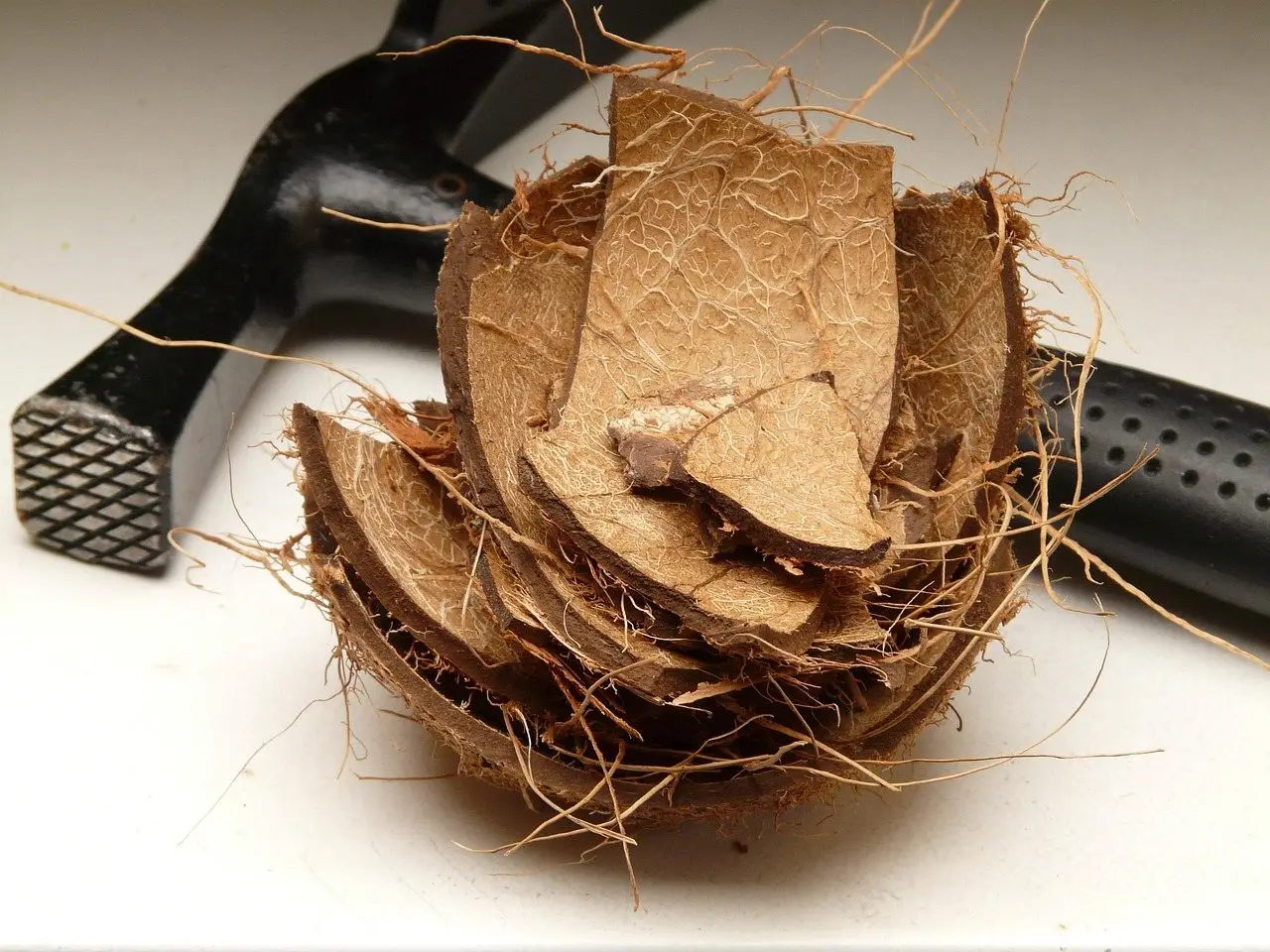
Coconut husk fibre — and it is not soil. Coir contains no mineral soil and almost no nutrients. It is a physical medium that holds water and air; you supply the feeding. Most of it also needs buffering before use.
Coir against peat
| Coir | Peat | |
|---|---|---|
| Source | Coconut waste product | Mined from peat bogs |
| Rewetting when dry | Easy | Repels water stubbornly |
| Drainage | Slightly freer | Holds tighter |
| Nutrients | Essentially none | Essentially none |
| pH | Near neutral, 5.5–6.8 | Acidic, 3.5–4.5 |
| Preparation | Rinse and buffer | None |
| Environmental cost | Shipping | Habitat that takes millennia to form |
Why buffering matters
Raw coir holds a lot of potassium and sodium on its exchange sites. When you feed the plant, the calcium and magnesium in the feed displace them — which both wastes your fertiliser and delivers a salt dose to the plant.
Buffering just means pre-loading those sites
Soak the coir in a calcium and magnesium solution before use, so the exchange sites are already occupied. Good coir is sold pre-buffered and says so on the bag. Cheap coir usually is not — and cheap coir is also the kind most likely to arrive salty from poor washing.
Rehydrating a block
- Big container — a 5 kg brick makes far more than it looks like it will.
- Several times its volume in warm water.
- Twenty to thirty minutes, breaking it up by hand as it swells.
- Squeeze a handful: damp and springy, with only a few drops coming out.
- If it is sodden, let it drain before use.
Using it
- As a mix component — roughly a third to a half, with compost for feeding and perlite for drainage. This is the right answer for ordinary garden use.
- Neat, hydroponically — works, and routine among hydroponic growers, but you must supply all the nutrition.
Pure coir with no feeding regime fails predictably
You get healthy-looking young plants that stall and yellow within weeks, because there was never anything in the medium to feed them.
Water holding
Fine coir pith is very absorbent and can stay wet in a pot with poor drainage. Coarser chip grades hold more air.
Same fix as any over-wet mix: add perlite, and choose the coarse grade for orchids, succulents and anything prone to root rot.
Common questions
What is coco soil?
Is coco coir better than peat?
Why does coir need buffering?
How do you rehydrate a coir block?
Can you grow in pure coir?
Does coir hold too much water?
Backyard Weekly
Know what to plant, week by week
Join the weekly email for seasonal jobs, fixes for what is going wrong, and gear worth buying.
Not ready to subscribe? The planting calendar is free and needs no email.
By subscribing you agree to our privacy policy. Grow In Backyard will never sell your address.
Keep reading
Potting Soil: What Is Actually in the Bag, and Which to Buy
Potting mix contains no soil at all, and that is the point. What each ingredient does, why garden soil fails in a container, and how to read a bag honestly.
Perlite vs Vermiculite: Which One, and When
Both lighten soil, but one drains and one holds water. Which to use for seeds, cuttings, succulents and containers, and why mixing them defeats the point.
Can I Mix Peat Moss With Soil? Yes, But Ask Why First
Peat opens clay and holds water in sand, but it acidifies, breaks down within a few years and is mined from habitats that take millennia to form.
What Is Perlite Made Of? Volcanic Glass, Popped Like Corn
Perlite is volcanic glass heated to 900°C until its trapped water flashes to steam and expands it. That is why it is white, light and permanent.