
Perlite vs Vermiculite: Which One, and When
Both lighten soil, but one drains and one holds water. Which to use for seeds, cuttings, succulents and containers, and why mixing them defeats the point.
 By

On this page
Both are white-ish, light, and sold beside each other for the same price. They do opposite jobs: one makes a mix drier, the other makes it wetter.
The difference
| Perlite | Vermiculite | |
|---|---|---|
| What it is | Expanded volcanic glass | Expanded mica |
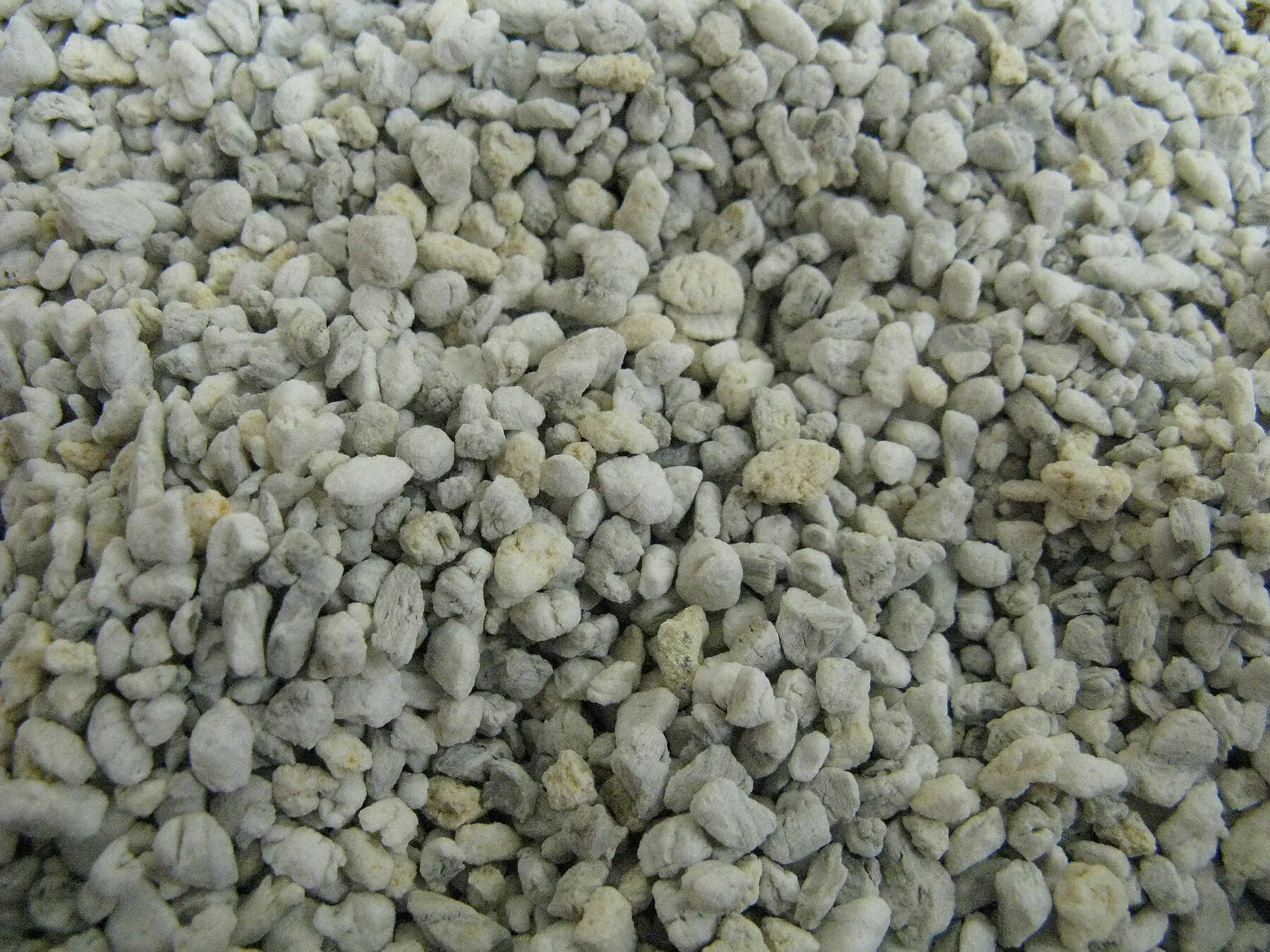
| Looks like | Hard white balls, polystyrene-ish | Soft golden-brown flakes, layered |
| Feels | Gritty, crushes with effort | Spongy, crumbles between fingers |
| Water | Drains. Holds a little on the surface | Absorbs 3–4× its weight |
| Air space | High | Moderate, and falls as it compacts |
| Nutrients | Holds none — inert | Holds and releases them |
| pH | Neutral, 6.5–7.5 | Neutral to slightly alkaline |
| Lifespan in a pot | Years. Does not break down | Compacts over a season or two |
The test if a bag is unlabelled: squeeze a piece. Perlite resists and then crunches; vermiculite squashes softly and flakes apart.
Which one for what
| Job | Use | Why |
|---|---|---|
| Seed starting | Vermiculite | Even moisture, no surface crust |
| Covering fine sown seed | Vermiculite | Lets light through, stays damp |
| Succulents, cacti | Perlite | Must dry fast. Vermiculite rots them |
| Woody cuttings | Perlite | Air at the stem base prevents rot |
| Soft herbaceous cuttings | Vermiculite | They wilt before they rot |
| Heavy clay-ish potting mix | Perlite | Opens it up, adds drainage |
| Sandy soil drying too fast | Vermiculite | Holds water and nutrients |
| Container vegetables | Either, or both | Tomatoes like the moisture buffer |
| Hydroponic media | Perlite | Inert, stable, does not compact |
| Orchids, hoyas, aroids | Perlite (with bark) | Air space is the whole point |
Vermiculite in a succulent mix is a slow death sentence
It is the most common mix-up with real consequences. A cactus or succulent potted in a mix holding three to four times its weight in water keeps wet roots for weeks, and those roots are adapted to being dry most of the time.
The plant looks fine, then collapses at the base. Perlite, coarse sand or pumice — never vermiculite.
Mixing them
The classic soil-less mix is one part peat (or coir), one part perlite, one part vermiculite — balanced, sterile, light, and a perfectly good general-purpose medium.
But adding both to fix a problem usually cancels out. A mix that stays sodden needs perlite alone; one that dries out in a day needs vermiculite alone. Putting in both moves it toward the middle rather than toward what you wanted.
Decide the direction first, then add the one that goes that way.
Rough proportions
- Standard potting mix, improved drainage: 10–25% perlite by volume
- Succulent and cactus mix: 1 part compost to 1–2 parts perlite
- Seed-starting mix: equal parts compost, vermiculite and fine perlite
- Cutting medium: pure perlite, or 50/50 perlite and vermiculite
- Improving a sandy bed: vermiculite worked into the top few inches
These are starting points, not recipes. Water the mix and watch how fast it dries — that tells you more than any ratio.
Handling both safely
Dampen the bag before you pour
Both produce fine dust that irritates the lungs, and perlite dust in particular gets everywhere. Mist the bag, work outdoors or with ventilation, and wear a mask if you are mixing a lot.
On the asbestos question: vermiculite from a mine at Libby, Montana — closed in 1990 — was contaminated with asbestos, and that history is why the concern exists. Horticultural vermiculite sold now is sourced elsewhere and tested. Current bags are not the issue; old loft insulation is, and that is a job for a professional, not a trowel.
Substitutes
If neither is to hand, or you would rather avoid mined products:
Instead of perlite: pumice (heavier, does not float to the surface, arguably better), coarse horticultural sand, fine bark, or LECA clay pellets.
Instead of vermiculite: coco coir (holds water well, renewable), peat, or well-rotted leaf mould.
Pumice is the genuine upgrade on perlite for containers — it does the same job, weighs enough to stay mixed in rather than floating to the top with every watering, and lasts indefinitely. It is simply harder to find and more expensive.
Common questions
What is the difference between perlite and vermiculite?
Should I use perlite or vermiculite for seed starting?
Which is better for succulents and cacti?
Is perlite or vermiculite better for cuttings?
Can I use perlite and vermiculite together?
Is perlite or vermiculite safe to handle?
Backyard Weekly
Know what to plant, week by week
Join the weekly email for seasonal jobs, fixes for what is going wrong, and gear worth buying.
Not ready to subscribe? The planting calendar is free and needs no email.
By subscribing you agree to our privacy policy. Grow In Backyard will never sell your address.
Keep reading
Loam Soil: What It Is, and How to Get It From Clay or Sand
Loam is a particle-size ratio, not a product you buy. How to test what you have with a jar of water, and the only method that genuinely changes it.
Potting Soil: What Is Actually in the Bag, and Which to Buy
Potting mix contains no soil at all, and that is the point. What each ingredient does, why garden soil fails in a container, and how to read a bag honestly.
Outdoor Plants in Pots: What Survives, and What Kills Them
A pot outdoors is a harsher place than the ground — hotter, drier, and colder in winter. How to pick plants and pots that cope, and get through the cold.
Types of Worms in Soil — 7 You Find and What Each Does
Types of worms in soil fall into 3 earthworm groups plus the larvae people mistake for them. Which are working for you, and which are eating your roots.