
Are Dandelions Bad for Your Lawn? Mostly a Symptom
Dandelions do not kill grass — they colonise thin, compacted, low-nitrogen turf. What they indicate, and how to remove them if you want them gone.
 By
On this page
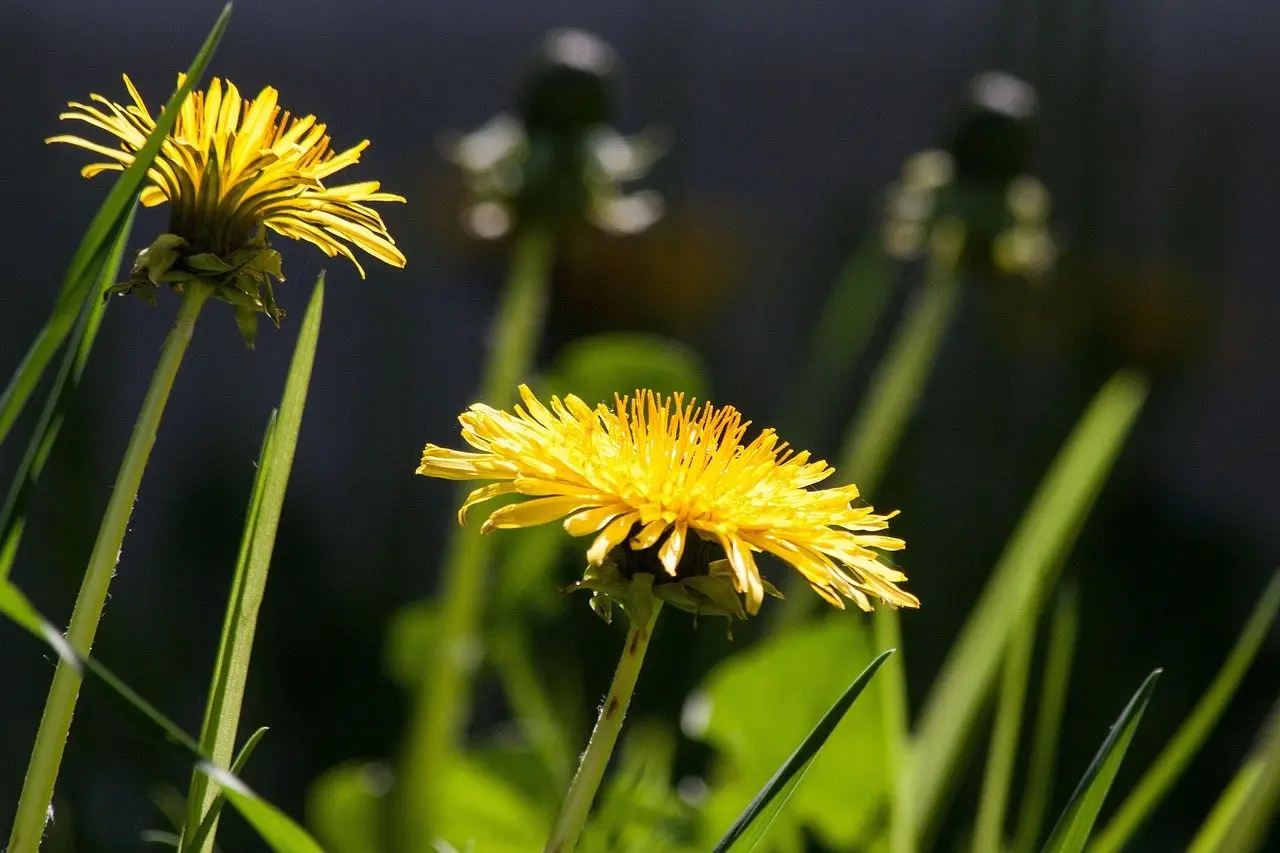
Dandelions are a symptom, not a cause. They move into turf that has already thinned, and the conditions that let them in are the actual problem.
What their presence tells you
| dandelions concentrated in | likely cause |
|---|---|
| Paths, play areas, parking strips | Compaction |
| Across a pale, slow-growing lawn | Low nitrogen |
| A closely-mown lawn | Cutting height too low |
| Edges and thin margins | Bare soil exposed to light |
| Everywhere, after a dry summer | Turf thinned by drought |
Removing the ones you have
- Wait for rain, or water the area thoroughly the day before
- Long-handled weeder or a narrow trowel, driven down beside the root
- Lever the whole taproot out. Fragments below about two inches regrow
- Fill the hole with soil and a pinch of grass seed immediately
- Repeat in three weeks on anything that comes back
A pulled dandelion leaves a bare patch
Which is exactly the gap the next seed needs. Fill and seed every hole the same day, or hand-weeding turns into an annual ritual that never reduces the population.
The long-term fix
- Core aerate if the screwdriver test fails
- Feed 2–4 times a year at no more than a pound of actual nitrogen per 1,000 sq ft
- Overseed in early autumn to close the gaps
- Raise the mowing height to 3–4 inches — the single biggest lever
- Water deeply and infrequently
- Cut before the flowers set seed; each head carries 150–200 seeds
Reasons to leave some
- Early nectar. They flower when little else does, and bees rely on them
- Nutrient cycling. The taproot lifts calcium and potassium from depth
- Mild subsoiling through compacted layers
- Edible leaves and flowers, if you have not treated the lawn
A few dandelions in a lawn used by a family are not a failure. A lawn that is half dandelion is telling you about compaction and feeding.
Common questions
Are dandelions actually harmful to a lawn?
What do dandelions indicate about my soil?
Do dandelions do any good?
How do I remove dandelions without chemicals?
Will mowing get rid of them?
What is the long-term fix?
Backyard Weekly
Know what to plant, week by week
Join the weekly email for seasonal jobs, fixes for what is going wrong, and gear worth buying.
Not ready to subscribe? The planting calendar is free and needs no email.
By subscribing you agree to our privacy policy. Grow In Backyard will never sell your address.
Keep reading
How to Make a Lawn Green and Thick: The Order That Works
Thick grass comes from mowing height, overseeding and deep watering before fertilizer. The sequence that fixes a thin lawn in one season.
Is Lawn Aeration Necessary? Only If It Is Compacted
The screwdriver test settles it in ten seconds. Which lawns genuinely need aerating, which do not, and why annual aeration by default is a waste.
Lawn Care for Beginners: The Year in Five Jobs
A good lawn needs mowing high, watering deeply, feeding twice, overseeding in autumn and a soil test. Everything else is optional.
Are Lawn Mower Blades Reverse Thread? Usually Not
Most walk-behind mower bolts are standard right-hand thread — turn left to loosen. A few are reversed, so here is how to check before you round the bolt.