
When Do Tomatoes Bloom? 5 to 7 Weeks After Transplanting
Tomatoes flower about five to seven weeks after transplanting, once night temperatures hold above 55°F. What delays it and what stops fruit setting.
 By
On this page
Five to seven weeks after transplanting, once nights hold above 55°F. From seed, nine to eleven weeks. But flowering is triggered by the plant reaching size, not by the calendar — which is why a late-planted tomato catches up faster than you would expect.
The timeline
| Stage | When |
|---|---|
| Transplant out | Day 0 |
| First flowers | 5–7 weeks |
| Visible green fruit | About a week after the flower opens |
| Cherry types ripe | 20–30 days from set |
| Beefsteak types ripe | 50–60 days from set |
So open flower to eating is usually six to nine weeks. Petals dropping once a flower has set is normal, not a failure.
Determinate and indeterminate bloom differently
| Determinate | Indeterminate | |
|---|---|---|
| Flowering | One flush, 1–2 weeks | Continuous until frost |
| Harvest | Mostly together | A steady trickle |
| Suits | Sauce, containers | Fresh eating over a season |
Neither is better. If your plant flowered heavily and then stopped, it is probably determinate and doing exactly what it should.
Not flowering at all
A large, lush, dark green plant with no flowers is a nitrogen problem
The plant is being fed to grow leaves and is doing so. A lawn feed or a high-nitrogen general fertilizer will produce this reliably.
Switch to a high-potash feed and stop the nitrogen. It corrects, but not overnight.
The other two causes:
- Not enough light. Tomatoes want six to eight hours of direct sun
- Immaturity. A plant that went out late simply has not reached flowering size yet
Flowers that open and drop
Temperature, almost every time:
- Above ~90°F by day, or ~75°F at night — pollen becomes unviable
- Below ~55°F at night — the same outcome from the other end
- Erratic watering and very dry air do it too
In a heatwave there is not much beyond shading the plants and keeping water steady. It resumes when the weather does.
They pollinate themselves
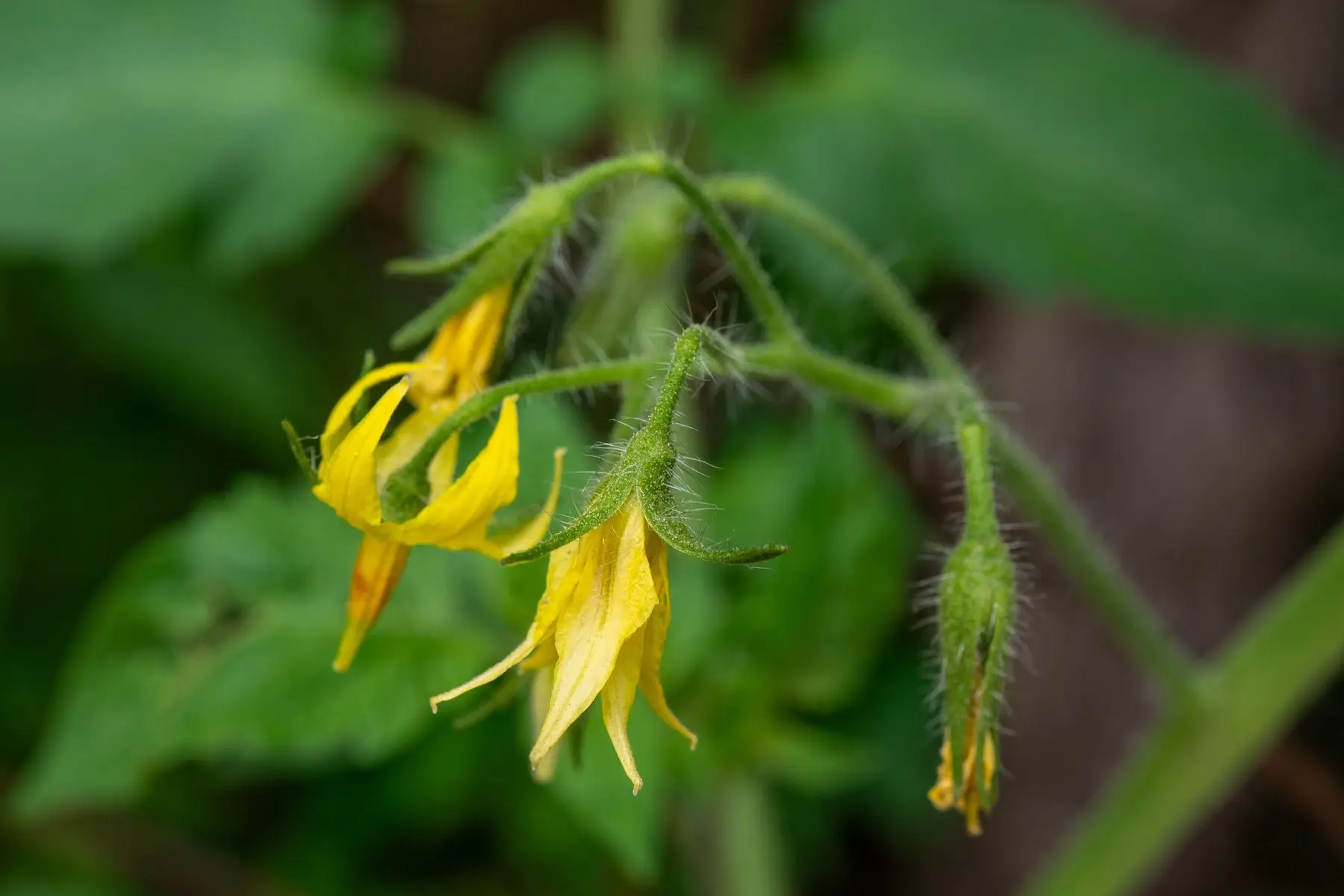
Tomato flowers carry both parts and are self-fertile. Outdoors, wind and passing bees shake the pollen loose without any help.
Under cover it is different — in a greenhouse, polytunnel or still air the pollen can simply sit there. Flicking the flower trusses or tapping the stake every couple of days, in the morning, noticeably improves set.
Common questions
When do tomatoes bloom?
How long after flowering do tomatoes appear?
Why is my tomato plant not flowering?
Why are my tomato flowers falling off without setting fruit?
Do tomato flowers need bees to pollinate them?
Do determinate and indeterminate tomatoes bloom differently?
Backyard Weekly
Know what to plant, week by week
Join the weekly email for seasonal jobs, fixes for what is going wrong, and gear worth buying.
Not ready to subscribe? The planting calendar is free and needs no email.
By subscribing you agree to our privacy policy. Grow In Backyard will never sell your address.
Keep reading
How to Grow Tomatoes: Determinate or Indeterminate First
That one word on the seed packet decides your spacing, your pruning, and your harvest shape. Then it is warmth, consistent water, and feeding at the right time.
How Many Tomato Plants Per Person? Depends on the Plan
Two or three plants per person for fresh eating, but eight to ten each if you are canning. The numbers by use, plant type and realistic yield.
When Is Corn Harvested? The Milk Test, Not the Calendar
Sweetcorn has a harvest window of a few days and starts losing sugar within an hour of picking. The three signs, and why you check by piercing a kernel.
When to Plant Dahlias, and Whether to Lift Them
Dahlia tubers rot in cold wet soil, so the planting date is set by soil temperature. Starting them early under cover, and the honest case for leaving them in.