
Spider Plant Care: Brown Tips, Babies and Why It Stops
Spider plants are nearly unkillable but tell you everything through their tips. Water, light, why yours has no babies, and propagating the ones it has.
 By

On this page
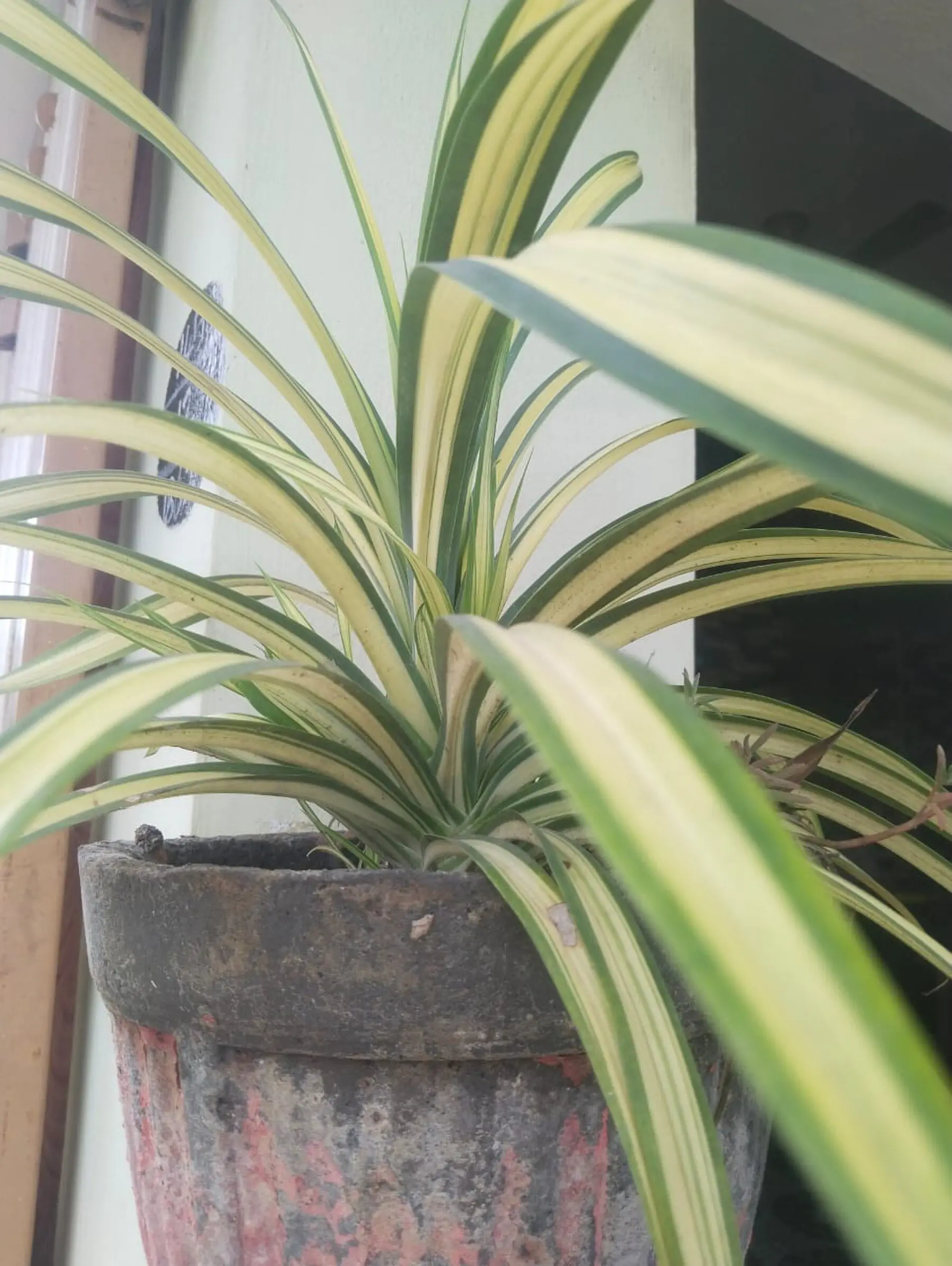
Nearly unkillable, and unusually honest about it — a spider plant tells you what is wrong through its tips before anything serious happens.
The basics
| Light | Bright indirect. Tolerates medium; variegation fades in low light |
| Water | When the top 1–2 in is dry. Never standing in a saucer |
| Soil | Ordinary houseplant compost with drainage. Nothing special |
| Humidity | Average is fine; dry air worsens tip browning |
| Temperature | 60–80°F. Below about 50°F it sulks |
| Feeding | Half strength, monthly, spring and summer only |
| Pot | Snug. A pot-bound plant flowers and makes babies |
Those thick white tuberous roots are water storage, which is why the plant forgives being forgotten and does not forgive being waterlogged. When they fill the pot so completely that the whole root ball lifts out as a solid white mass, it is time — one size up, no more.
Brown tips
The most-asked question about this plant, and the answer is usually what you are watering it with.
| Looks like | Cause | Fix |
|---|---|---|
| Dry brown tips, otherwise healthy | Fluoride or chlorine in tap water | Rainwater, filtered, or tap left standing overnight |
| Brown tips plus white crust on soil | Fertiliser salts | Flush the pot; feed less |
| Brown crispy tips, leaves limp | Under-watering, dry air | Water more consistently |
| Brown tips with yellowing base leaves | Over-watering | Let it dry; check drainage |
| Bleached pale patches | Direct sun | Move out of the midday beam |
Flushing the pot is worth doing every few months regardless: take it to a sink and run water through it for a minute or two, letting it drain fully. That washes out the accumulated salts that no amount of good watering will otherwise remove.
Browned tips do not turn green again. Trim them at an angle with scissors if they bother you, leaving a sliver of brown rather than cutting into green tissue.
Tap water is the usual culprit, and it is easy to test
If the plant is otherwise thriving and the tips keep browning, run it on rainwater or filtered water for two months and watch the new leaves.
Old damage stays. New leaves coming in clean is the confirmation.
Babies
Spiderettes appear on long arching stems — technically stolons — and a plant that makes none is usually being treated too well.
What suppresses them:
- Too large a pot. Energy goes into roots and leaves. A snug pot is the single biggest factor
- Not enough light. Medium light keeps a plant alive and stops it reproducing
- Too much nitrogen. Lush green foliage, no stolons
- Youth. Often a year or two before a plant starts
- Long day length. Flowering has a short-day element, so a plant under a lamp until midnight may never trigger
What encourages them: bright indirect light, a pot it has filled, light feeding, and leaving it alone. A plant that has been in the same pot for two years on a bright windowsill is usually covered in them.
Propagating
The reliable method, in order of success rate:
1. Pin it down while still attached — the best way.
- Pick a spiderette showing small brown-white root nubs at its base
- Sit a small pot of damp compost next to the mother plant
- Pin the baby onto the surface with a bent paperclip or wire staple, still attached to its stolon
- Keep lightly moist. It roots in two to three weeks while the mother plant feeds it
- Cut the stolon once it is visibly growing
2. Cut and pot directly. Snip the spiderette off, plant into damp compost, keep it humid — a clear bag over the pot for a fortnight — and out of direct sun.
3. Water rooting. Easy and satisfying to watch, and the weakest of the three: water roots are brittle and translate poorly to compost. If you do it, move it into soil within a week or two of roots appearing, not after they are inches long.
Common problems
- Yellowing lower leaves — normal in small numbers; widespread means over-watering
- Mushy base, foul smell — root rot. Unpot, cut away black roots, repot into dry compost, and water far less
- Faded variegation — not enough light
- Sticky leaves, fine webbing — spider mites, which like dry air. Shower the plant, raise humidity, treat if it persists
- Limp, pale, refusing to grow in winter — usually cold, or a draught from a window
Outdoors
In zones 9 to 11 it is a genuine perennial groundcover for shade. Everywhere else it makes a good summer container or hanging-basket plant, in bright shade rather than sun, and comes back indoors before the first frost. Full outdoor sun bleaches it badly within days — move it out gradually.
Common questions
How do you care for a spider plant?
Why does my spider plant have brown tips?
Why does my spider plant have no babies?
How do you propagate a spider plant?
Are spider plants toxic to cats?
How often should I water a spider plant?
Backyard Weekly
Know what to plant, week by week
Join the weekly email for seasonal jobs, fixes for what is going wrong, and gear worth buying.
Not ready to subscribe? The planting calendar is free and needs no email.
By subscribing you agree to our privacy policy. Grow In Backyard will never sell your address.
Keep reading
Outdoor Plants in Pots: What Survives, and What Kills Them
A pot outdoors is a harsher place than the ground — hotter, drier, and colder in winter. How to pick plants and pots that cope, and get through the cold.
Rubber Tree Plant Care: Light, Water, and Why Leaves Drop
Ficus elastica drops leaves when it is moved, overwatered, or cold — usually all three. What it actually needs indoors, and how to prune one that has gone leggy.
Tradescantia Zebrina Care: Light, Pinching, and Legginess
The stripes fade and the stems go bare in low light, and no amount of feeding fixes it. What this plant needs, and how to rebuild one that has gone straggly.
Stonecrop Varieties — 10 Sedums and Where Each Belongs
Stonecrop varieties split into upright and creeping sedums, and the 2 groups want different ground. 10 compared on height, hardiness and foot traffic.