
Spanish Moss: Not a Moss, and Not a Parasite
Tillandsia usneoides takes nothing from the tree it hangs on. How it feeds, growing it at home, the chigger myth, and whether it harms trees.
 By

On this page
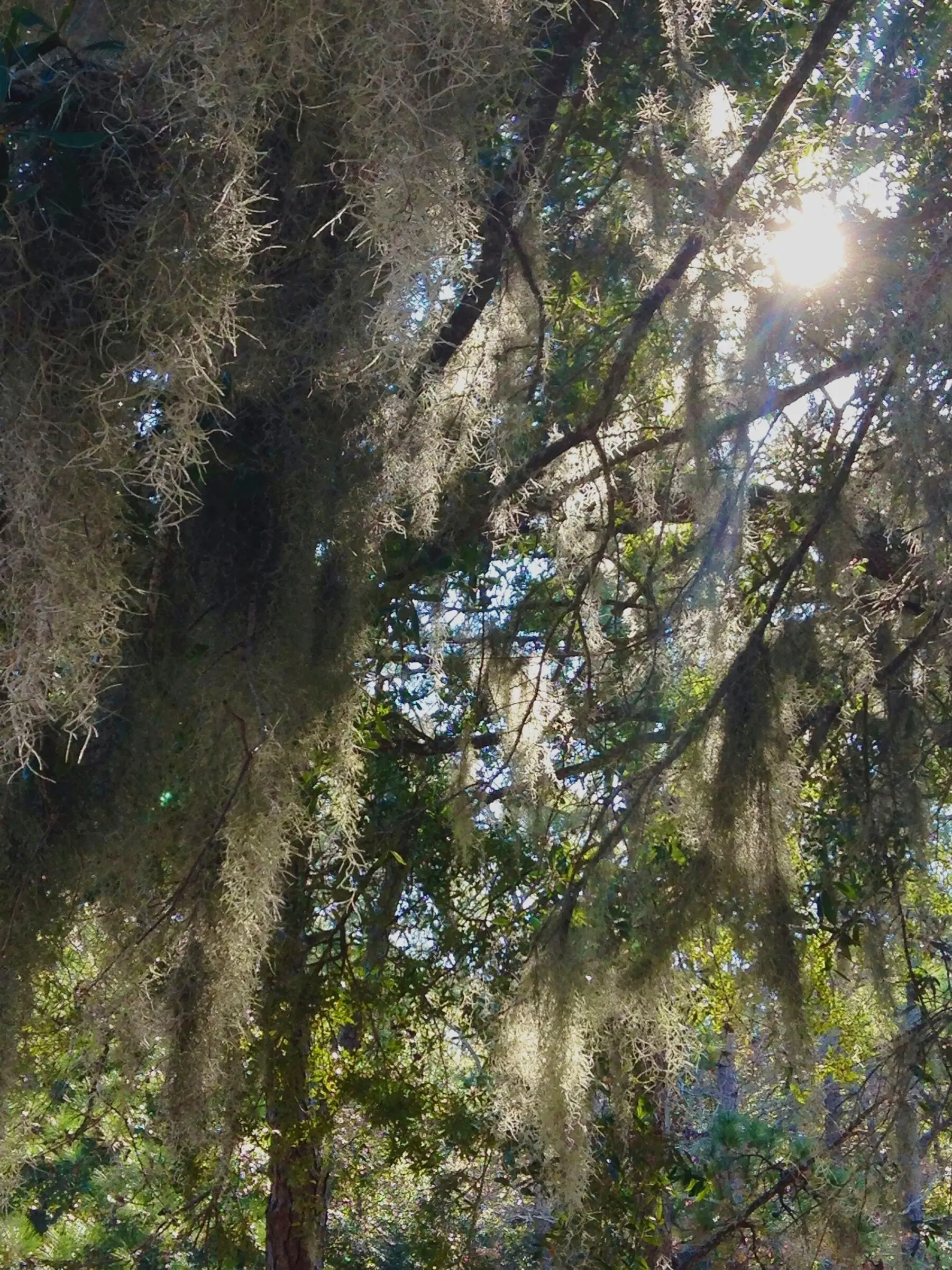
It is not a moss, it is not Spanish, and it is not a parasite. It is a bromeliad — a relative of the pineapple — that lives on rain and dust and hangs on trees for the view.
What it actually is
| The name says | The truth |
|---|---|
| Moss | A flowering plant in the bromeliad family, like the pineapple |
| Spanish | Native to the Americas, from the southern US to Argentina |
| Implied parasite | An epiphyte — it uses the tree only as a perch |
It has no roots. Water and dissolved minerals are absorbed directly through trichomes — tiny silvery scales covering every strand — which is also what gives it its grey-green colour. Wet, it darkens noticeably to green.
It flowers, too: small, pale green, faintly fragrant, in spring and summer, easy to miss. The seeds carry feathery parachutes that catch on rough bark, which is how it colonises a new tree.
Does it harm trees?
Not directly. It draws nothing from the host, so a healthy tree carries it indefinitely.
Two genuine effects appear at heavy loads:
- Shading. A thick curtain intercepts light that would have reached leaves and buds, which can slow a tree that is already struggling
- Weight. Saturated moss is heavy, and a storm-loaded limb can break
Both matter most on trees already thinned by age, drought or disease — which is precisely why the moss accumulates there. Open canopies let in the light and air it likes, so the decline usually precedes the moss rather than following it. The correlation is real; the causation runs backward from what people assume.
If you want less of it: pull it off accessible limbs by hand or with a rake. Stripping a whole tree or spraying is not warranted, and the copper-based sprays sometimes recommended damage the tree more reliably than the moss damages it.
Growing it at home
Genuinely easy, provided you understand the one thing it needs: to dry out fast after watering.
| Light | Bright indirect. Some morning sun is fine; harsh midday sun bleaches it |
| Water | Soak thoroughly 1–2× a week; mist between if the air is dry |
| Drying | Must be dry within a few hours. This is the critical part |
| Air | Real movement. Still, stagnant air rots it |
| Feed | Very dilute bromeliad or air-plant feed, monthly in summer |
| Temperature | Above 40°F. Zones 8–11 outdoors |
| Soil | None. Never pot it |
Hang it loosely. The commonest mistake is packing it into a bowl, a terrarium or a tight bundle, where the inside stays wet and rots while the outside looks fine.
Brown, mushy strands in the middle of the clump
That is rot, and it comes from water sitting in a dense mass rather than from too much watering as such.
Shake it out after soaking, hang it where air moves, and pull the clump apart if it has become a solid wad. A fan in a still room does more good than any change to the watering schedule.
Watering method: dunk the whole clump in a basin for 20 to 30 minutes, shake it hard, and hang it back up. Rainwater or filtered water is better than hard tap water, which leaves mineral deposits on the scales.
Collecting it
The chigger question, answered properly
Chiggers are ground-dwelling mite larvae. Moss hanging in a tree rarely carries them; moss lying on the ground often does — and fallen moss is exactly what people pick up.
So the myth is half true, and the half that is true is the half that matters. Collect from a branch, not from the ground. If you have gathered fallen moss, soak and dry it, or freeze it for two days, before it comes indoors.
Also worth knowing: take only what you need, and not from protected land. It grows slowly, and a stripped tree takes years to recover its drape.
Uses
- Hanging displays, indoors or on a shaded porch
- Mulch and potting additive — it holds moisture well once dried
- Craft and floristry, where dried moss is standard
- Historically, upholstery and mattress stuffing — Henry Ford’s cars used it, and the industry only died out in the mid-twentieth century
- Nesting material for birds and roosting cover for bats in its native range
Dried moss for crafts is usually treated and dyed, and will not grow. If you want living moss, buy it as a living plant or collect it fresh.
Common questions
Is Spanish moss a parasite?
Is Spanish moss actually a moss?
Does Spanish moss have chiggers in it?
How do you care for Spanish moss at home?
Does Spanish moss kill trees?
Can I grow Spanish moss outside my region?
Backyard Weekly
Know what to plant, week by week
Join the weekly email for seasonal jobs, fixes for what is going wrong, and gear worth buying.
Not ready to subscribe? The planting calendar is free and needs no email.
By subscribing you agree to our privacy policy. Grow In Backyard will never sell your address.
Keep reading
How to Grow Aloe Vera: Underwater It and Give It Sun
Aloe is killed by watering, not neglect. How to tell thirst from rot, why the leaves go flat or brown, and what to do with the pups it keeps producing.
Cast Iron Plant: The One for the Dark Corner
Aspidistra tolerates deep shade, neglect and cold that kills other houseplants. What it will not tolerate, how slowly it grows, and outdoor use.
Spider Plant Care: Brown Tips, Babies and Why It Stops
Spider plants are nearly unkillable but tell you everything through their tips. Water, light, why yours has no babies, and propagating the ones it has.
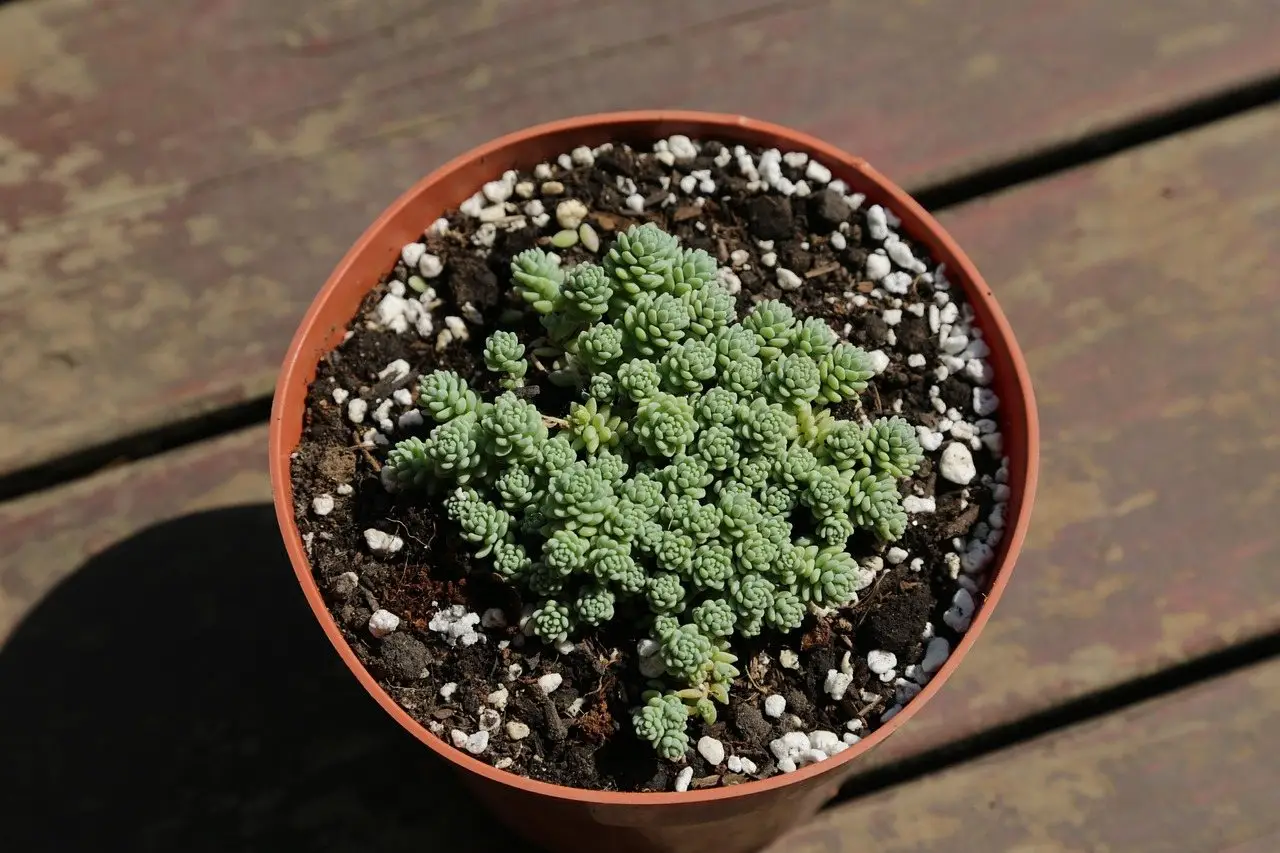
Stonecrop Varieties — 10 Sedums and Where Each Belongs
Stonecrop varieties split into upright and creeping sedums, and the 2 groups want different ground. 10 compared on height, hardiness and foot traffic.