
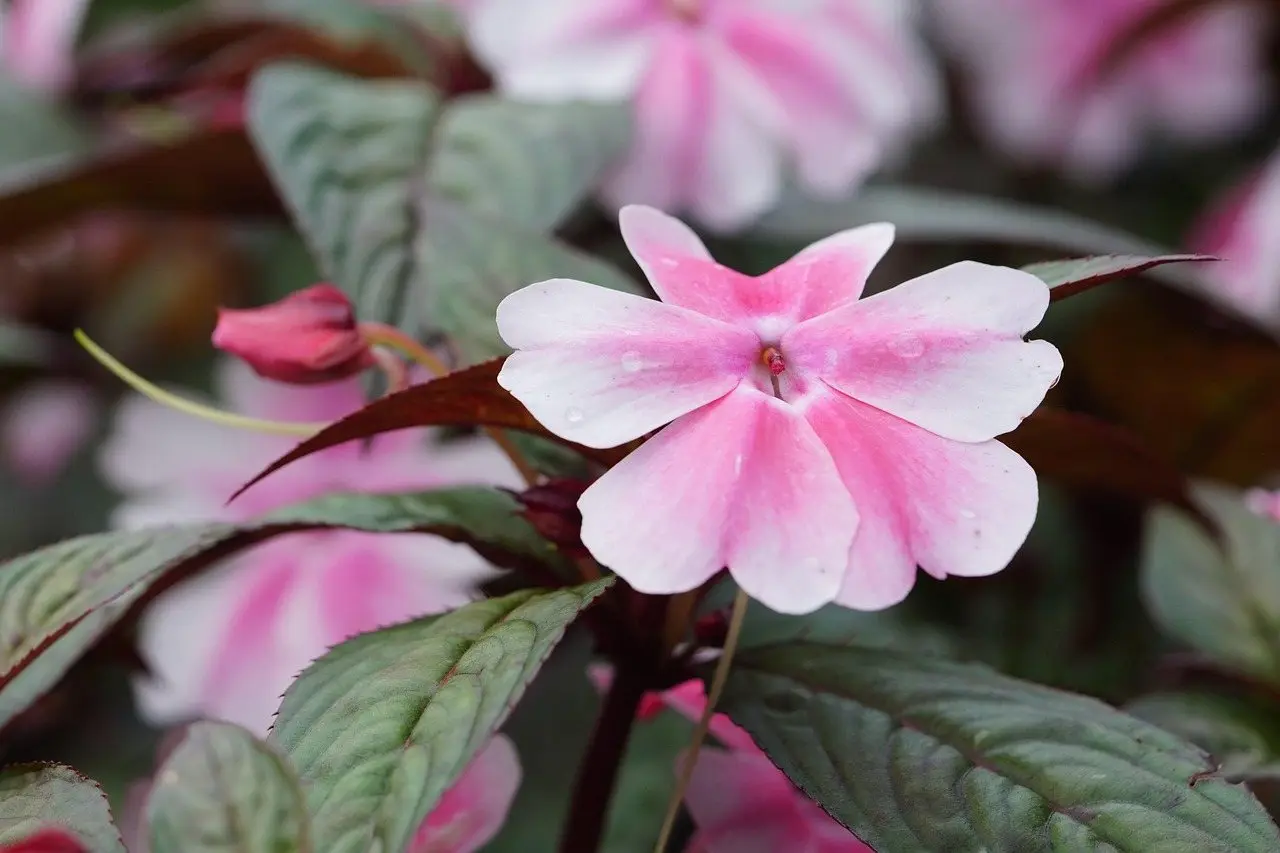
New Guinea Impatiens Care: Sun Tolerant, But Never Dry
Unlike bedding impatiens these take real sun and resist downy mildew. What they will not take is drying out — they collapse within hours.
 By
On this page
The whole plant is a trade: more sun tolerance and mildew resistance than bedding impatiens, in exchange for an absolute intolerance of drying out.
Why they exist in every garden centre now
Until about 2011, common bedding impatiens (Impatiens walleriana) were among the most widely planted summer annuals anywhere. Then impatiens downy mildew (Plasmopara obducens) spread widely, and plantings collapsed — leaves yellowing and dropping, stems bare within days, whole beds lost.
New Guinea impatiens are a different species (Impatiens hawkeri) and are highly resistant. That resistance, plus genuine sun tolerance, is why they took over the shelf space.
| New Guinea | Bedding (walleriana) | |
|---|---|---|
| Sun | Part to full sun | Shade to part shade |
| Downy mildew | Highly resistant | Highly susceptible |
| Flower size | Larger | Smaller, more numerous |
| Foliage | Larger, often bronze or variegated | Plain green |
| Drought tolerance | Very low | Low |
| Habit | Upright, bushier | Mounding |
Water is the entire care regime
They wilt harder and faster than almost anything else sold as a bedding plant. A container can go from fully upright to flat on the compost in a couple of hours on a hot afternoon.
The good news: a thorough soak usually brings them back within an hour or two with no lasting damage.
The bad news: repeated severe wilting scorches leaf margins, drops buds and reduces flowering for the rest of the season.
Reducing how often it happens:
- Bigger pots. The single largest improvement — small containers cannot hold enough
- Moisture-retentive compost, with water-retaining material if you use it
- Mulch the surface of containers as well as beds
- Afternoon shade in hot regions
- Group containers together so they shade each other and raise local humidity
- Water in the morning, thoroughly, rather than little and often
- Self-watering containers are genuinely worth it for this plant specifically
Judge the pot by weight
Surface compost dries long before the rootball does, and these plants are usually watered too lightly rather than too rarely.
Lift the pot. Light means water it thoroughly, until it runs out of the bottom.
Light, by climate
- Cool summers — full sun is fine and produces the best flowering
- Moderate — four to six hours, ideally morning
- Hot summers — morning sun, afternoon shade, no exceptions
- Deep shade — they survive and flower sparsely. Bedding impatiens are better there, if mildew allows
Feeding and shaping
- Balanced liquid feed every two weeks in containers, which exhaust nutrients quickly
- Slow-release granules at planting as a base
- Pinch the tips of young plants to encourage branching
- Cut back by a third if a mid-season plant gets leggy — new growth and flowers follow within a few weeks
- Deadheading is optional. They drop spent flowers themselves
Keeping them past the first frost
They are tender perennials grown as annuals and frost kills them outright.
Cuttings are the practical answer, and they root very easily:
- Take 8–10 cm tip cuttings in late summer, before any cold
- Strip the lower leaves
- Root in water or damp compost — usually one to two weeks
- Pot up and keep on a bright windowsill over winter
- Pinch them through winter to keep them bushy
- Harden off and plant out after the last frost
A handful of cuttings in August replaces a tray of bought plants the following May, which over a few seasons is the difference between an annual expense and a free one.
Common questions
Do New Guinea impatiens need sun or shade?
Why do my New Guinea impatiens keep wilting?
Are New Guinea impatiens resistant to downy mildew?
Do New Guinea impatiens come back every year?
Should you deadhead New Guinea impatiens?
Backyard Weekly
Know what to plant, week by week
Join the weekly email for seasonal jobs, fixes for what is going wrong, and gear worth buying.
Not ready to subscribe? The planting calendar is free and needs no email.
By subscribing you agree to our privacy policy. Grow In Backyard will never sell your address.
Keep reading
Problems With Hydrangeas in Pots: Why Yours Keeps Wilting
A potted hydrangea drinks more than any other shrub and wilts daily in summer. Pot size, compost and afternoon shade fix most of it.
Heart Leaf Philodendron Care: Why Yours Has Gone Leggy
Long bare stems with leaves only at the ends means too little light. Pinching, not more water, is what turns a straggly plant back into a full one.
How to Grow Cacti: Light, Grit and a Dry Winter Rest
Most cacti die from winter watering, not neglect. Gritty mix, the brightest window, a soak in summer and almost nothing from October to March.
Outdoor Plants in Pots: What Survives, and What Kills Them
A pot outdoors is a harsher place than the ground — hotter, drier, and colder in winter. How to pick plants and pots that cope, and get through the cold.