
How to Propagate Elephant Bush From Cuttings
Portulacaria afra roots from almost any piece of stem. Callus the cut for a few days, keep it dry, and resist watering — that is the whole method.
 By
On this page
Elephant bush is one of the easiest plants there is to propagate — and the only way to get it wrong is to be helpful. Callus the cut, plant it dry, and leave it alone.
The method, which is mostly waiting
- Cut 3–6 inches of firm stem with sterile scissors. Almost any piece works
- Strip the lowest inch of leaves — buried leaves rot and take the cutting with them
- Callus 3–5 days somewhere dry and shaded, until the cut end is dry and firm
- Dry gritty compost, not pre-watered. Push in about an inch
- No water for one to two weeks
- Warm and bright, 20–25 °C, out of direct midday sun
- Tug gently after 2–3 weeks. Resistance means roots
Both failure modes are the same instinct
A cutting planted with a fresh wet cut rots. A cutting watered in its first fortnight rots.
The plant is a succulent carrying its own water in the stem and leaves — it does not need any help during rooting, and help is the thing that kills it. If a cutting goes soft and dark at the base, that is rot, not thirst.
Not a jade plant
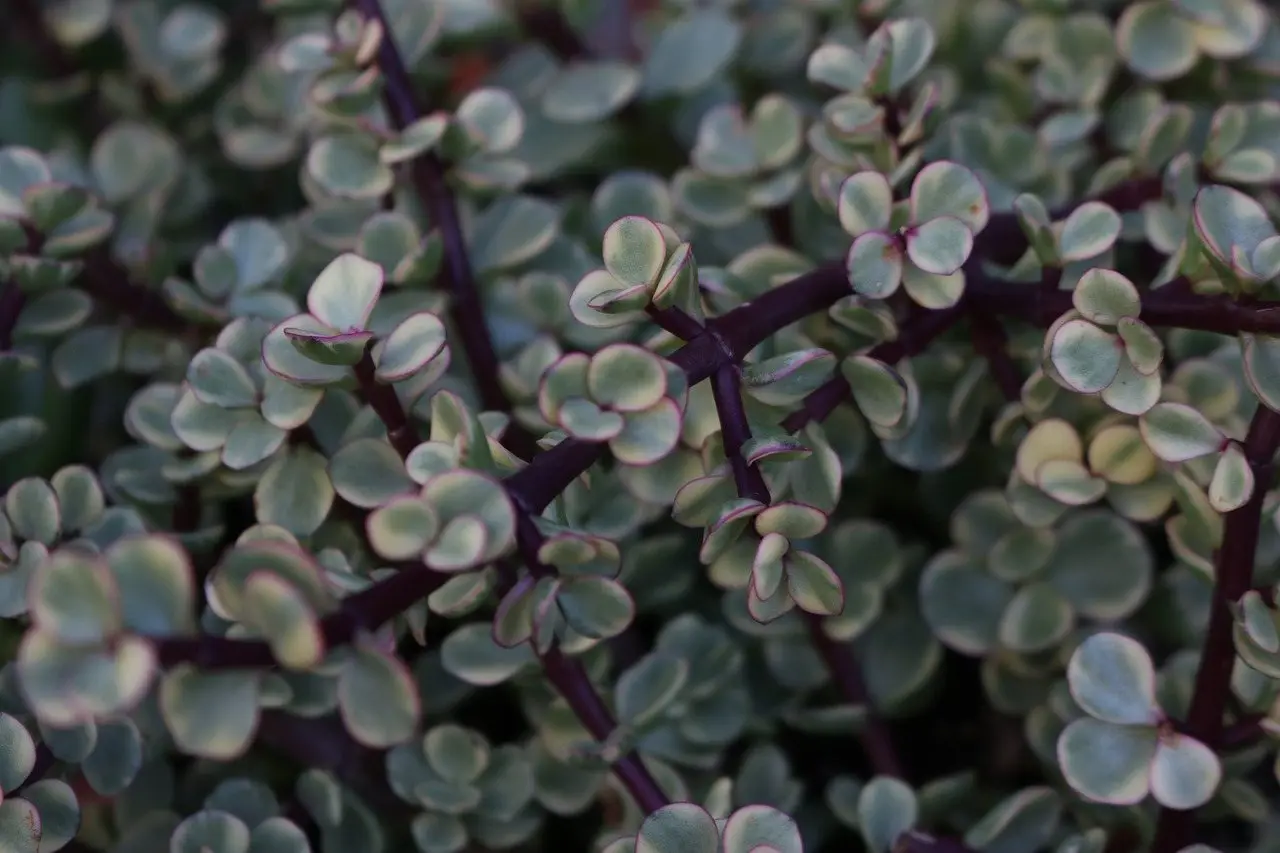
They look alike, are frequently sold interchangeably, and are not related at all.
| Elephant bush | Jade plant | |
|---|---|---|
| Species | Portulacaria afra | Crassula ovata |
| Leaves | Small, round, thin | Thicker, larger, oval |
| Stems | Reddish-brown | Grey-green |
| Habit | Faster, trailing | Stouter, tree-like |
| Edible? | Yes — eaten in southern Africa | No, mildly toxic to pets |
That last row is the one worth knowing. Elephant bush is spekboom, eaten in southern Africa, sharply lemony, used in salads and stews — and considered non-toxic to cats and dogs. Jade is mildly toxic.
If a pet is likely to chew a houseplant, the identification matters.
Making it look full
A single rooted cutting takes a long time to look like anything. Two things fix that:
Pot three to five cuttings together. They are genetically identical and grow at the same rate, so the pot fills evenly rather than looking like one plant and some stragglers.
Pinch the growing tips once established. Each pinch forces branching; left alone, elephant bush runs into long bare trailing stems.
If leaves are dropping
| What you see | Likely cause |
|---|---|
| Leaves fall at a touch, stems soft | Overwatering. Stop; check the roots |
| Sudden drop after a move | Light change or a cold draught |
| Leaves shrivel first, then drop | Genuine drought — rare |
Check the compost before doing anything. If it is damp, the answer is less water, not more — which is the same mistake in a different costume.
Step by step
- Time
- P30D
- Cost
- 0
- You need
- A healthy elephant bush, Gritty cactus or succulent compost, Small pots with drainage
- Tools
- Clean sharp scissors or secateurs
Take a stem cutting three to six inches long
Cut cleanly with sterile scissors, choosing firm growth rather than the softest tip. Almost any piece works, which is why this is one of the easiest succulents to propagate.
Strip the leaves from the lowest inch
Remove leaves that would otherwise sit buried in compost, where they rot and take the cutting with them.
Let the cut callus for three to five days
Stand the cutting somewhere dry and shaded until the cut end is dry and firm to the touch. Skipping this is the main cause of failure, because a fresh wet wound in compost is an open route for rot.
Fill a small pot with gritty compost and leave it dry
Cactus or succulent mix with added perlite or grit. Do not pre-water it — the cutting goes into dry compost.
Push the cutting in about an inch
Just deep enough to stand up. Firm the compost lightly so no air pocket remains around the base.
Give no water for one to two weeks
The cutting carries its own water in the stem and leaves. Watering now is what rots it, and the plant does not need help.
Keep it warm and in bright indirect light
Around 20 to 25 C and good light without direct midday sun, which scorches an unrooted cutting.
Water lightly once roots have formed
Tug gently after two to three weeks. Resistance means roots. Then water sparingly and let the compost dry out completely between waterings.
Pinch the growing tips once it is established
Pinching forces branching and keeps the plant bushy rather than letting it run into long bare stems.
Pot several cuttings together for a fuller plant
Three to five rooted cuttings in one pot look dense far sooner than a single cutting will, and they are genetically identical so they grow at the same rate.
Common questions
How do you propagate elephant bush?
What is the difference between elephant bush and jade plant?
Is elephant bush edible?
Why are my elephant bush leaves dropping?
How long does an elephant bush cutting take to root?
Can you root elephant bush in water?
Backyard Weekly
Know what to plant, week by week
Join the weekly email for seasonal jobs, fixes for what is going wrong, and gear worth buying.
Not ready to subscribe? The planting calendar is free and needs no email.
By subscribing you agree to our privacy policy. Grow In Backyard will never sell your address.
Keep reading
How to Grow a Jade Plant: Underwater It and Give It Sun
Jade plants live for decades on neglect. Soak then dry completely, full sun for solid growth, and repot rarely — overwatering is the only real killer.
How to Propagate Kalanchoe: Leaves, Cuttings or Plantlets
Most kalanchoes root from a leaf or a stem tip after a few days of callusing. One species does the work for you and drops ready-made plantlets.
How Long Can Succulents Live? Months to Centuries
Succulent lifespan runs from one year to several hundred, and it is set by species, not by care. What yours is, and what actually shortens it.
How to Propagate Peperomia: Leaf Cuttings That Work
Most peperomias root from a single leaf with its stalk attached, in water or compost. Petiole length and humidity decide whether it works.