How to Grow Peppercorns: A Tropical Vine in a Pot
Black pepper is a climbing vine needing warmth, humidity and three years before it fruits. What it takes indoors, and why all four peppercorns are one plant.

On this page
Black pepper is not related to chilli. It is Piper nigrum, a tropical climbing vine, and the peppercorn is its dried fruit.
Growing one at home is entirely possible and takes three to four years to fruit. It is a curiosity project rather than a route to not buying pepper, and worth knowing that before you start.
One vine, four peppercorns
This is the genuinely interesting part, and it is rarely explained.
| Peppercorn | Picked | Processing | Flavour |
|---|---|---|---|
| Green | Unripe | Preserved fresh — brined, freeze-dried | Mild, fresh, herbal |
| Black | Unripe | Blanched, then sun-dried until wrinkled and black | Pungent, the familiar one |
| White | Fully ripe | Soaked until the outer skin rubs off | Earthier, less aromatic, hotter |
| Red | Fully ripe | Preserved fresh or freeze-dried | Sweet, fruity, rare |
| Pink | — | A different plant entirely | Sweet, resinous — from Schinus |
Black and white pepper being the same fruit surprises most people. The difference is only whether the skin is left on and dried, or soaked off.
Pink peppercorns are not pepper at all — they come from Schinus trees, unrelated, and they are sold alongside pepper purely because they look the part.
What the vine needs
- Temperature: 75 to 85°F. Below about 50°F it suffers badly, and frost kills it.
- Humidity above 60 percent. This is the hardest condition to meet indoors, and dry central heating is what usually kills a pepper vine.
- Bright indirect light. It grows naturally under a forest canopy — direct midday sun scorches it.
- Consistently moist but free-draining soil, rich in organic matter.
- A support. It climbs by adventitious roots, like a philodendron, so a moss pole or a rough trellis works and a smooth cane does not.
Realistically that means a greenhouse or conservatory outside the tropics. A humid bathroom windowsill is the best a normal house offers, and it is marginal.
It climbs the way a houseplant aroid does
Piper nigrum grips with small roots that emerge along the stem, rather than twining like a bean or gripping with tendrils like a cucumber. That means it needs something it can root into — a moss pole, a rough bark slab, or coarse netting. Given a smooth cane it simply flops, which is a common reason a young plant looks unhappy for no obvious reason.
Starting one
Buy a plant or a rooted cutting. This is the realistic route.
Supermarket peppercorns will not germinate — they have been blanched and dried, or sun-dried at temperatures that kill the embryo. Fresh seed works but must be sown immediately, germinates slowly and unevenly over a month or more, and adds a year before fruiting.
From cuttings, which is how it is done commercially: take a stem section with three or four nodes from a fruiting vine, remove the lower leaves, and root it in a warm, humid, free-draining mix.
Growing it on
Pot: deep, with generous drainage. Repot every two to three years.
Compost: rich and free-draining — potting mix with added bark and perlite. See potting soil for the balance.
Water: keep consistently moist but never waterlogged. Roots rot readily.
Humidity: mist, group plants together, use a pebble tray, or keep it somewhere naturally humid.
Feed: a balanced liquid feed every two to four weeks through the growing season, less in winter.
Train it upward as it grows, tying loosely until the aerial roots take hold. Vines reach 12 feet or more in the wild; in a pot, keep it to what you can manage and prune the tip to encourage side shoots.
Fruiting and harvesting
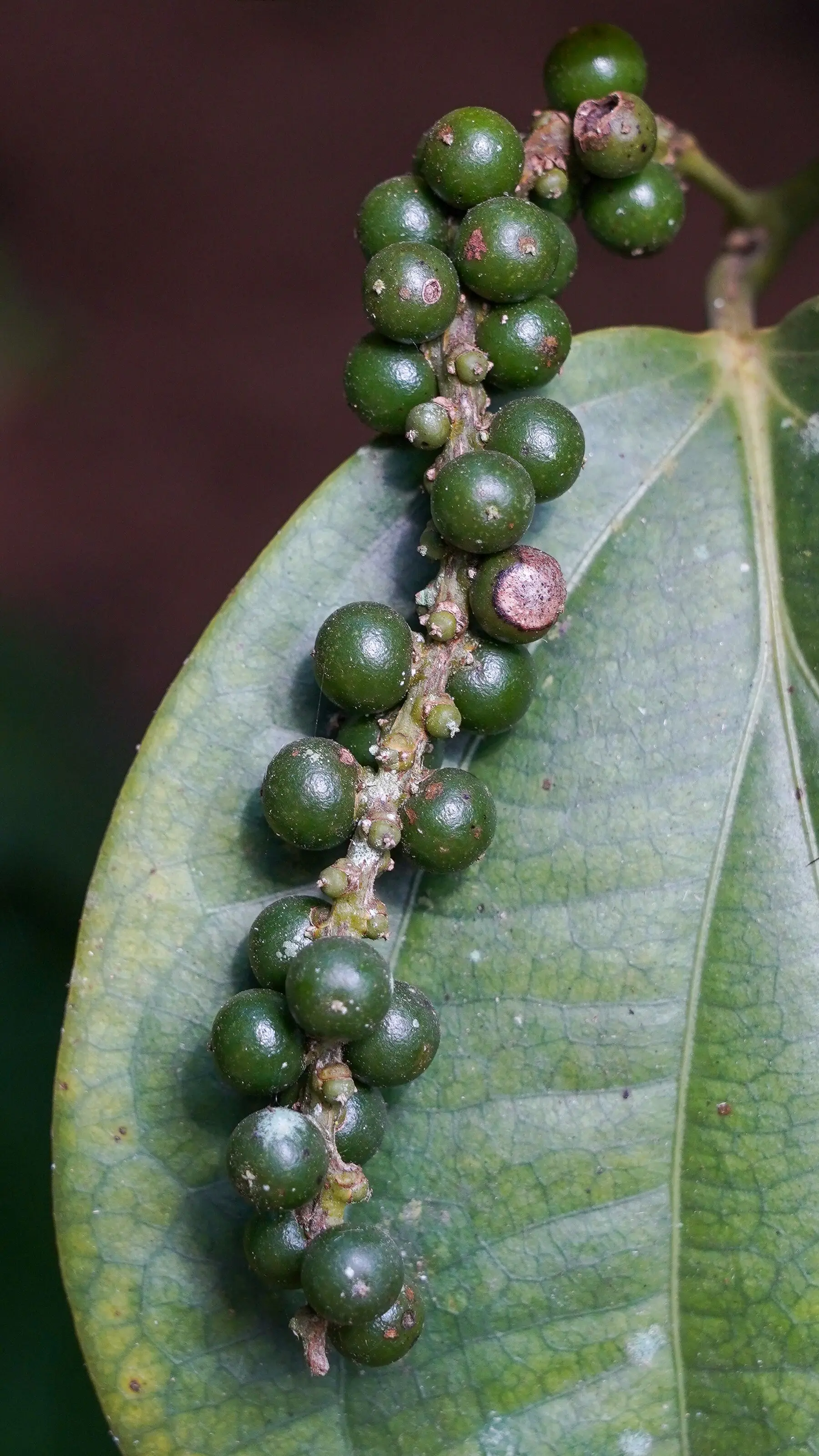
After three or four years, the vine produces spikes of small green berries, hanging in catkin-like strings.
Harvest the whole spike when the first one or two berries on it turn red — that indicates the rest are mature. Waiting for all of them to redden means the earliest ones drop.
For black pepper: strip the green berries, blanch briefly in hot water — which triggers the browning — then dry in the sun for several days until they shrivel and blacken.
For white pepper: let the berries ripen fully to red, soak them for a week or so until the outer skin softens, then rub it away and dry the pale inner seed.
For green peppercorns: pick unripe and preserve immediately in brine or vinegar; they do not dry well.
A mature vine produces for fifteen to twenty years, with yield increasing for the first seven or eight.
An honest expectation
A single container vine gives a small harvest — enough to grind fresh and be pleased about, not enough to replace a jar.
What you get instead is one of the more interesting plants you can grow indoors, and a permanent answer to what white pepper actually is.
Common questions
Can you grow peppercorns at home?
What is the difference between black, white, green and red peppercorns?
Can you grow black pepper from supermarket peppercorns?
How long does a pepper vine take to fruit?
What conditions does a pepper vine need?
How do you harvest and process peppercorns?
Backyard Weekly
Know what to plant, week by week
Free planting calendar. Join the weekly email for seasonal jobs, fixes for what is going wrong, and gear worth buying.
Set MONETIZATION.email.endpoint in src/config/site.ts to enable this form.
By subscribing you agree to our privacy policy. Grow In Backyard will never sell your address.
Keep reading
Types of Hot Peppers, Ranked by Heat and What They Taste Like
Scoville is only half the story — a habanero and a serrano at similar heat behave completely differently in a pan. Thirty peppers by heat, flavour, and best use.
How to Grow Ginger From a Piece of Supermarket Root
Ginger grows readily from a shop-bought rhizome, given warmth, humidity and a wide shallow pot. Why it sprouts sideways, and the eight to ten months it needs.
Outdoor Plants in Pots: What Survives, and What Kills Them
A pot outdoors is a harsher place than the ground — hotter, drier, and colder in winter. How to pick plants and pots that cope, and get through the cold.
How Deep to Plant Potatoes (And Why Hilling Matters More)
Four inches at planting, then hill as they grow. Why planting deep in cold spring soil backfires, and how depth differs in containers and no-dig beds.