How to Grow Peas: Sow Cold, Support Early, Pick Often
Peas are a cool-season crop that stops in heat, so sowing early beats sowing well. Support at three inches, and the sugar-to-starch clock after picking.
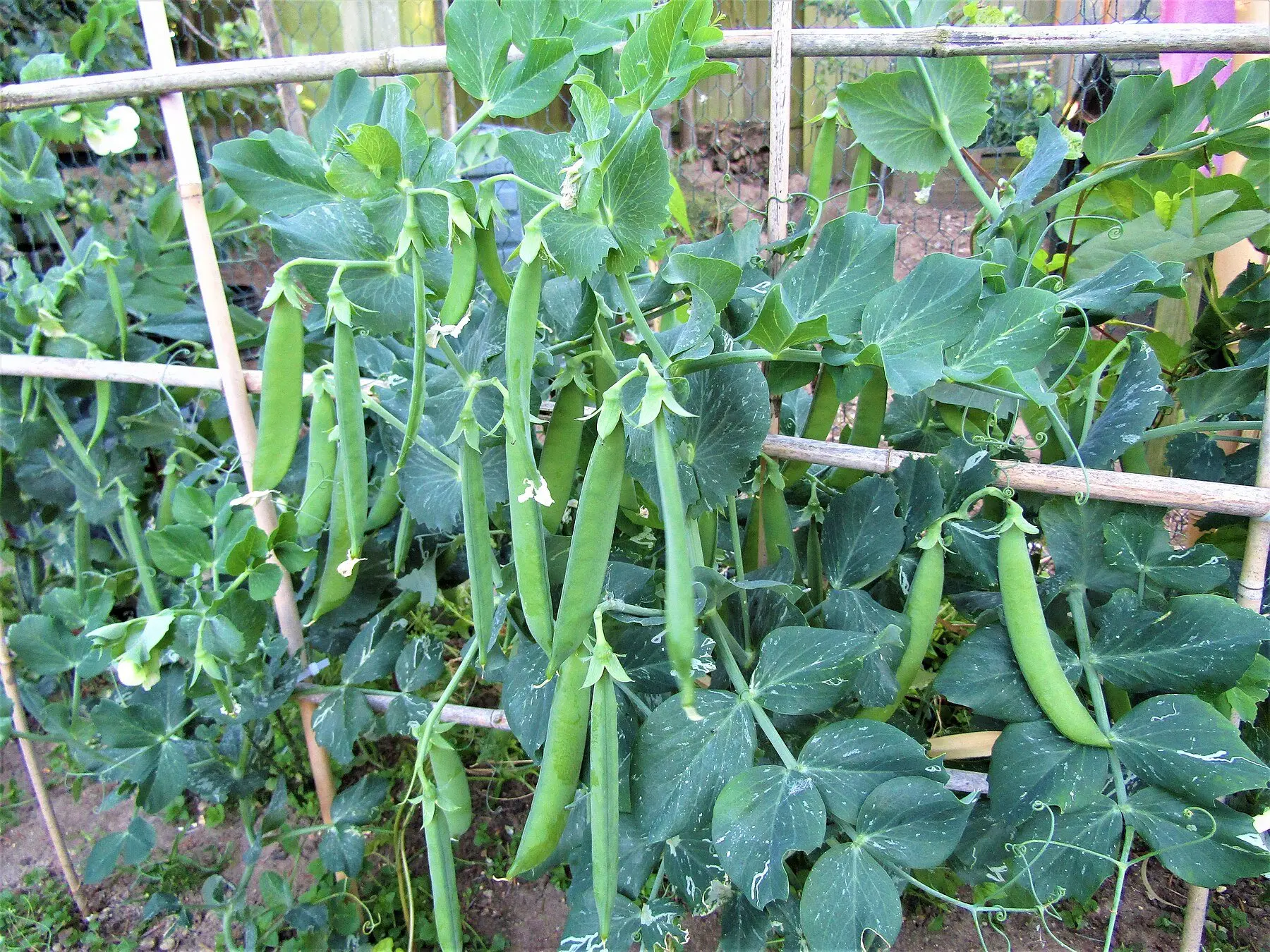
,_Trimingham,_Norfolk.JPG)
On this page
Peas are one of the few crops where being early beats being organised. They germinate in cold soil, tolerate frost, and stop producing once summer heat arrives — so a rough sowing in March outperforms a careful one in May.
The three types
They grow identically. The difference is what you eat and when you pick.
| Type | What you eat | Pick when | Notes |
|---|---|---|---|
| Garden / shelling | The peas; pod discarded | Pods full and rounded, still bright | Classic; most work per plate |
| Snow / mangetout | The whole flat pod | Pod full length, peas barely formed | Fastest to crop |
| Sugar snap | The whole plump pod | Pod rounded and crisp | Best fresh eating; needs stringing on some varieties |
| Petit pois | Small sweet peas | Pods slim and young | A picking stage, not a species |
Heights vary independently of type: dwarf varieties at 2 to 3 feet, tall at 5 to 6. Tall varieties crop over a longer period and need real support.
Sowing
Timing: as soon as the soil is workable and not waterlogged. Peas germinate from around 40°F. They tolerate light frost once up, though a hard freeze on flowering plants will damage them.
In mild climates an autumn sowing overwinters as small plants and crops several weeks earlier than anything sown in spring.
How: two inches apart, one to two inches deep, in a flat-bottomed drill about six inches wide — sowing in a band rather than a single line lets the plants support each other and uses the space better. Rows 18 to 24 inches apart.
Soil: moisture-retentive, well-drained, pH 6.0 to 7.5. Compost dug in helps, but do not add nitrogen — peas make their own, and excess nitrogen gives leafy plants with few pods.
Mice and pigeons take more pea seed than you would think
Mice dig up and eat sown peas, and pigeons strip the seedlings the moment they emerge. Both are far more common causes of a failed row than germination problems. Cover the row with netting or fleece from sowing until the plants are established, or start peas in lengths of guttering under cover and slide the whole row into a drill once they are a few inches tall.
Support, early
Almost every pea needs support, including varieties sold as self-supporting — those still sprawl, and pods on the ground get eaten by slugs.
Put it in when the seedlings are about three inches tall. Once tendrils start reaching they will grab each other instead, and untangling them later breaks stems.
What works: pea netting on posts, twiggy hazel or birch prunings pushed in along the row, wire mesh, or a trellis. Peas climb by tendril and need something narrow to grip — they cannot climb a smooth post or a wide plank, which is the same requirement as cucumbers.
Water and feeding
Water matters most at flowering and pod fill. Before that, peas are fairly self-sufficient. Once flowers appear, a deep soak once or twice a week makes a substantial difference to pod set and size.
Do not feed nitrogen. Peas host rhizobia bacteria in root nodules that fix atmospheric nitrogen. Adding more produces foliage at the expense of pods.
An inoculant — a cheap powder dusted onto damp seed at sowing — is worth using in ground where legumes have not grown recently, because the bacteria have to be present for nodulation to happen. In a bed that grew peas or beans in the last few years it makes little difference.
Mulch once plants are up. Peas are shallow-rooted and keeping the roots cool extends the season by a couple of weeks in a warm spring.
Picking
Every day or two, once cropping starts. This is not fussiness — a pod left to mature and set seed tells the plant it has reproduced, and production slows or stops. Consistent picking is what turns a two-week crop into a six-week one.
Pick from the bottom up, and hold the vine with one hand while pulling with the other; pea stems snap easily.
Peas start converting sugar to starch within hours
This is why shop peas taste nothing like garden peas, and why frozen peas often taste better than fresh ones — commercial peas are frozen within hours of picking. Sugar begins converting to starch almost immediately at room temperature. Pick peas immediately before you cook them, refrigerate them at once if you cannot, and eat them the same day.
When they finish
Heat ends the crop. Once temperatures hold above about 80°F, flowering stops and existing pods toughen.
Cut the plants off at soil level rather than pulling them up. The nitrogen fixed in the root nodules stays in the ground and feeds whatever you plant next — which is why peas are one of the best things to precede a hungry crop like brassicas in a rotation. Top growth goes on the compost heap.
For a second crop, a fast variety sown in midsummer sometimes crops in early autumn, though the odds are worse than a spring sowing.
What goes wrong
Powdery mildew — white coating in late season, common as the weather warms. Airflow helps; mostly it signals the crop is ending.
Pea moth — maggots inside the pods. Cover with fine mesh during flowering, or sow early or late to miss the flight period.
Mice and pigeons — see above; the most common causes of failure.
Yellowing lower leaves — often just age as the crop finishes, but check for waterlogging, which peas dislike strongly.
Common questions
When should you plant peas?
Do peas need support?
What is the difference between garden peas, snow peas and sugar snap peas?
Should you inoculate pea seed?
Why did my peas stop producing?
Should you pull peas up when they finish?
Backyard Weekly
Know what to plant, week by week
Free planting calendar. Join the weekly email for seasonal jobs, fixes for what is going wrong, and gear worth buying.
Set MONETIZATION.email.endpoint in src/config/site.ts to enable this form.
By subscribing you agree to our privacy policy. Grow In Backyard will never sell your address.
Keep reading
How to Grow Carrots: Stones, Thinning, and Carrot Fly
Forked carrots come from obstacles and fresh manure, not bad seed. Sowing direct into stone-free soil, why you should barely thin, and the fly barrier that works.
Companion Plants for Potatoes, and What Ruins the Crop
Potatoes are greedy, shallow-rooted and need earthing up, which rules out most neighbours. What genuinely fits alongside them, and the two crops to keep well away.
Cucumber Trellis Ideas, and Why Vertical Growing Wins
Cucumbers off the ground give straighter fruit, less mildew and half the footprint. Five trellis designs, the height you actually need, and how to train the vines.
How Deep to Plant Potatoes (And Why Hilling Matters More)
Four inches at planting, then hill as they grow. Why planting deep in cold spring soil backfires, and how depth differs in containers and no-dig beds.