
How to Grow Parsley: Slow Seed, Long Season
Parsley germinates in three to four weeks and tests everyone's patience. Soaking, why it resents transplanting, and what to do when it bolts in year two.
 By

On this page
Parsley is easy to grow and hard to start. The seed takes three to four weeks to germinate, and most failures are simply people concluding, at day twelve, that nothing is coming.
Get past that and it is among the most productive herbs in the garden — a long season, tolerant of cold, and happy to be cut repeatedly.
Getting it to come up
The seed coat contains furanocoumarins that suppress germination until enough water has leached them away. That is the delay, and it is deliberate on the plant’s part.
Soak the seed overnight in warm water before sowing. It genuinely helps.
Then the part that matters more: the seedbed cannot dry out. Four weeks is a long time to keep a surface damp, and a single hot dry day mid-wait kills germinating seed you cannot see. Cover the row with damp burlap, board, or a thin mulch until seedlings appear, and check daily.
Sow direct, ¼ inch deep, once soil is above about 50°F. Thin to 6–8 inches apart.
Sow a radish alongside the row
Radish germinates in four days and marks the row so you do not hoe through your parsley while waiting. It is pulled long before the parsley needs the space.
If your season is too short to direct sow, use deep modules or paper pots and plant out while small. Parsley’s taproot makes it a poor transplanter — disturbed roots produce plants that sulk, or bolt in their first year.
Growing it
Sun to part shade. Full sun in cool climates, afternoon shade where summers are hot.
Soil: moisture-retentive, enriched with compost. Parsley is hungrier than most herbs and does not want the lean, sharp conditions that suit rosemary or thyme.
Water consistently. Drought makes it bitter and tough, and encourages bolting.
Feed lightly every few weeks through the growing season with a balanced or nitrogen-leaning feed — you are growing leaves.
Mulch to hold moisture and keep the soil cool.
Containers: at least 8–10 inches deep for the taproot. One plant per 8-inch pot.
Harvesting
Cut whole outer stems at the base. New growth comes from the centre, so removing outer stems leaves the growing point working. Snipping leaf tips off the top does the opposite — it removes the youngest growth and leaves a ragged plant.
Never more than a third at once, and harvest often: a regularly cut plant stays more productive than one left to its own devices.
Parsley is cold-tolerant and often keeps producing through light frosts, which makes it one of the last useful things standing in the autumn garden. Under a cloche it can run most of the winter in mild areas.
Year two
Parsley is a biennial. Year one is leaves. Year two it sends up a flower stalk, sets seed, and dies — and once that stalk rises, leaf production stops and the remaining foliage turns bitter.
This is not a problem to solve. It is the plant’s life cycle.
Sow fresh plants every year so you always have a first-year crop. And consider letting one second-year plant flower: parsley is an umbellifer, and the flowers are excellent for hoverflies and parasitic wasps, whose larvae eat aphids. A plant that has stopped being useful in the kitchen can still earn its space.
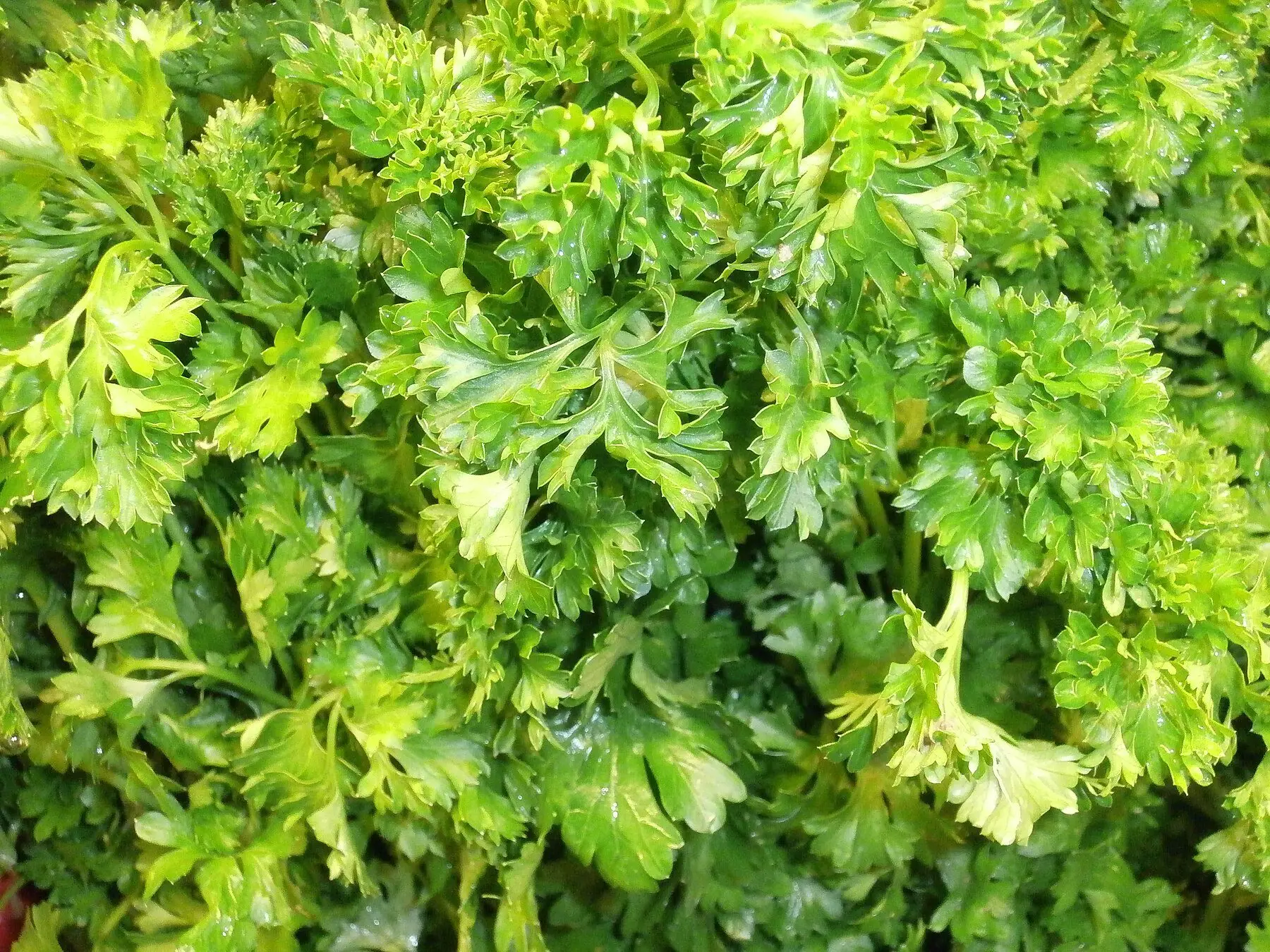
Flat-leaf or curly
| Flat-leaf (Italian) | Curly | |
|---|---|---|
| Flavour | Stronger, cleaner | Milder |
| Best for | Cooking | Garnish, holds shape |
| Cold tolerance | Good | Slightly better |
| Growing | Identical | Identical |
If you grow one, grow flat-leaf. It is the more useful herb in the kitchen by a distance.
Common questions
How long does parsley take to germinate?
Should you start parsley indoors or sow direct?
What is the difference between flat-leaf and curly parsley?
Why did my parsley suddenly flower and turn bitter?
How do you harvest parsley so it keeps growing?
Can you grow parsley indoors?
Backyard Weekly
Know what to plant, week by week
Join the weekly email for seasonal jobs, fixes for what is going wrong, and gear worth buying.
Not ready to subscribe? The planting calendar is free and needs no email.
By subscribing you agree to our privacy policy. Grow In Backyard will never sell your address.
Keep reading
How to Grow Cilantro Without It Bolting in Three Weeks
Cilantro bolts on heat and day length and nothing stops it, so the answer is succession sowing. Direct sowing, why it hates transplanting, and the seed crop.
How to Grow Basil: Pinch It Early, Pinch It Often
Basil is easy to grow and easy to lose to one mistake — letting it flower. How to sow it, where to put it, and the pinching routine that keeps it producing.
How to Harvest Basil So the Plant Gets Bushier
Cut above a leaf pair, never strip the bottom leaves, and pinch the flowers. The harvesting method that doubles the size of a basil plant instead of ending it.
How to Grow Rosemary: Drainage First, Water Almost Never
Rosemary is killed by wet roots far more often than by cold. Soil, siting, the pruning rule that avoids dead patches, and overwintering in a cold climate.