
How to Grow Mustard for Leaves, Seed or Green Manure
Mustard germinates in days and crops in 40. Spacing and timing for salad leaves, seed harvest and a soil-conditioning cover crop.
 By
On this page
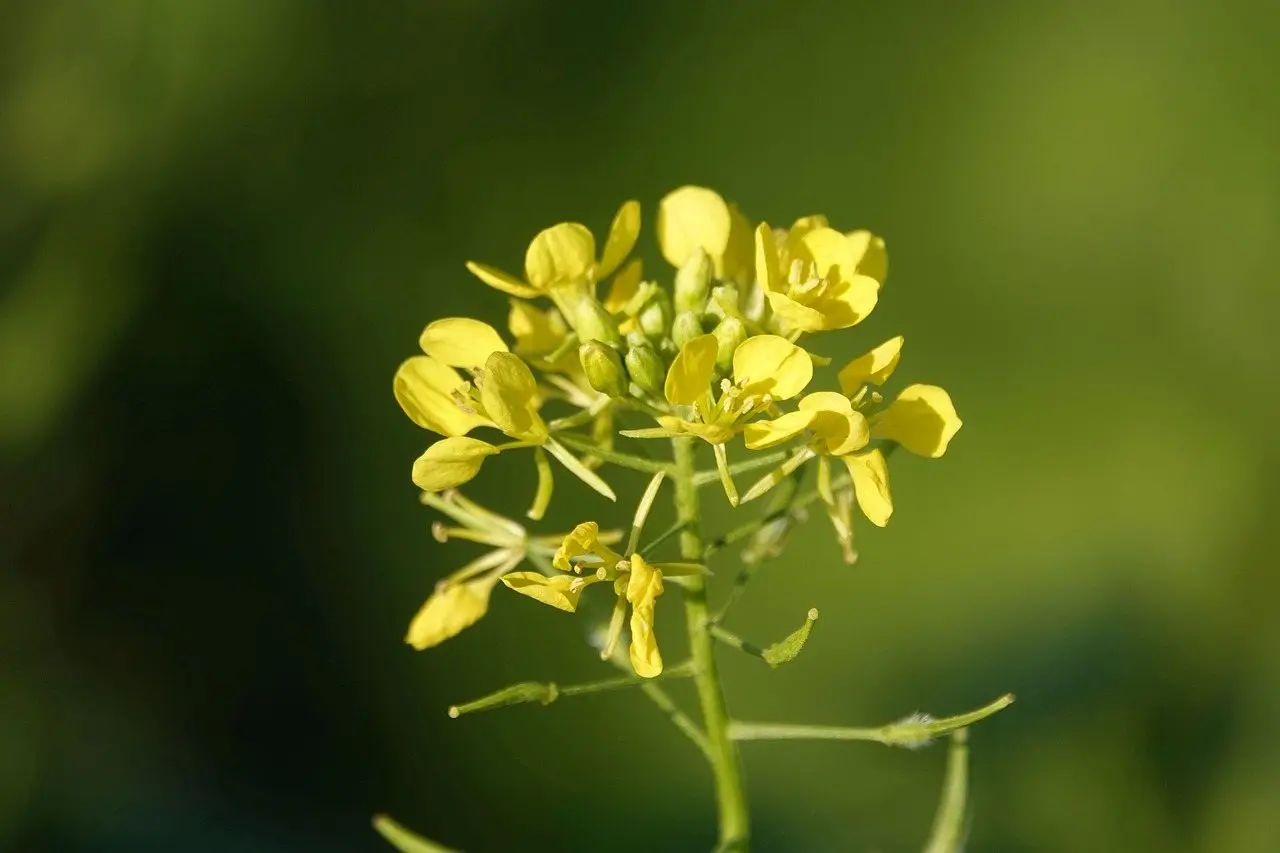
Mustard is the fastest useful thing in most vegetable gardens: germinating in under a week, leaves in a month, and useful as a green manure between crops.
Sowing
| purpose | spacing | sowing depth | timing |
|---|---|---|---|
| Baby leaf | 2–3 in | 1/4–1/2 in | Early spring, late summer, every 2–3 weeks |
| Full-size leaf | 6–9 in | 1/2 in | Early spring, late summer |
| Seed | 12 in | 1/2 in | Spring, for autumn harvest |
| Green manure | Broadcast thickly | Raked in | After a crop comes out, late summer |
Rows nine to twelve inches apart. Thin in two stages and eat the thinnings.
Growing on
- Full sun to light shade; afternoon shade helps in heat
- Consistent moisture. Drying out triggers bolting and bitterness
- Fertile soil — it is a leafy brassica and responds to compost
- Watch for flea beetle, which shot-holes the leaves; row cover is the answer
- Cabbage white caterpillars eat it too, despite the heat in the leaves
Succession beats quantity
A short row every two to three weeks gives continuous tender leaves. One big sowing produces a glut that bolts all at once.
Harvesting leaves
- Baby leaf: scissor-cut an inch above soil level, two or three cuts per sowing
- Full-size: take outer leaves at the base, leaving the growing point — the same method as lettuce
- Flavour: mildest when young and cool-grown; heat and age both increase the pungency
- Flower buds and shoots are also edible, like sprouting broccoli, once it starts to bolt
Harvesting seed
- Watch the lower pods — pale brown and rattling
- Cut whole stems before the pods split
- Head-down in a paper bag or upturned bucket, somewhere dry and airy, for one to two weeks
- Thresh by rubbing the pods between your hands
- Winnow the chaff off in a light breeze
- Store dry and airtight
Mustard shatters readily and self-seeds freely. Expect volunteers next year wherever you grew it.
As a green manure
- Sow thickly after an early crop comes out
- Cut and dig in while green, at six to eight weeks, before flowering
- Biofumigation: chopping the green tissue releases glucosinolates that suppress some soil pests and nematodes
- Rotation caution: it is a brassica. Do not use it before cabbages, or where clubroot is present
Common questions
How long does mustard take to grow?
How far apart should mustard be spaced?
Does mustard bolt in hot weather?
When do you harvest mustard seed?
Is mustard a good cover crop?
What is the difference between mustard greens and mustard seed varieties?
Backyard Weekly
Know what to plant, week by week
Join the weekly email for seasonal jobs, fixes for what is going wrong, and gear worth buying.
Not ready to subscribe? The planting calendar is free and needs no email.
By subscribing you agree to our privacy policy. Grow In Backyard will never sell your address.
Keep reading
How to Harvest Lettuce So It Grows Back Again
Cut-and-come-again gets three or four crops from one sowing, but only if you cut above the growing point. Where that is, and why lettuce turns bitter.
Cover Crop for Raised Beds: Which Ones Suit a Small Bed
Most cover crop advice assumes a field and a tractor. What works in a four-by-eight bed, how to kill it without digging, and the timings that matter.
Fast Growing Seeds: What Sprouts in Days, Not Weeks
Radish, cress, beans and sunflowers germinate in 2 to 5 days. A table by germination time and days to harvest, for gardens and for children.
How to Grow Onions: Day Length Decides Your Bulb Size
Onions bulb on day length, not on age — so the wrong variety for your latitude never sizes up. How to pick the right type, plant it, and feed it to a full bulb.