
How to Grow Kohlrabi: Fast, Hardy and Best Picked Small
Kohlrabi swells above ground in 45 to 60 days. Pick it at tennis ball size — left longer it goes woody, which is why most people dislike it.
 By
On this page
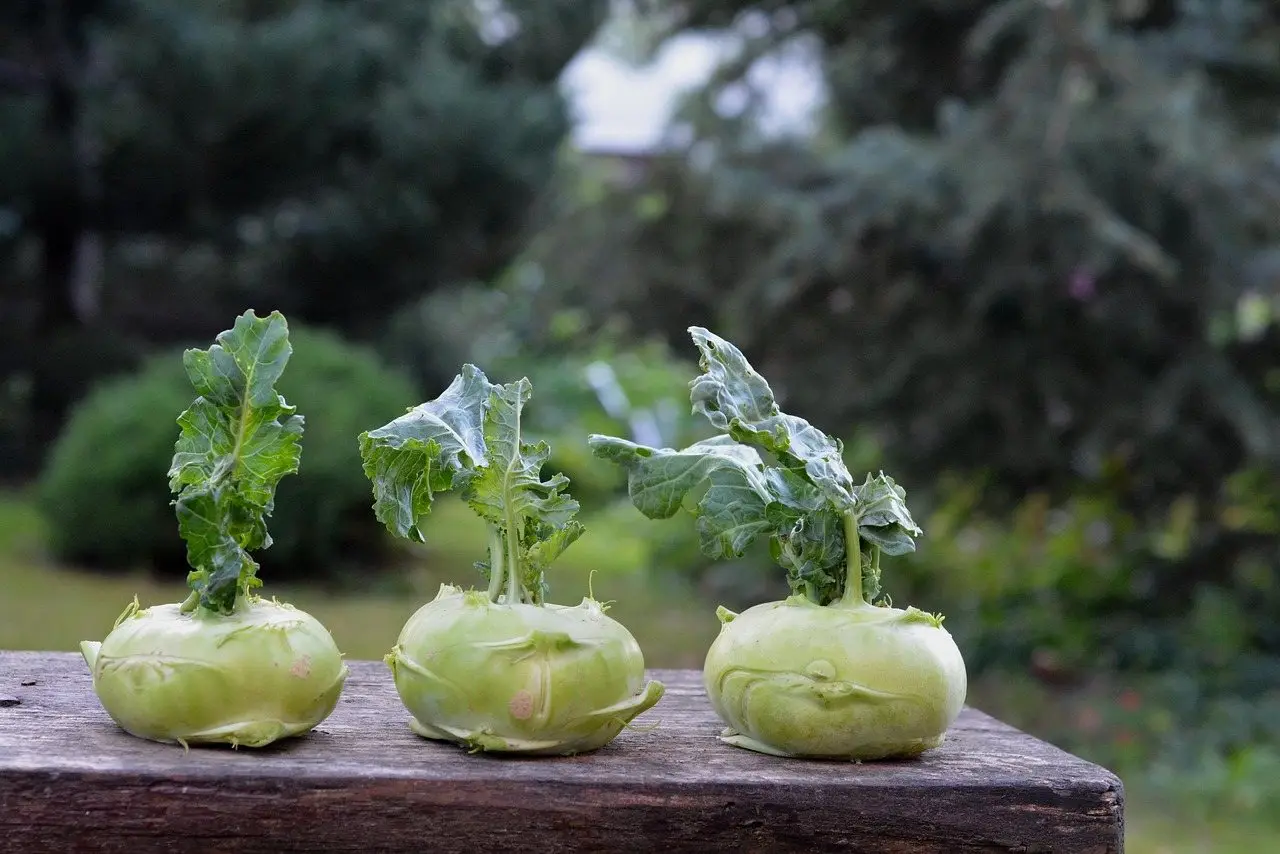
Kohlrabi is quick, hardy and genuinely easy. The reason people dislike it is almost always the same: it was left on the plant too long. Pick at tennis ball size and it is crisp and sweet; pick it at grapefruit size and it is wood.
Sow in the cool, not the heat
| Sowing | Harvest | Notes |
|---|---|---|
| Spring, 4–6 wks before last frost | Early summer | Good. Beat the heat |
| Midsummer | — | Avoid. Bolts, goes woody |
| Late summer | Autumn | Best flavour — cool finish |
Kohlrabi is a cool-season brassica. In heat it bolts — sends up a flower stem — and the bulb coarsens at the same time.
Sow a short row every two to three weeks rather than one long row. It matures fast and all at once, so successional sowing is what turns it from a glut into a supply.
The harvest size rule
This matters more than anything else on the page.
Two to three inches across. Tennis ball. At that size the flesh is crisp, mild and sweet — somewhere between an apple and a broccoli stem, good raw.
Left to keep swelling, the centre becomes fibrous and the flavour turns harsh. A grapefruit-sized kohlrabi is not a bigger harvest, it is a worse one.
The exception is the giant storage varieties — Superschmelz and similar — which are bred to stay tender at a much larger size. If you are growing a standard variety, pick small.
Mesh at sowing, not after
Flea beetles shred brassica seedlings into lace within days, and cabbage whites arrive later. Fine insect mesh over hoops, fitted when you sow, excludes both and removes any need to spray.
Kohlrabi seedlings are small and fast — a flea beetle attack in week one can end the row before it establishes.
Water is the texture
The other cause of woodiness is irregular watering. A plant that dries hard and is then soaked lays down tough growth rings, and that texture does not cook out.
- About an inch a week, more in heat
- Mulch once seedlings are established, to even out soil moisture and keep roots cool
- Direct sow rather than transplant, since root disturbance is another check that coarsens the bulb
Do not earth it up
Kohlrabi is a swollen stem, not a root. It sits on the surface with leaves radiating from it.
People reach for the hoe out of habit with root crops and bury it — which causes rot. It needs no support and no earthing up.
Use the leaves
The plant makes a lot of foliage for a fairly small bulb, and the leaves are as good as kale, slightly milder.
Young leaves whole; strip older ones off their midribs. Treating them as a crop rather than waste roughly doubles what the bed returns.
Step by step
- Time
- P55D
- Cost
- 10
- You need
- Kohlrabi seed, Compost, Mulch
- Tools
- Insect mesh, Hand fork
Sow in spring or late summer, not midsummer
Kohlrabi is a cool-season brassica. Sow four to six weeks before the last frost for a spring crop, or in late summer for autumn. Midsummer sowings bolt and go woody.
Choose a sunny bed with steady soil
Six hours of sun and plenty of compost. Kohlrabi is fast-growing and needs consistent moisture and fertility to swell smoothly rather than in fits and starts.
Sow half an inch deep
Direct sowing is better than transplanting, since any root check during growth is one of the causes of a woody bulb. Sow a short row every two to three weeks for a continuous supply.
Thin to 4 to 6 inches apart
Closer than most brassicas, because you are growing a swollen stem rather than a head. Crowding gives small bulbs, so thin properly rather than leaving them bunched.
Cover with insect mesh at sowing
Flea beetles shred brassica seedlings and cabbage whites follow later. Mesh fitted before anything arrives is far more effective than treating afterwards.
Water consistently, about an inch a week
This is the single biggest factor in texture. A plant that dries out and is then soaked produces a tough, fibrous bulb that no amount of cooking rescues.
Mulch once seedlings are established
Mulch evens out soil moisture and keeps the roots cool, both of which slow bolting in warm spells.
Do not earth up the swelling bulb
Kohlrabi swells above the soil line. Burying it causes rot, and it does not need support — this is a stem, not a root vegetable.
Harvest at 2 to 3 inches across
Tennis ball size, usually 45 to 60 days from sowing. This is the step that decides whether you enjoy it; larger bulbs turn woody and bitter.
Cut at the base and keep the leaves
Slice the stem at soil level. The leaves are edible and cook like kale, so there is no reason to compost them.
Common questions
How long does kohlrabi take to grow?
When should you harvest kohlrabi?
Why is my kohlrabi woody?
How far apart should kohlrabi be spaced?
Can you eat kohlrabi leaves?
Does kohlrabi grow above or below ground?
Backyard Weekly
Know what to plant, week by week
Join the weekly email for seasonal jobs, fixes for what is going wrong, and gear worth buying.
Not ready to subscribe? The planting calendar is free and needs no email.
By subscribing you agree to our privacy policy. Grow In Backyard will never sell your address.
Keep reading
How to Grow Collard Greens: Sowing to Harvest
Collards tolerate more heat and more cold than any other brassica, and frost genuinely sweetens them. Sow, space wide, and pick from the bottom up.
How to Grow Cabbage: Firm Soil, Wide Spacing, Mesh
Cabbages need firmer ground than most crops, more room than people give them, and a physical barrier against pests. Splitting heads and clubroot, explained.
What Vegetables Should Not Be Planted Together
Most bad pairings come down to four real mechanisms — shared disease, allelopathy, root competition and shade. The pairs worth actually avoiding.
How to Grow Lettuce: Beating the Bolt and the Bitterness
Lettuce turns bitter and runs to seed in heat. Sowing windows, cut-and-come-again, shade in summer, and why germination fails in warm soil.