
How to Dry Oregano (And Why It Beats Fresh)
Oregano is one of the few herbs that genuinely improves dried. Cut before flowering, hang it somewhere dark, and leave the leaves whole until you cook.
 By

On this page
Oregano is one of a small handful of herbs that is genuinely better dried than fresh — the flavour concentrates and rounds out rather than disappearing. Basil and cilantro lose nearly everything; oregano gains.
Which makes drying it worth doing properly rather than as a way of salvaging a glut.
Timing the cut
The flavour compounds are carvacrol and thymol, and they peak just as flower buds form — before the flowers open. After blooming, the plant redirects its energy and the leaves taste measurably flatter.
Morning, after dew has dried, before the day’s heat starts driving off volatiles.
Cut whole stems, up to a third of the plant, taking them low enough to encourage bushy regrowth. Oregano responds well to being cut hard and will usually give you two or three harvests a season.
Air drying, which is the best method
1. Skip the wash. Shake the stems out. Only rinse if genuinely gritty, then pat dry and let them air an hour before bundling — every drop of added water is extra drying time and extra mould risk.
2. Bundle loosely, six to ten stems, tied with string or an elastic band (which tightens as the stems shrink).
3. Hang upside down somewhere dark and airy. Light is the enemy — it bleaches the colour and destroys the oils. A cupboard, a spare room with curtains drawn, or a paper bag slipped over the bundle all work. If you use a bag, punch holes in it; a sealed bag traps moisture.
4. Wait one to two weeks.
Fully dry means fully dry
Leaves should crumble at a touch and stems should snap, not bend. Anything still leathery is still holding moisture, and moisture in a sealed jar is how a whole batch goes mouldy a fortnight later. When in doubt, give it another few days.
Faster methods, and what they cost
| Method | Time | Trade-off |
|---|---|---|
| Air drying, dark | 1–2 weeks | Best flavour — the default |
| Dehydrator, 95–115°F | 2–4 hours | Very good; consistent |
| Oven, lowest setting, door ajar | 1–3 hours | Most ovens run too hot and cook it |
| Microwave, 30-second bursts | 2–5 minutes | Works in an emergency; flavour suffers |
Storing it
Strip the leaves by running a hand down the stem from top to bottom.
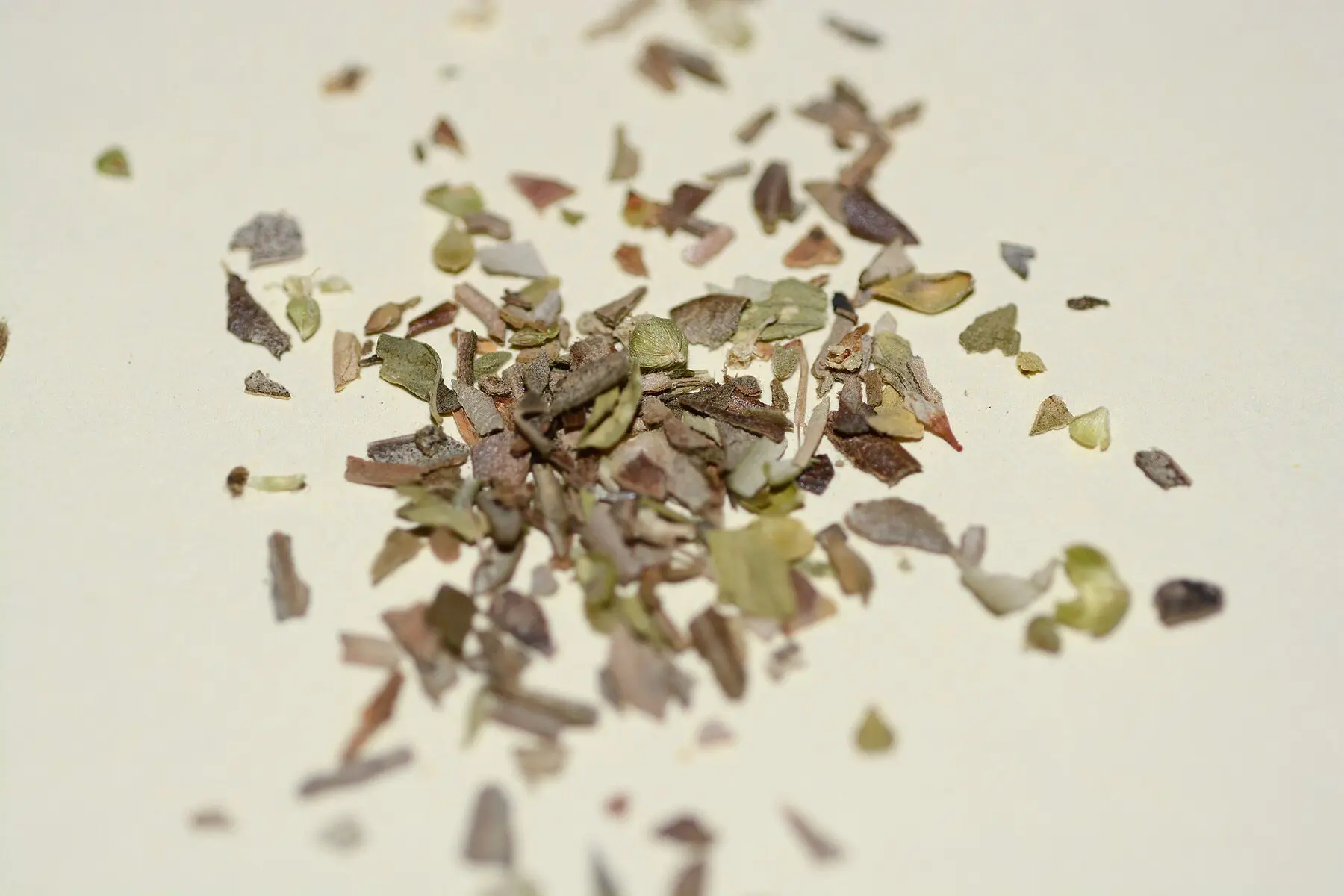
Keep them whole. This is the part most people get wrong: the aromatic oils sit inside intact leaf cells, and crushing them starts the clock on evaporation. Crush between your fingers as you drop them into the pan — that is also when the smell is best.
Airtight jars, dark, away from the stove. The cupboard above the hob is the worst place in the kitchen for herbs, and it is where most people keep them.
A year or more, easily. The real test is not the date on the label but your nose: rub a little between your fingers, and if it smells of nothing, it is finished.
Using it
Dried oregano is about three times stronger than fresh by volume — 1 teaspoon dried for 1 tablespoon fresh.
And unlike delicate herbs, it wants time in the heat. Add it early to a sauce rather than at the end. Twenty minutes of simmering is what opens it up.
Step by step
- Time
- P14D
- Cost
- $0
- You need
- Oregano stems, cut before flowering, String or elastic bands, Paper bag, optional, Airtight jars for storage
- Tools
- Scissors or secateurs, A dark, airy space
Cut just before it flowers
Oil content peaks as flower buds form and drops once the plant blooms. Cut whole stems in the morning after dew has dried, taking up to a third of the plant.
Skip the wash if you can
Water is the enemy of drying. Shake stems out instead, and only rinse if they are genuinely gritty — in which case pat them completely dry and let them air for an hour first.
Bundle loosely and hang upside down
Six to ten stems per bundle, tied and hung in a dark, airy room. Bundles packed tight in the middle stay damp and go mouldy, which is the main failure.
Keep it dark
Light bleaches colour and destroys the volatile oils that carry the flavour. A dark cupboard, a spare room with the curtains shut, or a paper bag over the bundle all work.
Wait one to two weeks
It is ready when leaves crumble at a touch and stems snap rather than bend. Anything still leathery needs longer — packing damp herbs is how a jar goes mouldy.
Strip the leaves, keep them whole
Run a hand down the stem to strip the leaves. Store them whole rather than crushed: the oils sit in intact leaf cells and keeping them there is what preserves the flavour.
Jar it, label it, keep it dark
Airtight jars away from the stove and out of sunlight. Whole dried leaves hold good flavour for a year or more; crush them between your fingers as you add them to the pan.
Common questions
When should you cut oregano for drying?
How long does oregano take to air dry?
Can you dry oregano in the oven or microwave?
Should you wash oregano before drying it?
Is dried oregano stronger than fresh?
How long does dried oregano keep?
Backyard Weekly
Know what to plant, week by week
Join the weekly email for seasonal jobs, fixes for what is going wrong, and gear worth buying.
Not ready to subscribe? The planting calendar is free and needs no email.
By subscribing you agree to our privacy policy. Grow In Backyard will never sell your address.
Keep reading
How to Harvest Basil So the Plant Gets Bushier
Cut above a leaf pair, never strip the bottom leaves, and pinch the flowers. The harvesting method that doubles the size of a basil plant instead of ending it.
How to Store Cilantro So It Lasts More Than Two Days
Cilantro wilts fast because it is mostly water with thin leaves. The jar method, what actually freezes well, and why drying it is largely a waste.
How to Grow Rosemary: Drainage First, Water Almost Never
Rosemary is killed by wet roots far more often than by cold. Soil, siting, the pruning rule that avoids dead patches, and overwintering in a cold climate.
How to Grow Basil: Pinch It Early, Pinch It Often
Basil is easy to grow and easy to lose to one mistake — letting it flower. How to sow it, where to put it, and the pinching routine that keeps it producing.