
How Old Can Oak Trees Get? 300 Years, Sometimes 1,000
Most oaks live 200–400 years, but pollarded and open-grown trees reach 800 or more. Why an oak's shape predicts its lifespan better than its species.
 By
On this page
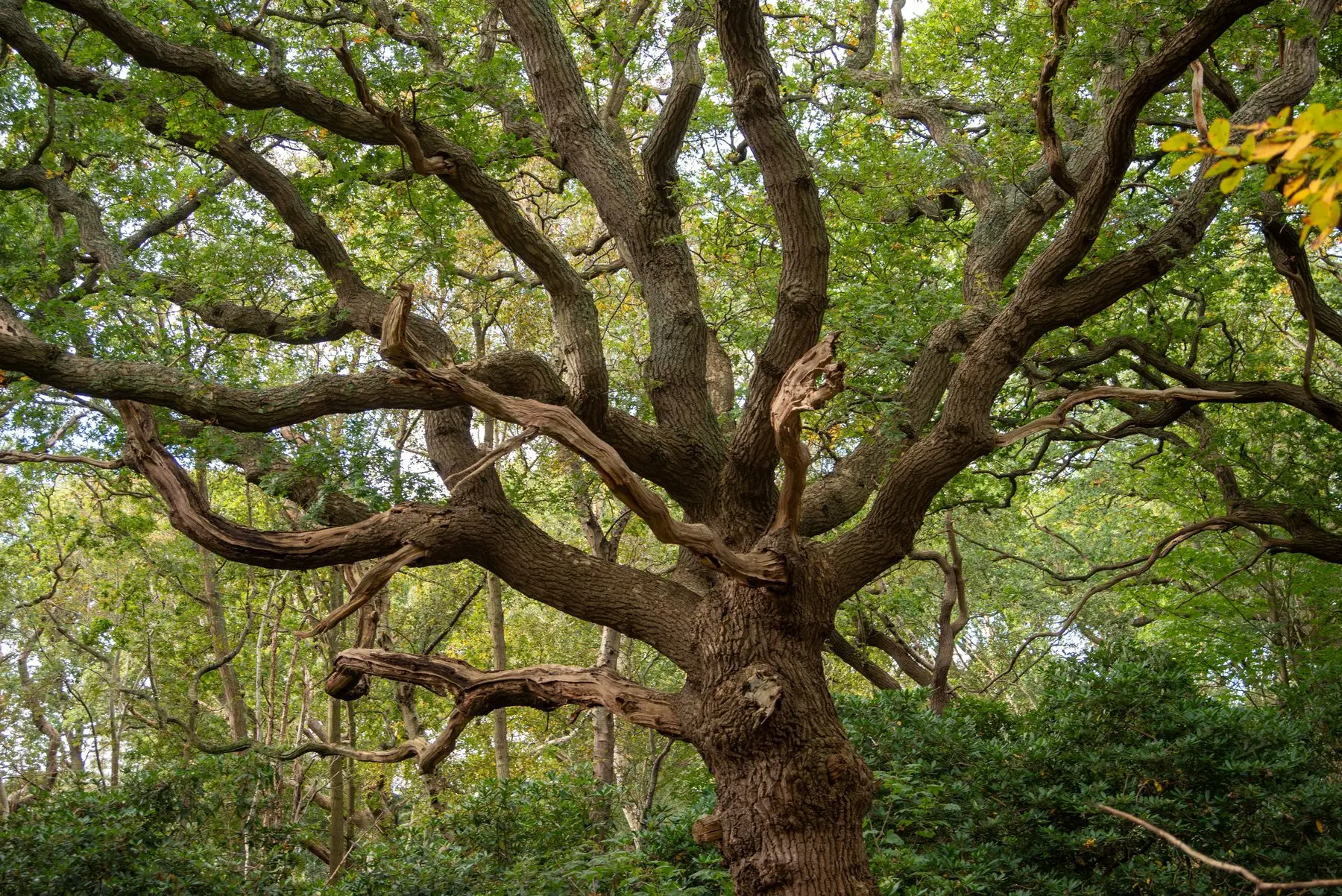
200 to 400 years for most oaks — already exceptional among broadleaves. But the famous ones reach 800 to 1,000, and they have something in common that is not their species: they were pollarded or grew in the open.
By species
| Species | Lifespan | Growth |
|---|---|---|
| English / pedunculate oak (Q. robur) | 400–1,000 | Slow |
| White oak (Q. alba) | 300–500 | Slow |
| Bur oak | 200–400 | Slow |
| Red oak, pin oak | 200–300 | Fast |
The same trade that governs maples applies here: fast growth buys a shorter life.
Why the ancient ones are nearly all pollards
A small crown on a big root system is what lasts
Repeated cutting keeps the canopy small in proportion to the roots, which:
- Reduces the water the tree must lift
- Reduces the wind load it must resist
- Prevents heavy limbs forming — and it is limb failure that lets decay into the trunk
Almost every documented thousand-year oak in Britain is a former pollard or a hedgerow tree, not a woodland one.
Estimating the age of one
Girth is the standard field method:
- Measure the circumference at chest height in centimetres
- Divide by roughly 1.88 for an open-grown tree
- The result is a rough age in years
Woodland oaks grow more slowly, so this underestimates them.
| Method | Limit |
|---|---|
| Increment borer (core sample) | Works without felling; invasive |
| Ring count | Requires the tree to be down |
| Both, on a very old oak | Ancient oaks are hollow — the early rings are gone |
That last point is why the oldest oaks carry estimated rather than known ages.
Against other trees
| Tree | Typical lifespan |
|---|---|
| Yew | 1,000–2,000+ |
| Oak | 200–400, exceptionally 1,000 |
| Sugar maple | 200–300 |
| Beech | 150–250 |
| Birch, silver maple | 60–100 |
Among trees people actually plant, oak is the long-lived option — the one most likely to outlast the house.
Planting one
Worth doing, with clear eyes about scale and time:
- 60 to 100 feet in height and spread. Serious distance from buildings and drains
- It will not be impressive in your lifetime
- The single most valuable garden tree for wildlife in temperate climates, supporting hundreds of insect species
Plant it as a gift to whoever has the garden in a century — not as landscaping.
Common questions
How old can oak trees get?
Which oak species lives longest?
Why do pollarded oaks live longer?
How do you tell the age of an oak tree?
Do oaks live longer than other common trees?
Is it worth planting an oak in a garden?
Backyard Weekly
Know what to plant, week by week
Join the weekly email for seasonal jobs, fixes for what is going wrong, and gear worth buying.
Not ready to subscribe? The planting calendar is free and needs no email.
By subscribing you agree to our privacy policy. Grow In Backyard will never sell your address.
Keep reading
How Long Do Maple Trees Live? 80 to 300 Years by Species
Maple lifespan depends almost entirely on species: silver maple 60–100 years, red maple 100–150, sugar maple 200–300. Where yours actually sits.
When Is the Best Time to Transplant a Tree? While Dormant
Move trees in late autumn after leaf drop or early spring before bud break. Dormancy is what lets roots re-establish before the canopy needs water.
Japanese Maple: Choosing One, Siting It, and Leaf Scorch
Crisp brown leaf edges are wind and sun, not disease. How to pick between upright and dissected forms, where to plant, and why you should barely prune one.
How to Cut a Tree Down, and When Not to Try
Felling is decided before the saw starts: lean, hazards, escape routes, and whether the tree is within your competence at all. Where the line is, honestly.