
How Long Until a Fig Tree Bears Fruit? Two to Six Years
A rooted cutting fruits in 3–6 years, a bought potted tree often in 1–2. Restricting the roots is what brings a stalling fig into production.
 By
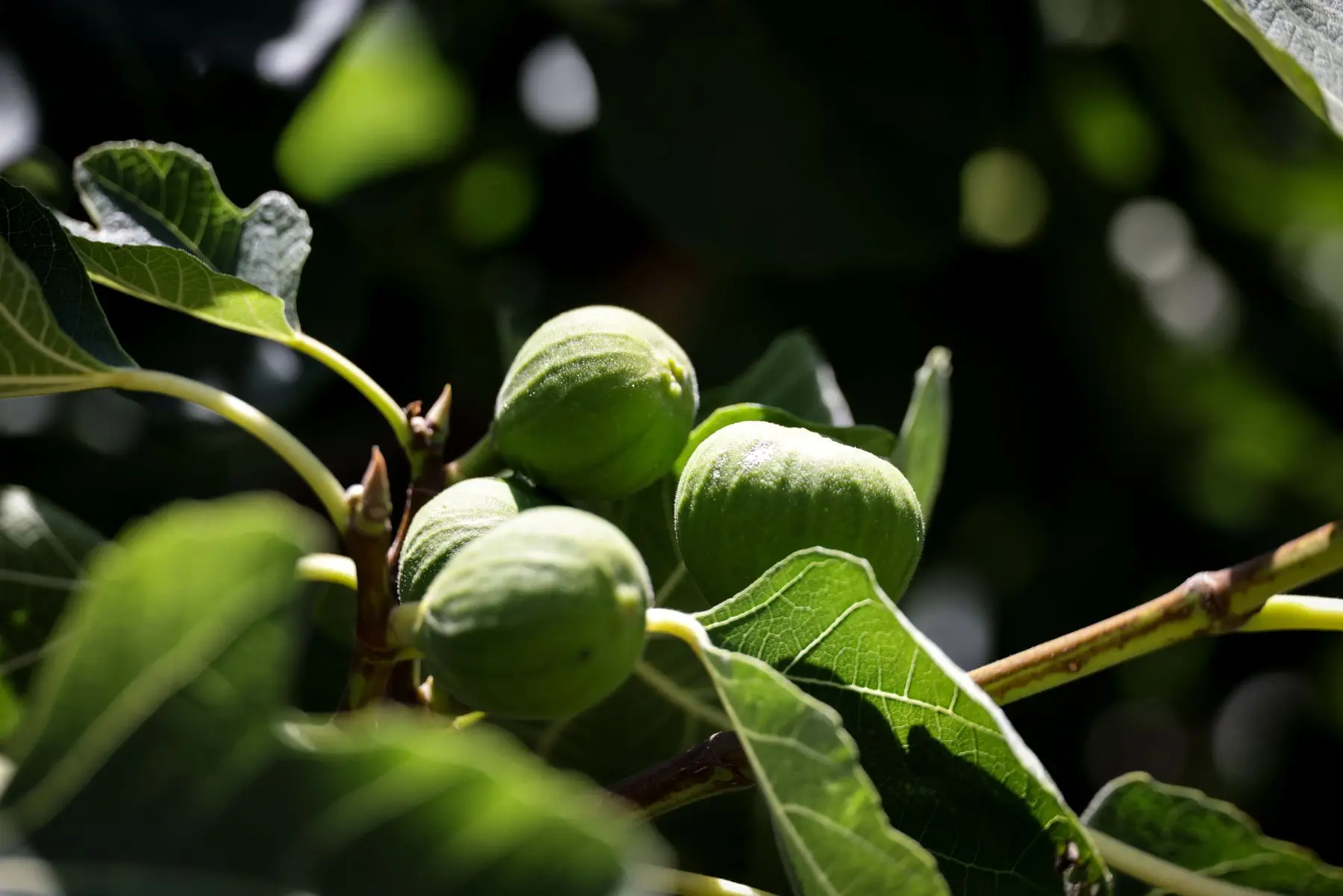
On this page
Two to six years — and which end you land on is set mostly by how the tree was propagated, not by anything you do. But if a mature fig is growing beautifully and fruiting nothing, there is one fix that usually works: make it less comfortable.
Why the range is so wide
| Started as | Time to a worthwhile crop |
|---|---|
| Nursery tree, 2–3 years old | 1–2 years after planting |
| Rooted cutting | 3–6 years |
| Seed | 6+ years, may not come true |
A nursery tree is not faster — it is simply already part-way through the same clock.
The comfortable-fig problem
Figs fruit in response to a degree of stress
A tree with unrestricted roots in rich soil puts its energy into leaf and branch growth. This is why “large, healthy, lush, and produces nothing” is one of the commonest fig complaints there is.
Too much nitrogen does exactly the same thing.
Restricting the roots is the single most effective intervention. It is why figs do so well in pots and against walls, and why the traditional method is a lined pit or a sunken container.
For a tree already in the ground: root-prune in winter — sever the roots in a circle roughly two to three feet out from the trunk. A stalling fig often comes into production within a season or two.
The other reasons
- Immaturity. Sometimes the answer is just to wait
- Not enough sun. Figs want the hottest spot you have
- Hard pruning, which removes the wood the fruit forms on — see below
Breba, and why pruning matters
| Breba crop | Main crop | |
|---|---|---|
| Forms on | Last year’s wood | This year’s growth |
| Ripens | Early summer | Late summer to autumn |
| Lost to winter pruning? | Yes | No |
In cooler climates the breba crop is often the only one that reliably ripens — which makes a hard winter prune the difference between figs and no figs.
Prune lightly.
You only need one tree
Garden varieties — Brown Turkey, Celeste, Chicago Hardy — are parthenocarpic: they set fruit with no pollination at all.
The exceptions are Smyrna and San Pedro types, which need a specific fig wasp and a caprifig. Those are commercial varieties and are not what a garden centre will sell you.
Bringing a young tree on faster
- Pot it, or restrict the roots
- The sunniest, warmest position you have — a south-facing wall is ideal
- No nitrogen. High-potash feed once fruit sets
- Prune lightly, not hard
- Be patient. A fig growing well is on its way even while it produces nothing
Common questions
How long does it take for a fig tree to bear fruit?
Why is my fig tree not fruiting?
Does restricting a fig tree's roots make it fruit?
Do you need two fig trees to get fruit?
What is a breba crop?
How do you get a young fig tree to fruit sooner?
Backyard Weekly
Know what to plant, week by week
Join the weekly email for seasonal jobs, fixes for what is going wrong, and gear worth buying.
Not ready to subscribe? The planting calendar is free and needs no email.
By subscribing you agree to our privacy policy. Grow In Backyard will never sell your address.
Keep reading
How to Grow Figs: Sun, Restraint and a Hard Prune
Figs fruit better in poor soil and a cramped root run than in a pampered bed. Planting, the two crops a year, and how far north you can push them.
Do You Need 2 Pear Trees to Produce Fruit? Almost Always
Most pears are self-incompatible and crop poorly alone. What matters is not two trees but two compatible varieties flowering at the same time.
When Is the Best Time to Transplant a Tree? While Dormant
Move trees in late autumn after leaf drop or early spring before bud break. Dormancy is what lets roots re-establish before the canopy needs water.
How Old Can Oak Trees Get? 300 Years, Sometimes 1,000
Most oaks live 200–400 years, but pollarded and open-grown trees reach 800 or more. Why an oak's shape predicts its lifespan better than its species.