
How Is Star Fruit Grown? Carambola From Tree to Harvest
Carambola is a subtropical tree that fruits twice a year and needs no pollinator. The one real caution is oxalate, which matters if kidneys are impaired.
 By
On this page
Carambola is an easy subtropical tree with one genuinely unusual property: it fruits two or three times a year, often carrying flowers and ripe fruit at once. It also carries a real medical caution that most fruit trees do not.
The kidney warning is not a formality
Carambola contains high oxalate and a neurotoxin called caramboxin. Healthy kidneys clear both without difficulty.
Impaired kidneys cannot. Documented outcomes after even small amounts include persistent hiccups, vomiting, confusion, seizures and death. Anyone with chronic kidney disease or on dialysis should avoid star fruit entirely.
For everyone else it is an ordinary fruit, though the oxalate load means it is not one to eat in very large quantities.
Climate and the grafted/seedling choice
| Grafted, named variety | From seed | |
|---|---|---|
| First fruit | 2–3 years | 4–6 years |
| True to variety | Yes | No |
| Sweet or tart | Known | Unknown until it fruits |
That last row is the one that bites. Carambola varieties split broadly into sweet and tart types, and a seedling from a supermarket fruit may be either. Finding out takes half a decade.
Zones 9b–11. Damage starts around 29 °F: an established tree usually survives a brief light frost with leaf loss and tip dieback, a young one often does not.
Growing it
- Full sun, six to eight hours, and shelter from wind. The wood is brittle and the canopy dense, so an exposed tree sheds branches in a gale
- Free-draining soil. On clay, plant on a low mound rather than in a hollow
- Consistent moisture. It is shallow rooted, and drought shows up immediately as dropped flowers and fruit — this is the main lever on yield
- Mulch widely, kept off the trunk
- Feed lightly, three or four times across the season. Young trees burn easily, so keep rates low
Flowers and fruit together
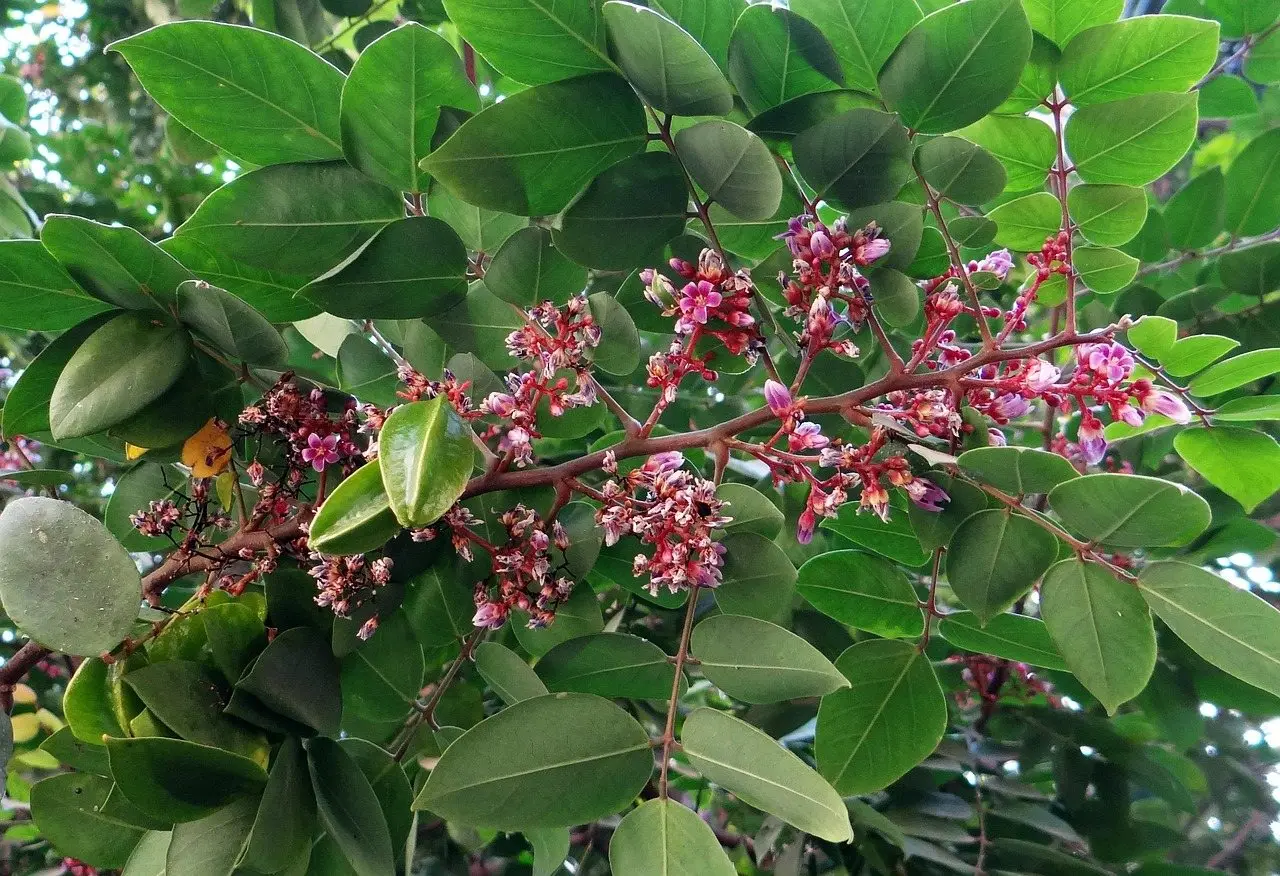
Carambola flushes more than once a year, so a healthy tree frequently carries flower sprays, swelling green fruit and ripe yellow fruit on the same branches.
This looks disordered and is entirely normal. It also means pruning has a cost: cut hard and you remove the next flush, so keep it to dead, crossing and crowded wood after a harvest, plus enough height reduction to pick from the ground.
Picking, which is the step that decides the flavour
Yellow, barely any green, rib edges just beginning to brown.
Unlike a banana or an avocado, carambola does not sweeten off the tree. There is no starch reserve converting to sugar after picking, so a fruit taken green is sour permanently.
Fully ripe fruit bruises easily — handle it gently and use it within a few days.
In a container
Better than most fruit trees. Dwarf varieties exist and carambola takes to the restriction reasonably well.
A pot of fifteen to twenty gallons with sharp drainage, full sun through summer, and brought under cover before frost. It will fruit less heavily than a tree in the ground, but reliably enough to be worthwhile — which is how most people outside the subtropics grow it at all.
Step by step
- Time
- P1095D
- Cost
- 60
- You need
- A grafted carambola tree of a named variety, Compost or well-rotted manure, Mulch
- Tools
- Spade, Secateurs
Check the climate before buying
Carambola suits roughly zones 9b to 11 and is damaged below about 29 F. Mature trees survive a brief light frost with leaf loss; young trees generally do not.
Buy a grafted tree, not a seedling
A grafted tree fruits in two to three years and comes true to variety. A seedling takes four to six and may produce sour fruit, since carambola varieties split broadly into sweet and tart types.
Choose a sheltered spot in full sun
Six to eight hours of sun, and shelter from wind. The wood is brittle and the canopy is dense, so an exposed tree loses branches in a gale.
Plant in free-draining soil
Carambola tolerates a range of soils but not waterlogging. On heavy clay, plant on a low mound rather than in a hollow that collects water.
Water regularly and never let it dry out
It is shallow rooted and drought shows up directly as dropped flowers and fruit. Consistent moisture through flowering and fruiting is the main lever on yield.
Mulch widely, keeping it off the trunk
A wide mulch ring conserves moisture for those shallow roots and keeps mower damage away from the base.
Feed lightly several times a year
Three or four light feeds through the growing season suit it better than one heavy one. Young trees are sensitive to fertiliser burn, so keep rates low.
Expect flowers and fruit at the same time
Carambola flushes more than once a year, so a tree often carries flowers, immature fruit and ripe fruit together. This is normal and not a sign of confusion.
Prune lightly for shape and airflow
Remove dead, crossing and crowded wood after a harvest flush, and keep the tree low enough to pick from the ground. Avoid hard cutting, which costs the next flush.
Pick when the ribs turn yellow
Harvest when the fruit has turned yellow with only a hint of green and the rib edges are just starting to brown. It does not sweeten further once picked, so picking green gives a sour fruit permanently.
Common questions
How long does a star fruit tree take to fruit?
Can you grow star fruit in a container?
Why is star fruit dangerous for people with kidney problems?
Do star fruit trees need a pollinator?
When should you pick star fruit?
How cold can a star fruit tree tolerate?
Backyard Weekly
Know what to plant, week by week
Join the weekly email for seasonal jobs, fixes for what is going wrong, and gear worth buying.
Not ready to subscribe? The planting calendar is free and needs no email.
By subscribing you agree to our privacy policy. Grow In Backyard will never sell your address.
Keep reading
How to Grow Papaya: Fast, Fruitful, and Short-Lived
Papaya fruits within a year from seed and declines after four. Plant several to get a female or hermaphrodite, and never let the roots sit wet.
How to Grow Persimmon: Astringent and Non-Astringent
The variety decides everything. Non-astringent fuyu is eaten firm; astringent hachiya must go jelly-soft or it is inedible. Plus pollination and chill.
How Do Macadamia Nuts Grow? Years to Crop, and a Hard Shell
Macadamias grow on evergreen trees that take 7 to 10 years to bear from seed. The nuts drop when ripe — you harvest from the ground, not the branch.
How Many Blueberry Bushes Should I Plant? Two, Minimum
One bush fruits poorly; two different varieties cross-pollinate and yield far more. Here is the arithmetic by household, and the spacing that lasts.