
How Many Blueberry Bushes Should I Plant? Two, Minimum
One bush fruits poorly; two different varieties cross-pollinate and yield far more. Here is the arithmetic by household, and the spacing that lasts.
 By
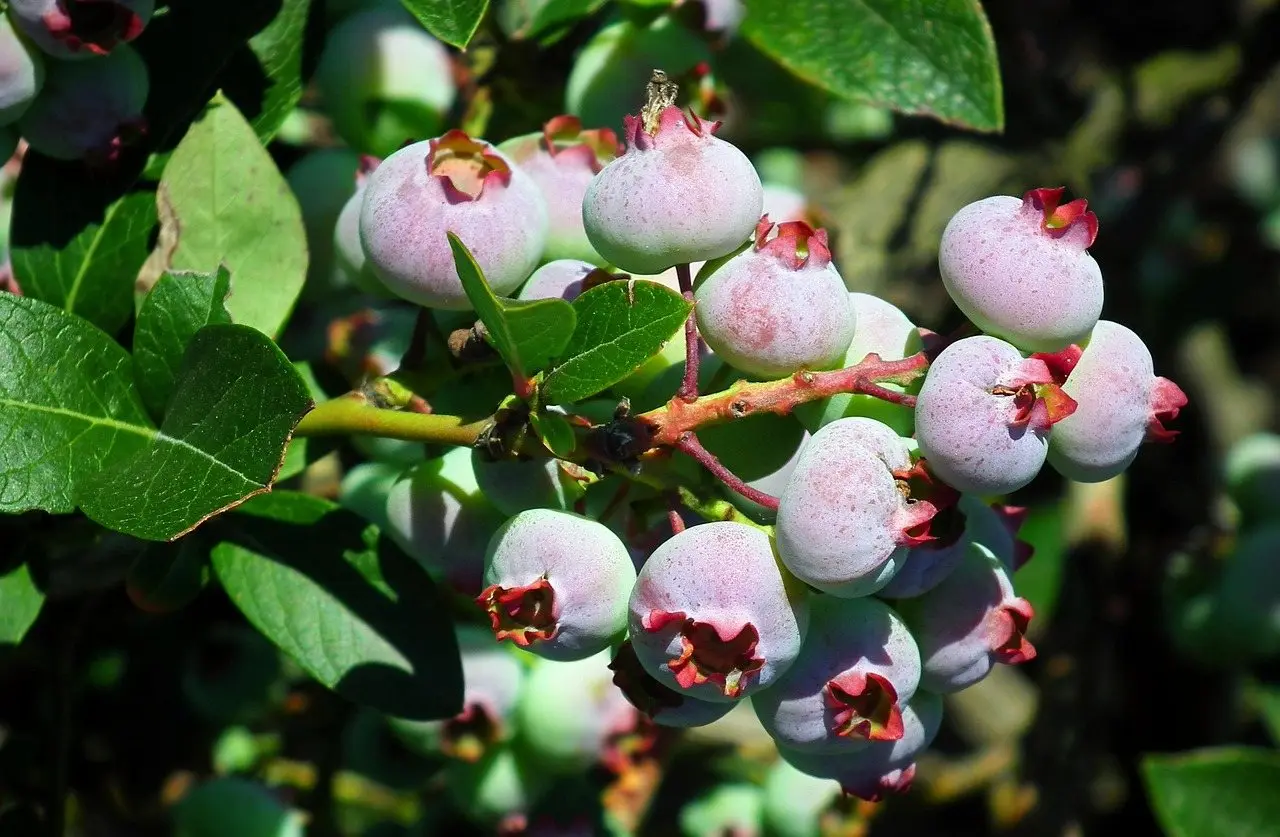
On this page
Two, minimum, and they must be different varieties. One bush will fruit, badly. The step from one to two is the largest yield gain available anywhere in a fruit garden.
The arithmetic
| Bushes | Varieties | Mature yield | Suits |
|---|---|---|---|
| 1 | 1 | Poor — reduced set, small berries | Nobody, really |
| 2 | 2 | 5–10 kg | The practical minimum |
| 3–4 | 2–3 | 10–20 kg | A family eating fresh |
| 5–6 | 3 | 12–30 kg | Fresh plus freezing |
| 8+ | 3+ | 20–40 kg | Preserving, sharing, selling |
Two things that stretch the season further than adding bushes: choosing early, mid and late varieties, which spreads the harvest over six to eight weeks rather than concentrating it; and accepting that years one to three produce very little while the plants establish.
Two of the same variety is still one variety
This catches people out. Cross-pollination requires genetically different plants. Two ‘Bluecrop’ bushes are clones of each other, and pollen from one does nothing for the other that the plant could not do alone.
Buy two named varieties, and check their flowering periods overlap — which generally means staying within the same type.
Self-fertile, and what the label does not say
Most highbush blueberries are sold as self-fertile, and that is technically accurate: a lone plant will set some fruit.
What cross-pollination adds, consistently:
- More berries set per truss
- Larger individual berries
- Earlier ripening
- More reliable crops in a poor pollination year
Rabbiteye varieties, grown in warmer regions, are a stronger case still — they are poorly self-fertile and genuinely need a partner rather than merely benefiting from one.
Spacing, for the plant they become
- Highbush: 1.2–1.8 m apart, rows 2.5–3 m
- Half-high: 90 cm–1.2 m
- Lowbush: 60 cm, as spreading ground cover
- Rabbiteye: 1.8–2 m — they get large
A mature highbush reaches 1.5 to 2 metres in both directions. Planting at 60 cm because the nursery plants are small produces a dense hedge in five years: fine if a hedge is the goal, poor for airflow and awkward to pick.
The soil question decides the format
Blueberries need acidic soil, pH 4.5 to 5.5 — considerably more acidic than most gardens.
Test before buying anything. If your soil is near neutral or alkaline:
- Containers are usually the better answer. 40–50 litres each, ericaceous compost
- Amending a whole bed is possible with sulphur and ericaceous material, and it is an ongoing commitment rather than a one-off job
- Raised beds filled with ericaceous mix are a middle route
- Water with rainwater where the tap water is hard, since the lime in it steadily raises pH
And in containers, the two-variety requirement still applies — plan for two large pots, not one.
What to expect, year by year
- Year 1–2: establishment. Remove flowers to direct energy into roots, hard as that is
- Year 3: a modest crop
- Year 4–5: building
- Year 6 onward: full yield, 2.5–5 kg per highbush bush
- Year 8+: prune out the oldest canes annually to keep production up
Blueberries are a long investment that pays for decades — mature bushes can be productive for thirty or forty years. The decisions worth taking time over are the ones made at planting: variety pairing, spacing, and soil pH.
Common questions
How many blueberry bushes do you need?
How much fruit does one blueberry bush produce?
Do blueberries need two different varieties?
How far apart should blueberry bushes be planted?
Can you grow blueberries in pots instead?
Backyard Weekly
Know what to plant, week by week
Join the weekly email for seasonal jobs, fixes for what is going wrong, and gear worth buying.
Not ready to subscribe? The planting calendar is free and needs no email.
By subscribing you agree to our privacy policy. Grow In Backyard will never sell your address.
Keep reading
When to Plant Blackberry Bushes: Late Winter On
Bare-root canes go in while dormant, containers any time the ground works. Know whether yours fruits on floricanes or primocanes before you prune.
How to Grow Blueberries: It Is All About Soil pH
Blueberries need pH 4.5 to 5.5 and will slowly starve above it. Getting the soil right, why you want two varieties, and the pruning that keeps fruit coming.
Best Way to Store Squash: Cure It, Then Keep It Cool
Winter squash needs ten days of curing at 27°C, then 10–15°C and dry air. Butternut keeps six months that way; acorn squash should not be cured at all.
How to Grow Blackberries: Planting, Pruning and Picking
Thornless erect varieties on a two-wire trellis, pruned on the floricane-primocane cycle. Planting, feeding, and the one pruning rule that decides your crop.