
How Do Macadamia Nuts Grow? Years to Crop, and a Hard Shell
Macadamias grow on evergreen trees that take 7 to 10 years to bear from seed. The nuts drop when ripe — you harvest from the ground, not the branch.
 By
On this page
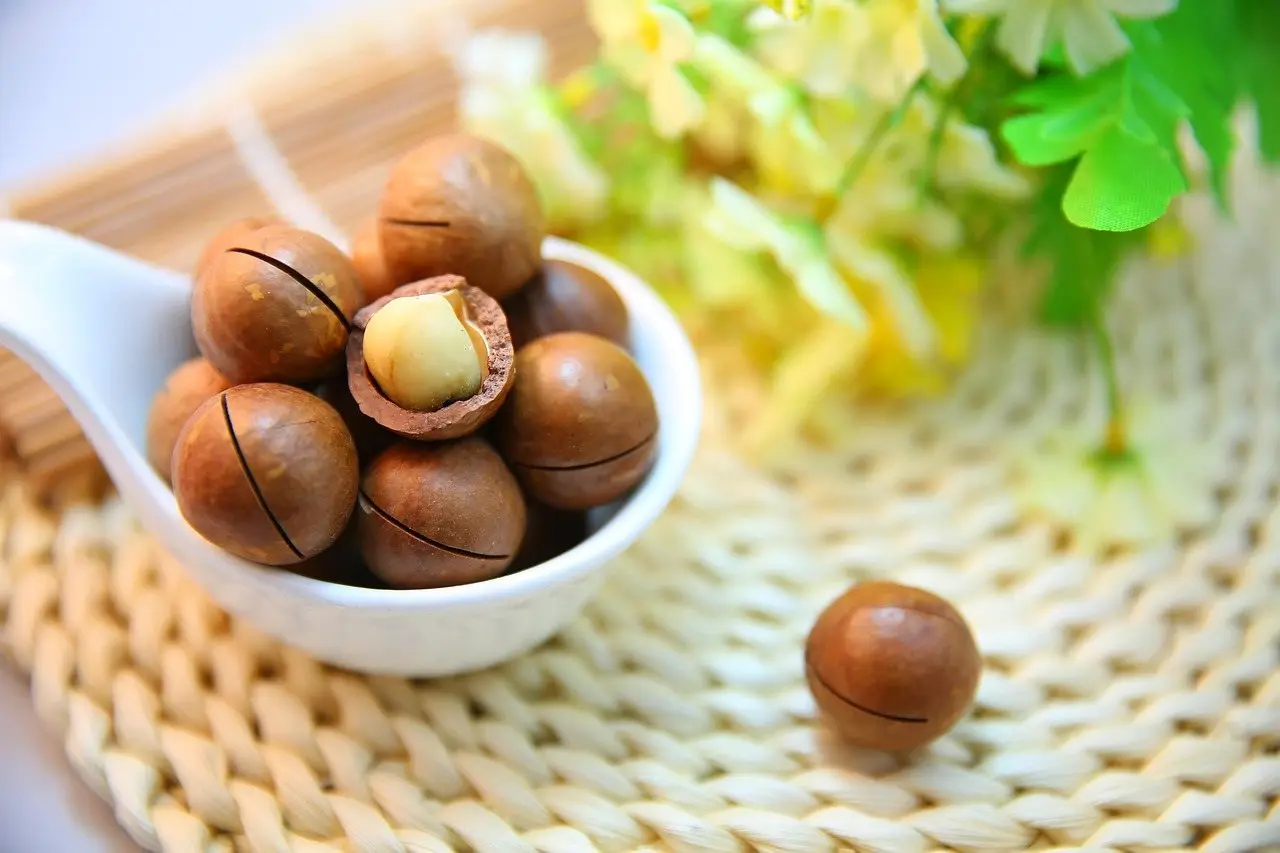
Macadamias grow on large evergreen rainforest trees, and the two things that surprise people are how long they take to bear and that you collect the nuts off the ground.
From flower to nut
Macadamia is in the Proteaceae — the same family as banksia and protea — and native to subtropical rainforest in eastern Australia.
| Stage | What happens |
|---|---|
| Spring | Long sprays of small cream or pink flowers |
| After pollination | Green leathery husk forms, one nut inside |
| Ripening | Husk splits |
| Harvest | Whole fruit falls. Collect from the ground |
The dropping is the key practical point. A mature tree sheds nuts over several weeks, so this is repeated gathering rather than one picking day. Nuts left lying too long on damp ground mould, so the collection interval matters.
The wait
| Grafted, named variety | From seed | |
|---|---|---|
| First nuts | 4–6 years | 7–10 years |
| Full production | ~12–15 years | Later |
| True to variety | Yes | No |
A seedling may also produce awkwardly shaped nuts or crop poorly — after a decade of waiting to find out. Buy a grafted tree.
Pollination
Technically self-fertile, but commercial orchards always interplant two varieties because the yield difference is substantial.
A single garden tree will set nuts, just fewer. Bees do the work, so do not spray insecticide during flowering — poor set on an otherwise healthy mature tree is more often pollination than nutrition.
The shell
Macadamia has one of the hardest shells of any nut, needing roughly 300 pounds of force. An ordinary nutcracker will not do it.
This is also why they are expensive: processing needs purpose-built equipment and the kernel yield from whole nut is low.
Dry them first
Dry the nuts in their shells for a few weeks somewhere warm and airy before cracking. The kernel shrinks slightly away from the shell, and cracking becomes considerably easier and far less likely to shatter the kernel.
A dedicated macadamia cracker or a bench vice is the realistic tool.
Macadamias are toxic to dogs
This is one of the clearest nut toxicities in dogs. Small quantities cause weakness, vomiting, tremors, hyperthermia and an inability to stand, usually within twelve hours.
The mechanism is still not fully understood, so there is no established safe dose. Dogs generally recover with veterinary support, but any ingestion warrants a call to a vet.
If you have a tree and a dog, fallen nuts are a genuine hazard — and since the harvest method is “they fall on the ground”, that needs managing rather than noting.
Climate and containers
Roughly zones 9 to 11 — frost-free, subtropical. Trees reach thirty to forty feet.
A potted macadamia is a decent conservatory foliage plant and may flower, but nut production in a container is unrealistic. The root system and the size of the tree are simply not compatible with it.
Common questions
How do macadamia nuts grow?
How long does a macadamia tree take to produce nuts?
Do macadamia trees need a pollinator?
Why are macadamia nuts so hard to crack?
Are macadamia nuts poisonous to dogs?
Can you grow a macadamia tree in a pot?
Backyard Weekly
Know what to plant, week by week
Join the weekly email for seasonal jobs, fixes for what is going wrong, and gear worth buying.
Not ready to subscribe? The planting calendar is free and needs no email.
By subscribing you agree to our privacy policy. Grow In Backyard will never sell your address.
Keep reading
How to Grow Papaya: Fast, Fruitful, and Short-Lived
Papaya fruits within a year from seed and declines after four. Plant several to get a female or hermaphrodite, and never let the roots sit wet.
Can You Grow a Peach Tree From a Pit? Yes, With Catches
A peach pit will sprout and make a tree, and it is easy. What it will not reliably make is the peach you ate. Here is why, and how to do it anyway.
How to Grow Persimmon: Astringent and Non-Astringent
The variety decides everything. Non-astringent fuyu is eaten firm; astringent hachiya must go jelly-soft or it is inedible. Plus pollination and chill.
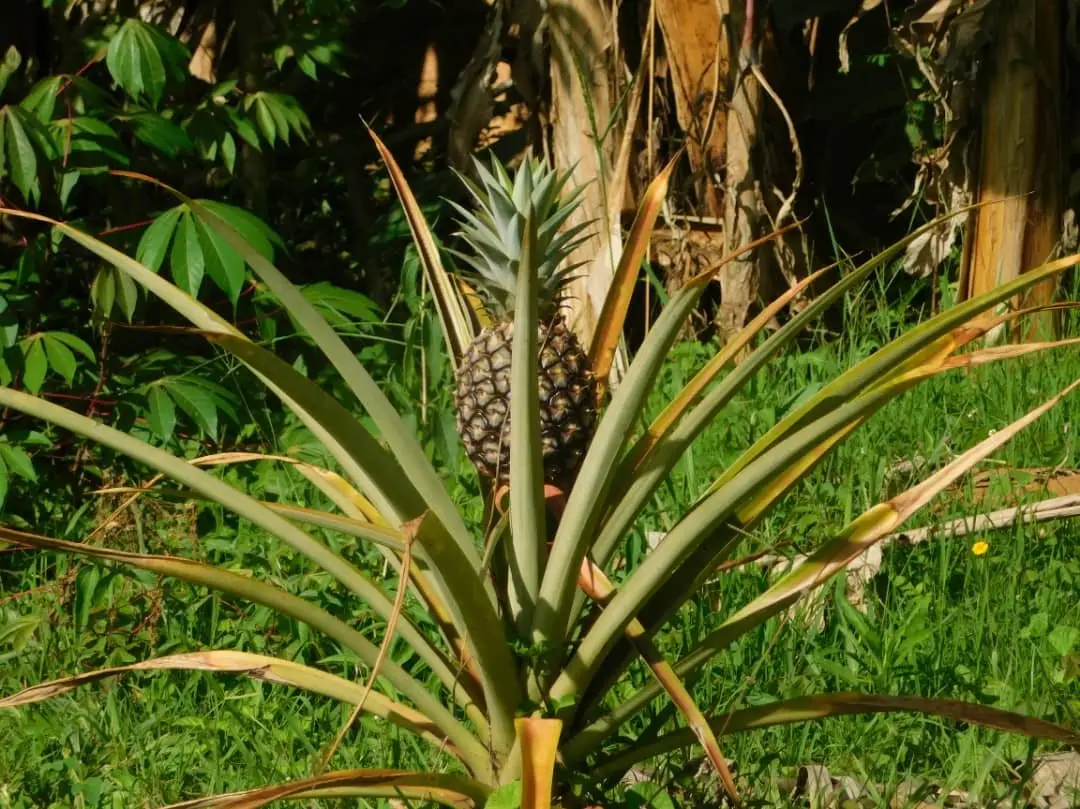
How Do Pineapples Grow? On the Ground, One Per Plant
Pineapples do not grow on trees but on a low ground plant, one fruit per plant, from hundreds of flowers fused into one. How they grow, and how long it takes.