
Does Basil Need Direct Sunlight? Yes — Six Hours Minimum
Basil wants six to eight hours of direct sun, with afternoon shade in hot climates. What leggy, pale or scorched leaves are each telling you.
 By
On this page
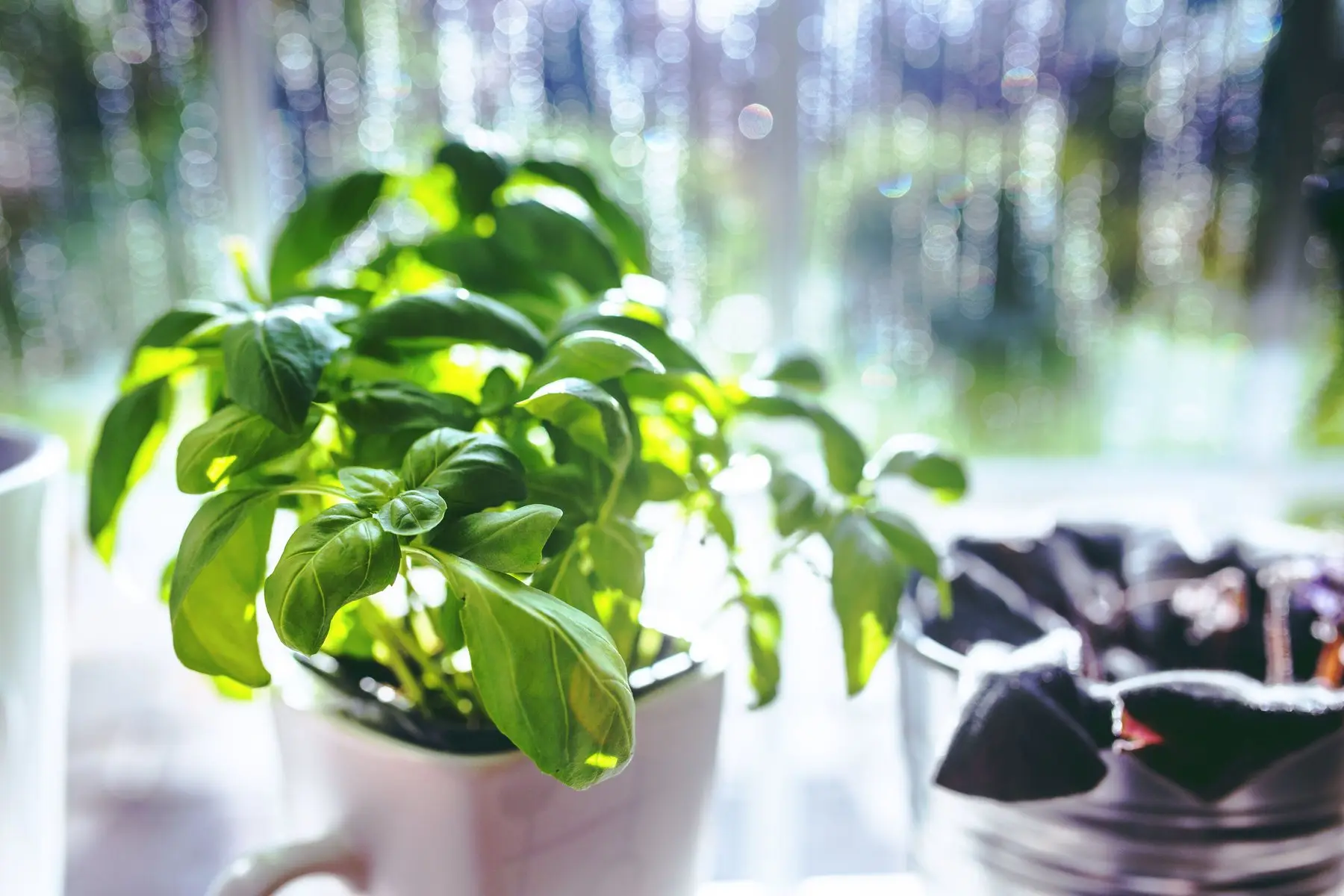
Yes — six to eight hours of direct sun. Basil is among the least flexible herbs about this, because the aromatic oils that make it worth growing are produced roughly in proportion to the light it gets. A shaded basil plant is not just smaller. It is blander.
What each amount of light gives you
| Direct sun per day | Result |
|---|---|
| Under 4 hrs | Stretched, pale, sparse. Weak flavour |
| 4–6 hrs | Alive and usable, visibly thinner |
| 6–8 hrs | Dense, dark, strongly aromatic |
| 8+ hrs with hot afternoons | Scorch risk, growth stalls |
Reading the plant
The two failure modes look nothing alike, which makes basil easy to diagnose:
| Too little light | Too much heat | |
|---|---|---|
| Stems | Long bare gaps between leaves | Normal |
| Leaves | Thin, pale, small | Bleached patches on the sunny side |
| Wilting | No | Afternoons, recovers overnight |
| Fix | Brighter spot, pinch back hard | Afternoon shade, steady water |
Leggy basil recovers, but the bare sections stay bare
Move it somewhere brighter and pinch the growing tips back hard, which forces branching from the leaf nodes below. New growth comes in dense.
The stretched stem you already have will not fill in, so cut lower than feels comfortable.
Hot climates are the real exception
In zone 9 and warmer, or anywhere afternoons run above about 90°F:
- Full morning and midday sun
- Shade from mid-afternoon
- Six good hours beats eight that include a brutal afternoon
Containers make it worse — the roots heat up as well as the leaves, and a dry pot in full afternoon sun is where basil gives up fastest.
Indoors
A bright-looking windowsill is usually not bright
Glass cuts light, and the drop-off with distance from the window is steeper than the eye registers. A south-facing window can just about carry basil through summer; east or north will not, and no aspect reliably does in winter.
Twelve to fourteen hours under a cheap LED grow light produces a far better plant than the sunniest sill in the house.
Common questions
Does basil need direct sunlight?
Can basil grow in shade?
How much sun does basil need in a hot climate?
Why is my basil tall and leggy with bare stems?
Can you grow basil indoors on a windowsill?
Can basil get too much sun?
Backyard Weekly
Know what to plant, week by week
Join the weekly email for seasonal jobs, fixes for what is going wrong, and gear worth buying.
Not ready to subscribe? The planting calendar is free and needs no email.
By subscribing you agree to our privacy policy. Grow In Backyard will never sell your address.
Keep reading
How to Grow Basil: Pinch It Early, Pinch It Often
Basil is easy to grow and easy to lose to one mistake — letting it flower. How to sow it, where to put it, and the pinching routine that keeps it producing.
How to Harvest Basil So the Plant Gets Bushier
Cut above a leaf pair, never strip the bottom leaves, and pinch the flowers. The harvesting method that doubles the size of a basil plant instead of ending it.
How to Grow Mint Without It Taking Over the Garden
Mint spreads by runners just under the surface and will colonise a bed in two seasons. Containment that actually works, and the pruning that keeps leaves tender.
Does Dill Come Back Every Year? It Self-Seeds Instead
Dill is an annual and dies after flowering — but it seeds so freely that a patch returns on its own if you let one plant set seed.