
Creeping Thyme: Planting, Spacing and Foot Traffic
Creeping thyme is a drought-tolerant lawn alternative that flowers for bees and takes light footfall. Which species to buy, spacing, and where it fails.
 By

On this page
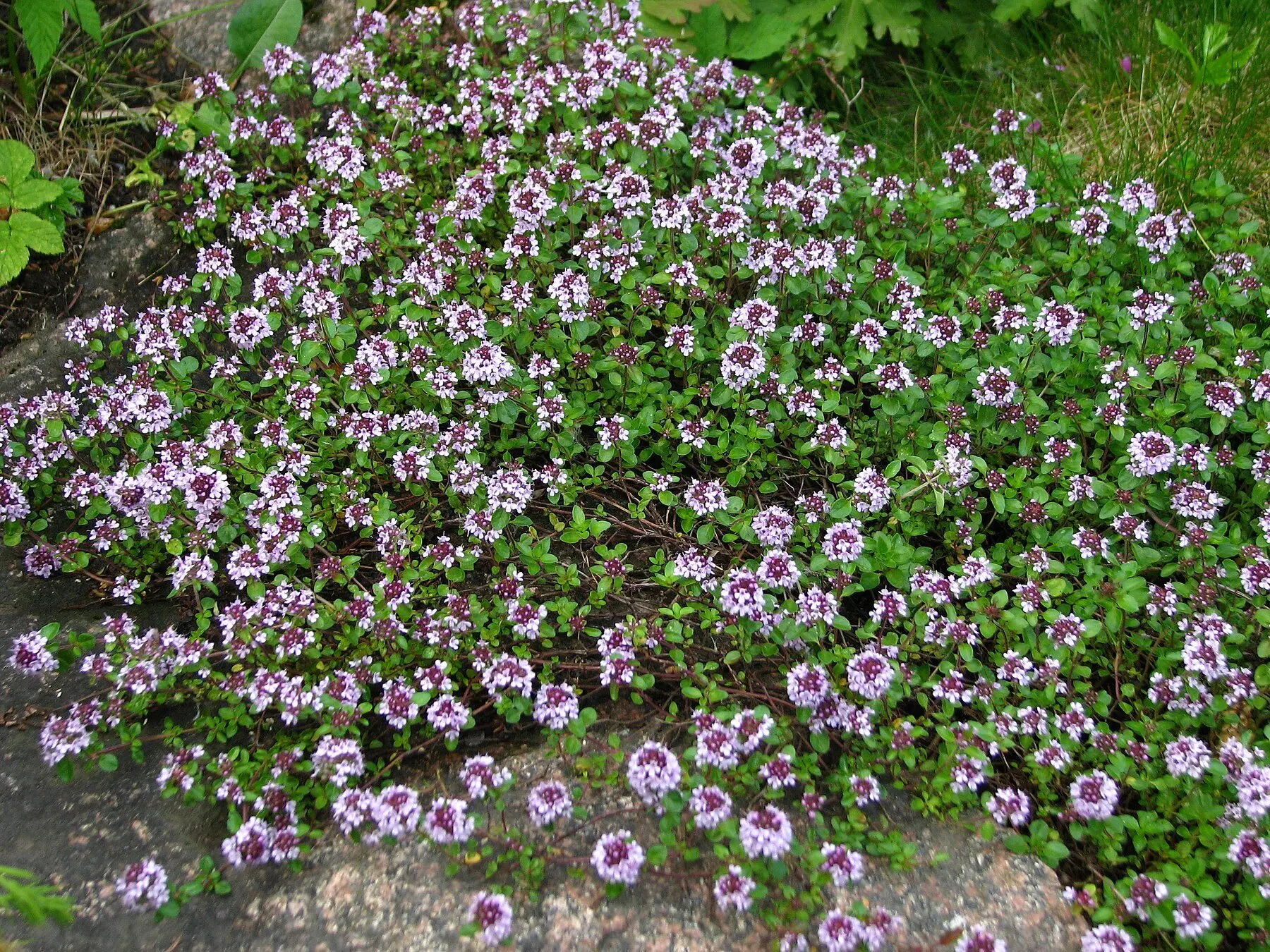
Creeping thyme is the plant people reach for when they want a lawn that does not need mowing. It can be that — with real limits that are worth knowing before you buy 200 plugs.
Which one to buy
“Creeping thyme” covers several species and a great many cultivars, and the labels in garden centres are notoriously loose.
| Name | Height | Flower | Notes |
|---|---|---|---|
| Thymus serpyllum (wild / mother of thyme) | 2–3 in | Pink-purple | The common one. Vigorous, reliable |
| Thymus praecox | 1–3 in | Pink, red, white | Includes most named garden cultivars |
| ‘Coccineus’ (red creeping thyme) | 2–3 in | Magenta-crimson | The one sold as “red”; not truly red |
| ‘Elfin’ | 1–2 in | Pale pink | Very tight, slow, good between pavers |
| ‘Pink Chintz’ | 2–3 in | Salmon pink | Dense, takes traffic relatively well |
| Thymus pseudolanuginosus (woolly) | 1 in | Sparse pink | Silver, furry, hates wet — the fussiest |
| Thymus vulgaris (common/English) | 6–12 in | Pale | Upright. This is the kitchen one, not groundcover |
Red creeping thyme is magenta
‘Coccineus’ is sold everywhere on the strength of photographs that have been pushed toward scarlet. The real colour is a strong magenta-crimson. It is a genuinely good plant; it is not the fire-engine red the listings imply, and buying it expecting that is the most common disappointment with this species.
Where it works, and where it does not
It works in:
- Full sun — six hours minimum, and more is better
- Sharp-draining soil: sandy, gravelly, poor. It is a Mediterranean plant
- Gaps between pavers, stepping stones and flagstones
- Gravel gardens, rockeries, wall tops, dry banks
- Hot, reflected-heat spots where nothing else thrives
- Slightly alkaline to neutral soil
It fails in:
- Heavy clay, or anywhere water stands in winter
- Shade. In under six hours of sun it goes leggy, sparse and stops flowering
- Wet, humid summers — root and crown rot follow
- Heavy mulch piled against the crowns
- Rich, fed soil, which produces soft growth that flops and rots
Winter wet is what kills it
Creeping thyme survives hard frost without complaint. What it does not survive is sitting in cold, sodden soil for weeks.
If your soil holds water, do not plant into it as it is — raise the bed, work in a good quantity of grit or coarse sand, or plant on a slope. A thyme lawn on clay is the single most common expensive failure with this plant.
Planting
When: spring after the last frost, or early autumn while the soil is still warm. Avoid planting into midsummer heat.
Spacing:
| Spacing | Plants per 100 sq ft | Cover |
|---|---|---|
| 12 in | ~100 | One season |
| 15 in | ~64 | 18 months |
| 18 in | ~44 | Two seasons |
Wider than 18 inches and the bare soil between plants stays open long enough for weeds to establish first — which is why a thyme planting so often looks patchy in year two.
How:
- Clear perennial weeds completely. Bindweed, couch grass and dock will out-live the thyme and cannot be removed once it has knitted together.
- Improve drainage before planting, not after. Grit, coarse sand, or raise the level.
- Plant at the same depth the plug was grown at. Burying the crown rots it.
- Water in well, then water through the first season only when genuinely dry.
- Weed the gaps by hand for the first year. This is the whole job.
- Do not mulch over the crowns. A thin layer of grit between plants is ideal — it suppresses weeds, keeps foliage off wet soil and looks right.
Foot traffic, honestly
| Use | Verdict |
|---|---|
| Between stepping stones | Ideal. Occasional crushing releases the scent |
| A path crossed a few times a day | Fine |
| Around a seating area | Fine if furniture is not dragged over it |
| A lawn children play on | No. It thins and opens up |
| A dog’s regular route | No |
| Anywhere mown | Never mow it |
The realistic version of a thyme lawn is a low-traffic area — a front garden, a hot slope, a strip beside a drive — not the patch of grass the family actually uses. Plenty of people plant it expecting to replace a working lawn and are disappointed by the second summer.
Through the year
- Spring: growth resumes; shear off any winter-damaged patches. Do not feed
- Early summer: several weeks of flower, covered in bees
- After flowering: shear the whole mat back by about a third with hedge shears. This keeps it dense and stops the centre going woody and bare
- Autumn: clear fallen leaves off it. A blanket of wet leaves over winter is how a good patch dies
- Winter: evergreen, slightly bronzed or grey. Leave it alone
Feeding is the mistake. Poor soil produces tight, dense, long-lived thyme. Fertiliser produces soft floppy growth that rots, splits open in the middle and needs replacing.
Weeds, and the honest limit
Once closed into a dense mat, creeping thyme genuinely does suppress annual weed seed — there is nowhere for it to germinate.
But it is a slow starter, and in year one the open ground between plants is exactly what weeds want. Hand weeding through that first season is the price of a weed-free mat afterwards.
And it will never beat established perennial weeds. Bindweed will grow straight through it, and removing couch grass from a thyme mat means lifting the lot. Clear them properly first.
Propagating more
Cheap, and easy enough that buying hundreds of plugs is rarely necessary.
- Division: lift and split an established clump in spring; each piece with roots grows on
- Layering: pin a stem to the soil with a wire staple. It roots within weeks, then cut it free
- Cuttings: 2 to 3 inch non-flowering tips in early summer, into gritty compost
- Seed: possible for the species, but named cultivars do not come true, and seedlings are slow
Layering is the one to use. A dozen plants pinned down in their first summer becomes a hundred by the following spring, for the cost of some wire.
Is it good for bees?
Genuinely, and it is one of the better reasons to grow it. A flowering mat is loud with bees for weeks, drawing honey bees, bumblebees and a wide range of solitary bees.
If that is part of the point, do not shear it until flowering has finished, and skip insecticides entirely — a thyme lawn treated with a systemic is a trap rather than a resource.
Common questions
What is creeping thyme?
Can you walk on creeping thyme?
How far apart should creeping thyme be planted?
Does creeping thyme come back every year?
What is the difference between creeping thyme and regular thyme?
Does creeping thyme choke out weeds?
Backyard Weekly
Know what to plant, week by week
Join the weekly email for seasonal jobs, fixes for what is going wrong, and gear worth buying.
Not ready to subscribe? The planting calendar is free and needs no email.
By subscribing you agree to our privacy policy. Grow In Backyard will never sell your address.
Keep reading
How to Grow Lavender: Drainage, Sun, and Almost Nothing Else
Lavender dies of wet feet and kindness, not cold. Which species suits your winter, why you plant it in poor soil, and the spacing that prevents rot.
How to Grow Rosemary: Drainage First, Water Almost Never
Rosemary is killed by wet roots far more often than by cold. Soil, siting, the pruning rule that avoids dead patches, and overwintering in a cold climate.
How to Plant Grass Seed So It Actually Comes Up
Seed fails from poor contact and a surface that dried out once, not from bad seed. Soil prep, sowing rates, and the watering routine that carries it to germination.
Do You Pick Mint From the Top or the Bottom?
Pick from the top, just above a pair of leaves. Cutting the growing tip makes mint branch into two stems — taking lower leaves does the opposite.