
Butterfly Pea Flower: Growing It and Using the Blue
A tender vine grown for blue flowers that turn tea purple with lemon. Trellis, heat, seed soaking, and how to grow it where winters are cold.
 By
On this page
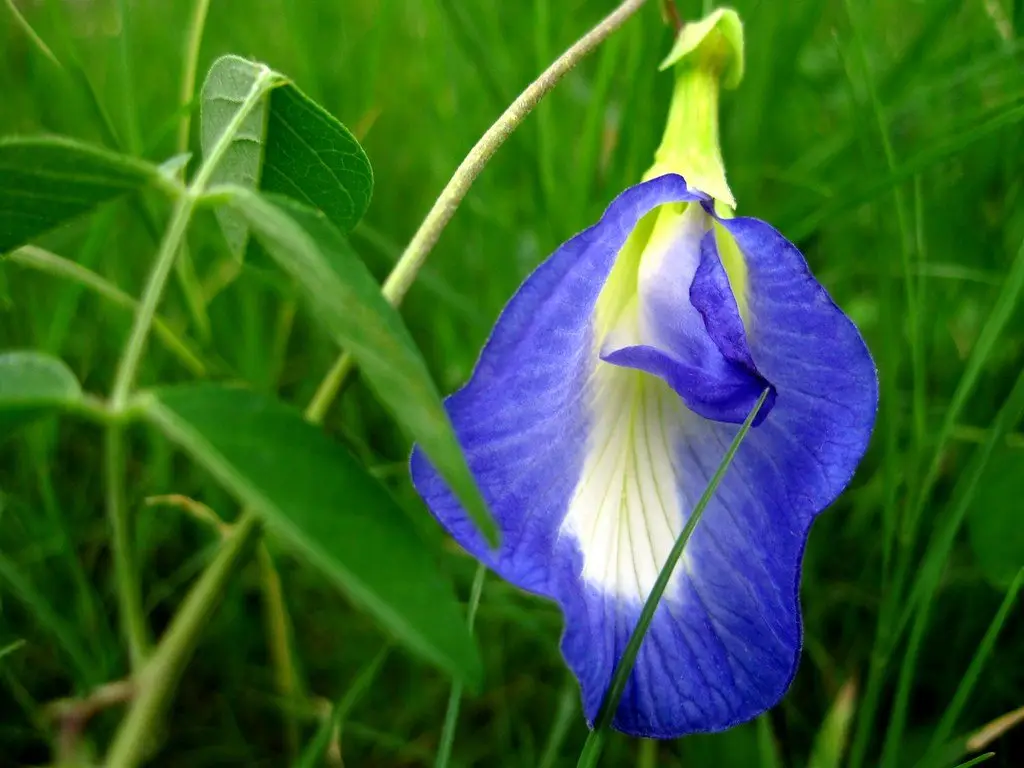
Grown for one thing: a flower that brews an ink-blue tea and turns magenta the moment lemon hits it. The plant itself is an easy tender vine that asks for heat and a trellis.
What it is
A twining legume from tropical Asia, in the pea family and behaving like one: nitrogen-fixing roots, pea-shaped flowers, slender pods. The common form is a deep blue single; there are also double-flowered and white cultivars, and the doubles give noticeably more petal per flower for drying.
- Vine to 6–10 ft, occasionally more in a long hot season
- Flowers 2 in across, continuously from midsummer to frost
- Zones 10–11 perennial, annual elsewhere
- Frost kills it outright — there is no hardening it off into cold
Growing it
Sowing. The seed coat is hard and repels water, which is the usual reason a packet fails.
- Scarify — nick the coat with a nail file or rub it on fine sandpaper, avoiding the pale scar where the seed attached
- Or soak overnight in warm water. Seeds that have swollen to roughly double are ready; ones still hard get another nick
- Sow ½ inch deep, somewhere warm — 70–85°F
- Three to seven days to emerge
- Start indoors 4 to 6 weeks before last frost if the season is short
Planting out. Only once nights are reliably above about 60°F. A cold snap in the first week sets the plant back further than waiting would have cost.
| Requirement | |
|---|---|
| Sun | Full. 6+ hours; flowering falls off fast in shade |
| Soil | Free-draining, poor is fine. Neutral to slightly acid |
| Water | Regular while young; drought-tolerant once established |
| Feeding | Little to none. Nitrogen gives leaves, not flowers |
| Support | 6–10 ft trellis, netting, fence, obelisk |
| Temperature | Loves heat. Dies at frost |
Feeding it is the common mistake
It is a legume with nitrogen-fixing root nodules, so it makes its own. A general fertiliser — or planting into rich, recently manured ground — produces a big leafy vine that flowers reluctantly.
If you feed at all, use something low in nitrogen and higher in potassium, and only once flowering has started.
In a pot it does well: a 5-gallon container, gritty free-draining mix, an obelisk, and a sunny wall. Pots are also how you overwinter one — bring it in before frost, keep it bright and above 55°F, water sparingly, and cut it back hard in spring.
Pinching the growing tips when the vine is young gives a bushier plant and more flowering stems. Left alone it runs upward and flowers mostly at the top.
Harvesting and drying
- Pick in the morning, once the flower is fully open and the dew has dried
- Picking daily keeps it flowering — letting pods set slows the whole plant down
- Use fresh, or dry for storage
- Drying: a single layer somewhere warm, dry and out of direct sun for a few days, or a dehydrator at low heat. They are dry when they crumble rather than bend
- Store in an airtight jar away from light. The colour fades in sunlight
A productive vine gives a steady handful a day through late summer, which dries down to very little — expect to need a season’s picking to fill a decent jar.
The colour
The pigment is anthocyanin, and it reads pH like litmus.
| Add | Colour |
|---|---|
| Nothing — plain water | Deep indigo blue |
| A little lemon or lime | Violet |
| More acid | Magenta pink |
| Hibiscus | Bright pink-red |
| Something alkaline | Drifts toward green |
Brewing: roughly 5 to 10 dried flowers per cup, water just off the boil, three to five minutes. Longer gives a deeper blue rather than a stronger flavour, because there is not much flavour to extract — it is mild, slightly earthy, caffeine-free, and nearly always blended with lemongrass, ginger, mint or citrus.
Beyond tea it is used as a natural food dye: blue rice, cocktails, syrups, ice cream, and anything where the colour shifts on serving.
Flowers yes, seeds and pods no
The flowers are a long-established food across Southeast Asia. The seeds and pods are not food — they have a reputation as a purgative, and there is no reason to test it.
Standard herbal-tea caution otherwise: ask a pharmacist rather than a recipe blog if you are pregnant or taking medication.
Where it struggles
- Cool summers. Without real heat it grows slowly and flowers sparsely
- Shade. Fewer flowers, longer leggier growth
- Wet, heavy soil. Root rot follows quickly
- Rich ground. Foliage instead of flowers
- The first frost. No warning, no recovery — pick everything before it
It self-seeds readily in frost-free climates, and is listed as invasive in parts of northern Australia and some Pacific islands. Where winters kill it that is not a concern; where they do not, check before planting.
Common questions
How do you grow butterfly pea flower?
Is butterfly pea flower a perennial?
Why does butterfly pea tea change colour?
What does butterfly pea flower taste like?
How long does butterfly pea take to flower from seed?
Is butterfly pea flower safe to eat?
Backyard Weekly
Know what to plant, week by week
Join the weekly email for seasonal jobs, fixes for what is going wrong, and gear worth buying.
Not ready to subscribe? The planting calendar is free and needs no email.
By subscribing you agree to our privacy policy. Grow In Backyard will never sell your address.
Keep reading
How to Grow Peas: Sow Cold, Support Early, Pick Often
Peas are a cool-season crop that stops in heat, so sowing early beats sowing well. Support at three inches, and the sugar-to-starch clock after picking.
How to Grow Mint Without It Taking Over the Garden
Mint spreads by runners just under the surface and will colonise a bed in two seasons. Containment that actually works, and the pruning that keeps leaves tender.
Outdoor Plants in Pots: What Survives, and What Kills Them
A pot outdoors is a harsher place than the ground — hotter, drier, and colder in winter. How to pick plants and pots that cope, and get through the cold.
Can Rosemary Grow in Shade? It Survives, It Does Not Thrive
Rosemary needs six to eight hours of sun. In shade it gets leggy, loses flavour and rots at the roots — plus the shadiest spot it will tolerate.