
Tire Planter Ideas — 8 Builds and 1 Safety Question
Tire planter ideas are free to build and fine for 6 of 8 uses. What the leaching evidence says, which crops to keep out, and the 5 parts each build needs.
 By
We may earn a commission when you buy through links on this page, at no extra cost to you.

On this page
A tire is free, it will outlive any wooden bed, and it is sitting at the back of every garage in the country. The reason this page is longer than a list of shapes is that one question about them is genuinely unresolved, and it decides what you plant.
The eight builds
1. Single cut-rim planter. The standard. Cut the upper sidewall out, flip the tire so the cut edge sits underneath, and you get a scalloped rim and a deeper bowl. Twenty minutes with the right blade.
2. Stacked potato tower. Three or four tires, adding one as the haulm grows and backfilling with compost. It works, and it is the build where the liner question matters most — potatoes are a root crop in direct contact.
3. Raised bed on hard standing. Six to eight tires in a rough rectangle, filled, with the gaps packed. Puts 10 inches of soil on concrete for nothing.
4. Terrace steps on a slope. Tires bedded into a bank, each one holding its own soil. They stop erosion better than timber because they flex and do not rot out at the ends.
5. Hanging planter. A single tire cut into a hoop and hung from three chains. Light enough once you cut away most of the rubber, and the one build that suits a wall.
6. Pond surround. A tire sunk level with the ground, lined with pond liner, becomes a small water feature with a very tough rim.
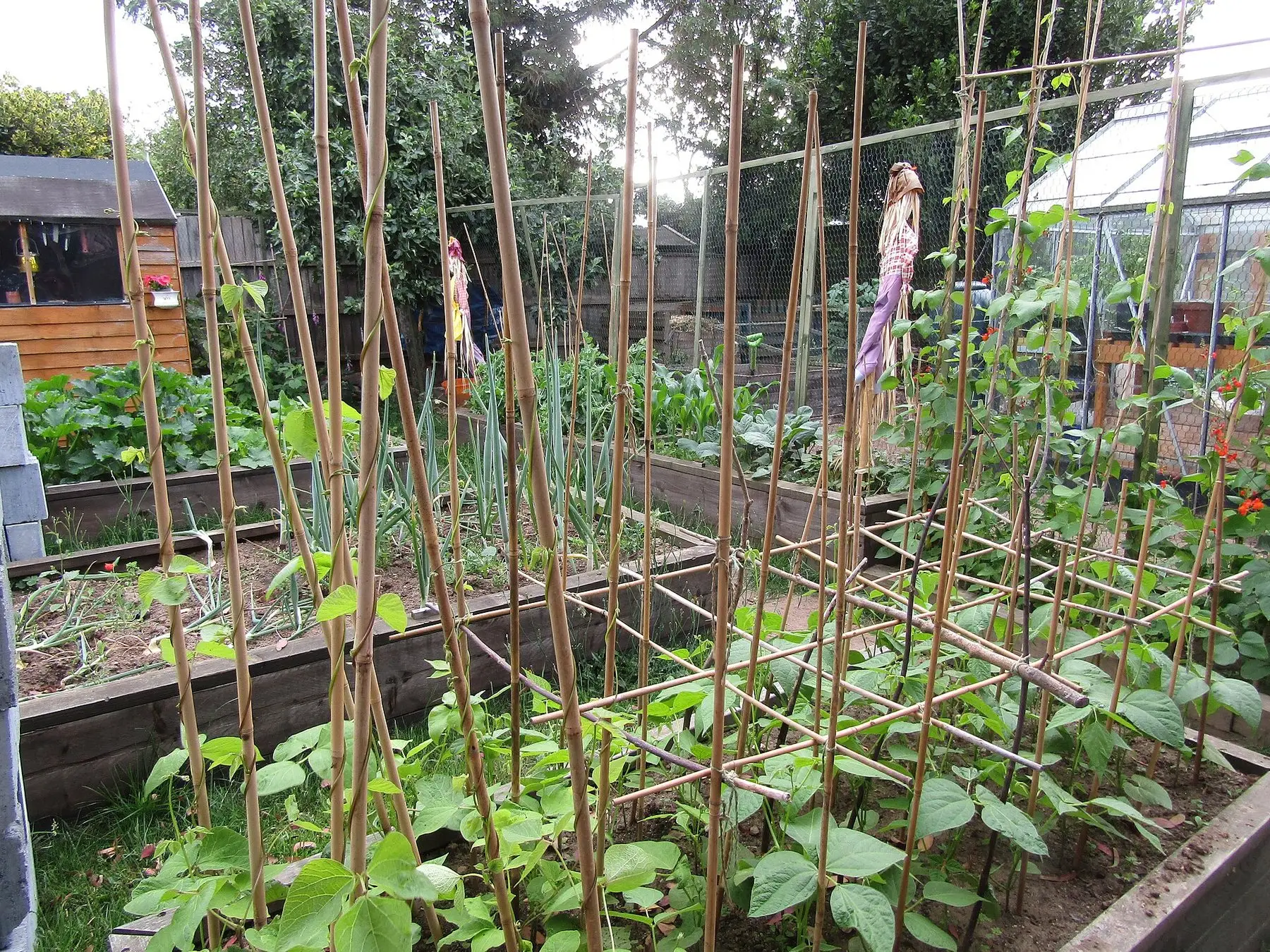
7. Climbing support. Two stacked tires as the anchor for a bean tepee — the weight means the frame does not need staking.
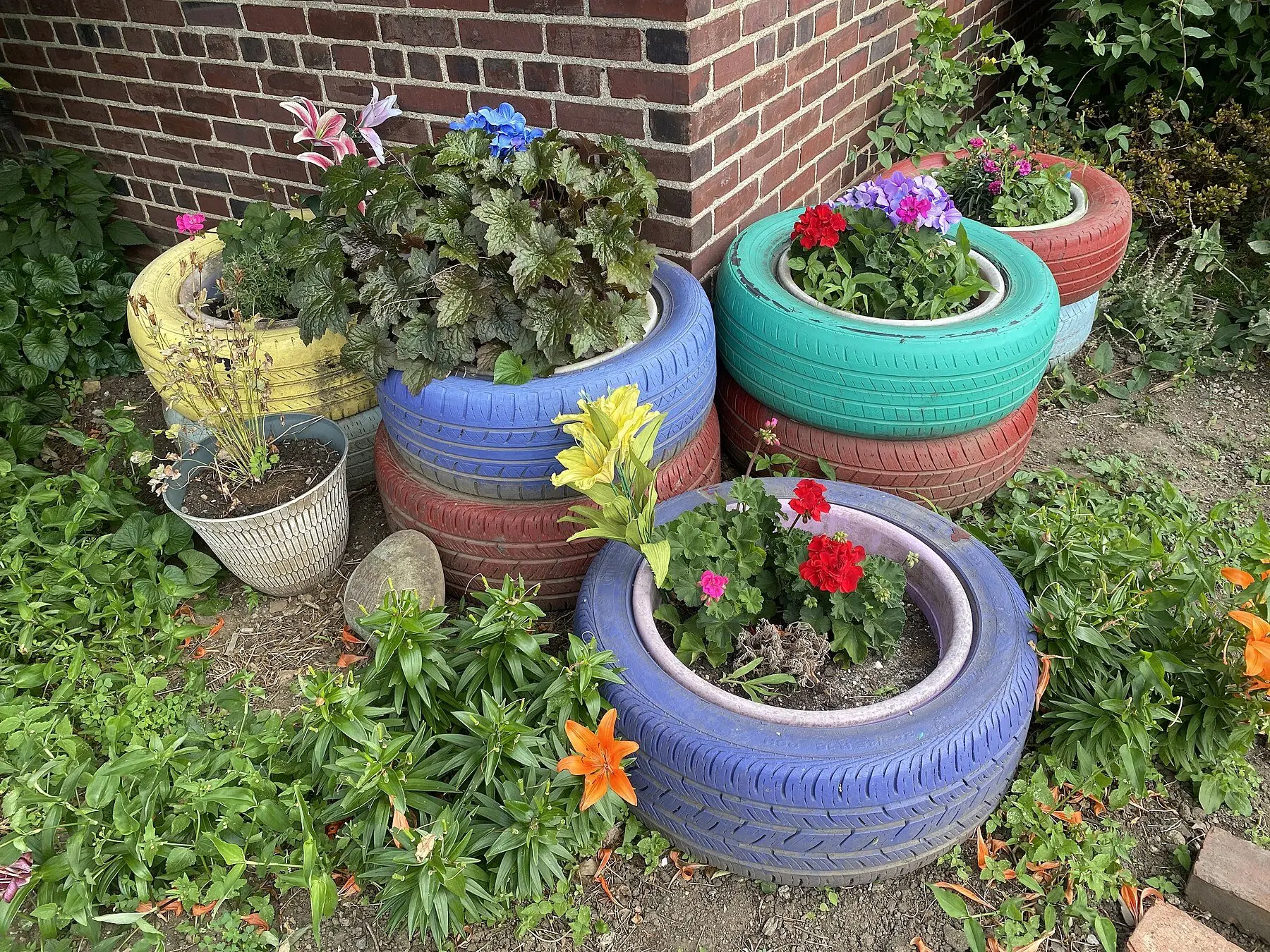
8. Painted ornamental group. Three or four tires at different heights, primed and painted, planted with trailing annuals. This is where the tire stops looking like a tire.
The safety question, honestly
Tires contain zinc oxide as a vulcanisation activator, along with polycyclic aromatic hydrocarbons from the carbon black and processing oils. Studies of crumb rubber — shredded tire used on playing surfaces — have repeatedly measured zinc moving into water and surrounding soil, with zinc the most consistently detected of the group.
Whole tires are a far weaker case than crumb rubber, because leaching scales with surface area and a shredded tire has orders of magnitude more of it. Uptake into fruiting parts of plants appears low in the work that exists. But the evidence is thin rather than reassuring, and it is mostly about playgrounds rather than vegetable beds.
Watch out
The proportionate response is a liner, not a ban. A fabric grow bag inside the tire removes soil-to-rubber contact for a few dollars, which resolves the question instead of arguing it. Without one, keep tires for ornamentals, or at most for fruiting crops — and keep leafy greens and root vegetables out of direct contact.
The build, once
Every one of the eight is the same five minutes of work repeated.
| Step | Why |
|---|---|
| Cut the upper sidewall | Opens the bowl; no steel in the sidewall |
| Flip the tire | Puts the cut edge down, gives a scalloped rim |
| Drill 6–8 holes, lower wall | The bead well holds water otherwise |
| Fit a liner (food crops) | Removes soil-to-rubber contact |
| Fill with compost, not soil | A tire is a container; garden soil compacts in one |
A filled car tire weighs 150–200 lb, so build it where it is going to live. That is the mistake that costs a Saturday afternoon, far more often than the cutting does.
How we picked
Five supplies judged on whether they make a tire build safe, durable and actually usable · Picks last checked October 2026.
- Whether it separates soil from rubber
- This is the whole safety question. A liner removes the contact that leaching needs, and it costs a few dollars against a free planter.
- Drainage
- A tire holds water in the bead and the sidewall well. Without holes cut through the lower wall, the bottom third stays anaerobic and roots rot.
- Cutting effort
- Steel-belted radials will destroy a standard blade. The right blade turns an hour of fighting into ten minutes.
- Whether the finish lasts outdoors
- Rubber sheds plasticiser, so ordinary paint peels within a season. Adhesion matters more than colour.
- Weight once filled
- A filled car tire is 150–200 lb. Anything stacked or raised needs to be built where it will stay.
Our picks
| # | Pick | Best for | Where to buy |
|---|---|---|---|
| 1 | Heavy-duty fabric grow bag liner (15–20 gal) | The part that settles the safety question | Check price for Heavy-duty fabric grow bag liner (15–20 gal) → |
| 2 | Bi-metal reciprocating saw blade (9 in, 14 TPI) | What makes cutting a tire possible | Check price for Bi-metal reciprocating saw blade (9 in, 14 TPI) → |
| 3 | Spade bit or hole saw (¾–1 in) | For drainage that actually works | |
| 4 | Flexible exterior primer and paint | For a finish that lasts past one winter | |
| 5 | Heavy-duty gloves and a dust mask | Wear them for the cutting, every time |
The part that settles the safety question
Heavy-duty fabric grow bag liner (15–20 gal)
A few dollars, and it turns the whole leaching debate into a non-question. If food is going in the tire, this is the one thing not to skip.
- Use
- Lines the tire so soil never touches rubber
- Size
- 15–20 gal suits a car tire
- Life
- 3–5 seasons
What we liked
- Removes the soil-to-rubber contact entirely
- Breathable, so it air-prunes roots rather than circling them
- Lifts out, which makes the planter emptiable
Worth knowing
- Visible at the rim unless folded under
- Degrades in UV at the exposed edge
What makes cutting a tire possible
Bi-metal reciprocating saw blade (9 in, 14 TPI)
A wood blade will bind and burn. This is the single difference between people who build one tire planter and people who build eight.
- For
- Cutting the sidewall out
- Teeth
- 14 TPI bi-metal
- Note
- Steel belts sit in the tread, not the sidewall
What we liked
- Cuts a sidewall in minutes rather than an hour
- Survives the steel belt if you stray into the tread
- Cheap enough to treat as a consumable
Worth knowing
- Needs a reciprocating saw
- Throws rubber dust — eye protection required
For drainage that actually works
Spade bit or hole saw (¾–1 in)
A tire without drainage holes is a bucket. This is five minutes of work that decides whether anything survives the first wet month.
- Holes
- 6–8 through the lower sidewall
- Size
- ¾–1 in
What we liked
- Opens the bead well, where water otherwise sits
- One tool does every tire you will ever cut
Worth knowing
- Rubber grabs the bit; go slow and back it out often
For a finish that lasts past one winter
Flexible exterior primer and paint
Painting is the difference between a planter and a tire with a plant in it. Skipping the primer wastes the topcoat.
- Type
- Elastomeric or plastic-bonding primer
- Then
- Exterior acrylic topcoat
What we liked
- Bonds to rubber, which ordinary primer does not
- Flexes with the tire through freeze and thaw
Worth knowing
- Two coats plus drying time
- Light colours still show rubber bloom eventually
Wear them for the cutting, every time
Heavy-duty gloves and a dust mask
Cut tires once without gloves and you will not do it twice.
- Why
- Steel belt whiskers and rubber dust
What we liked
- Steel belt strands are fine, sharp and go straight through skin
- Cutting rubber throws a fine particulate
Worth knowing
- None worth listing
Which should you buy?
| If you… | Buy | Because |
|---|---|---|
| Growing food in them | A heavy-duty liner | It removes soil contact entirely, which settles the leaching question rather than arguing it. |
| Flowers, shrubs or ornamentals only | Drill bit and blade | No liner needed. Drainage and clean cuts are all the build actually requires. |
| Cutting several tires | A reciprocating saw with a bi-metal blade | Steel belts blunt wood blades in one cut. This is the difference between a project and an afternoon lost. |
| Painting them | Flexible exterior primer | Rubber flexes and sheds oils. Without a primer made for it, the colour lifts in one winter. |
Common questions
Are tire planters safe for vegetables?
What should I not grow in a tire planter?
How do you cut a tire for a planter?
Do tire planters get too hot for plants?
How long does a tire planter last?
Backyard Weekly
Know what to plant, week by week
Join the weekly email for seasonal jobs, fixes for what is going wrong, and gear worth buying.
Not ready to subscribe? The planting calendar is free and needs no email.
By subscribing you agree to our privacy policy. Grow In Backyard will never sell your address.
Keep reading
Best Raised Garden Beds — 5 Kits, 20-Year Steel First
The best raised garden beds are decided by material and depth. 5 kits compared on lifespan, cost and fill volume. See which suits your climate.
Types of Gardening Methods — 8 and What Each Suits
Types of gardening methods come down to 8 real choices, from no-dig to hydroponics. What each costs in space, water and effort, and which fits your ground.
Cheap Planter Boxes: What Lasts and What Rots in Two Years
Budget planters split into things that last a decade and things that fail fast. The materials, the drainage rule, and what the soil actually costs.
How to Fill a Raised Garden Bed (Without Spending a Fortune)
What to put in the bottom, the soil mix that actually works, and why hugelkultur layering is a good idea in a deep bed and a bad one in a shallow bed.