
Can You Use a Solo Stove Under a Covered Patio?
The maker says no, and the overhead clearance is why. Smokeless does not mean heatless, and a roof traps both heat and combustion gases.
 By
On this page
The manufacturer says no, and the reason is overhead clearance. Published instructions for wood-burning pits call for several feet of open air above the fire, which a patio roof removes by definition.
Three separate problems under a roof
| Problem | Open sky | Covered patio | Does smokeless help? |
|---|---|---|---|
| Radiant heat overhead | Dissipates | Hits the roof | No |
| Carbon monoxide | Disperses | Can accumulate | No |
| Embers and sparks | Fall clear | May lodge above | Somewhat |
| Visible smoke | Rises away | Collects under the roof | Yes |
Smokeless designs fix the one row that is about appearance and leave the two that are about safety unchanged.
What “smokeless” actually does
A double-walled pit draws air up between its walls, heats it, and injects it through holes near the top of the bowl. That secondary burn ignites the smoke before it leaves the pit.
It is a genuine improvement, and it changes how completely the exhaust is burned — not whether combustion is happening. The fire is just as hot, and it still produces carbon monoxide.
Less smoke can make the risk harder to judge
Visible smoke filling a covered space is the ordinary signal that it is not ventilating. Take that signal away and people stay comfortable in a space that is still accumulating combustion gases.
Heat against timber, over a whole evening
The overhead risk is sustained radiant heat, not a spark. Timber exposed to moderate heat for long periods degrades and chars progressively, at temperatures well below what it would take to ignite it in one go.
That is why the published clearances are measured in feet rather than inches, and why “it was fine last time” is weak evidence.
Pergola, porch or patio?
- Open-slatted pergola, no solid roof — heat and gases rise away between the slats. A much better case, though any combustible structure overhead still needs the stated clearance.
- Solid roof, open sides — heat trapped above, gases able to escape sideways. Better than enclosed, still outside the manufacturer’s instructions.
- Solid roof, three enclosed sides — effectively an indoor space for these purposes, whatever the estate agent called it.
Propane under a cover
It removes embers and smoke entirely, which is a real improvement and why some burn bans exempt gas appliances.
It does not remove radiant heat against the roof or carbon monoxide, and many propane pits carry outdoor-use-only instructions of their own.
The alternative that actually fits
An electric patio heater. No combustion, no embers, no exhaust — all three problems gone, and it is designed for exactly this position.
Failing that, siting the pit just outside the covered area with seating arranged at the boundary gets most of what the covered position was for, without the clearance problem.
Common questions
Can you use a Solo Stove under a covered patio?
Does a smokeless fire pit still produce carbon monoxide?
How much overhead clearance does a fire pit need?
What about a pergola or an open-sided structure?
Is a propane fire pit safer under a cover?
What are the alternatives for a covered patio?
Backyard Weekly
Know what to plant, week by week
Join the weekly email for seasonal jobs, fixes for what is going wrong, and gear worth buying.
Not ready to subscribe? The planting calendar is free and needs no email.
By subscribing you agree to our privacy policy. Grow In Backyard will never sell your address.
Keep reading
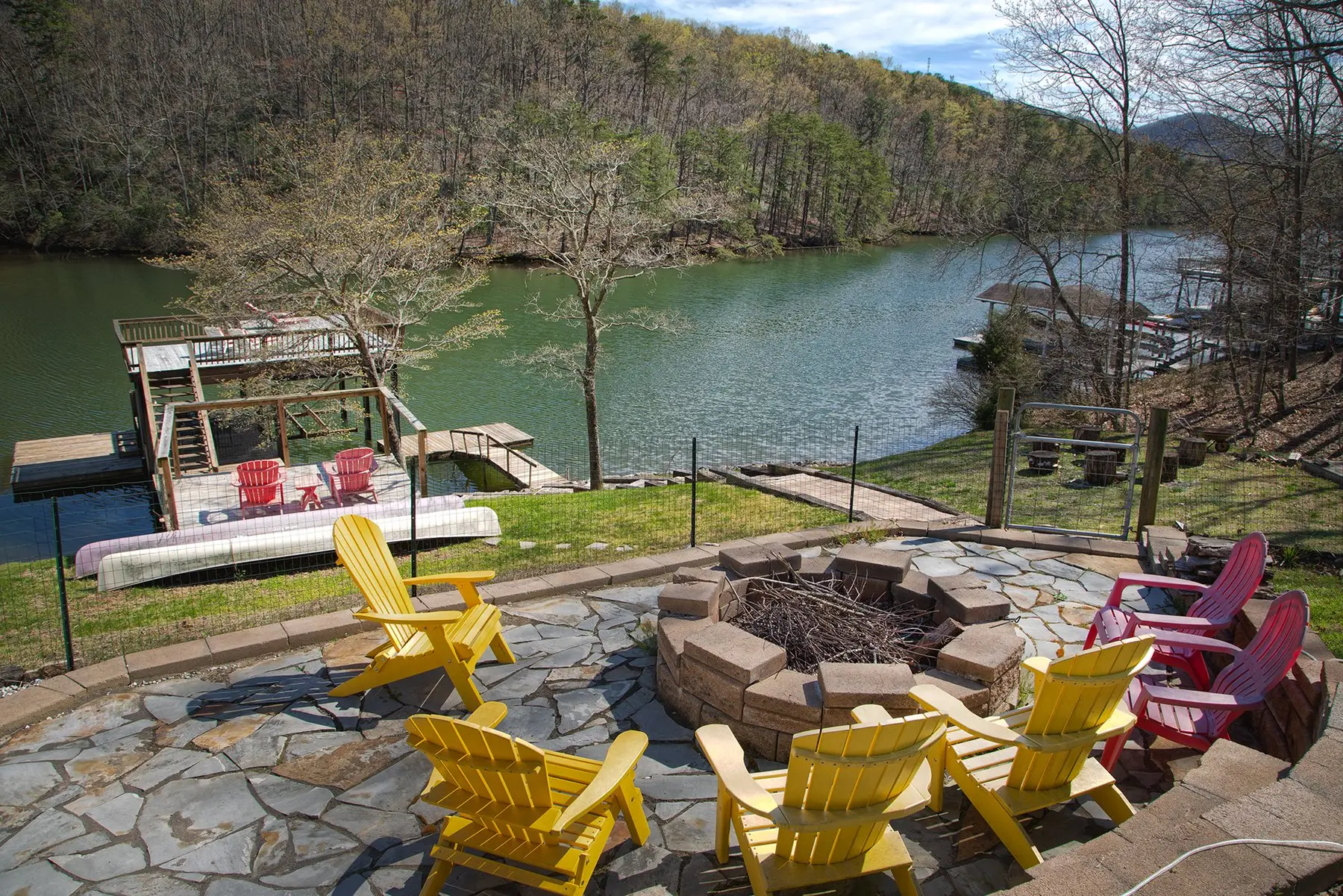
How a Smokeless Fire Pit Works (and Its Real Limits)
A smokeless fire pit burns the smoke rather than venting it, using a double wall and a second ring of air. Here is the mechanism, and when it stops working.
Fire Pit on a Deck: What Is Safe and What Is Not
A wood fire pit on a wooden deck is a bad idea whatever you put under it. What actually works on decking, and the clearances that make it survivable.
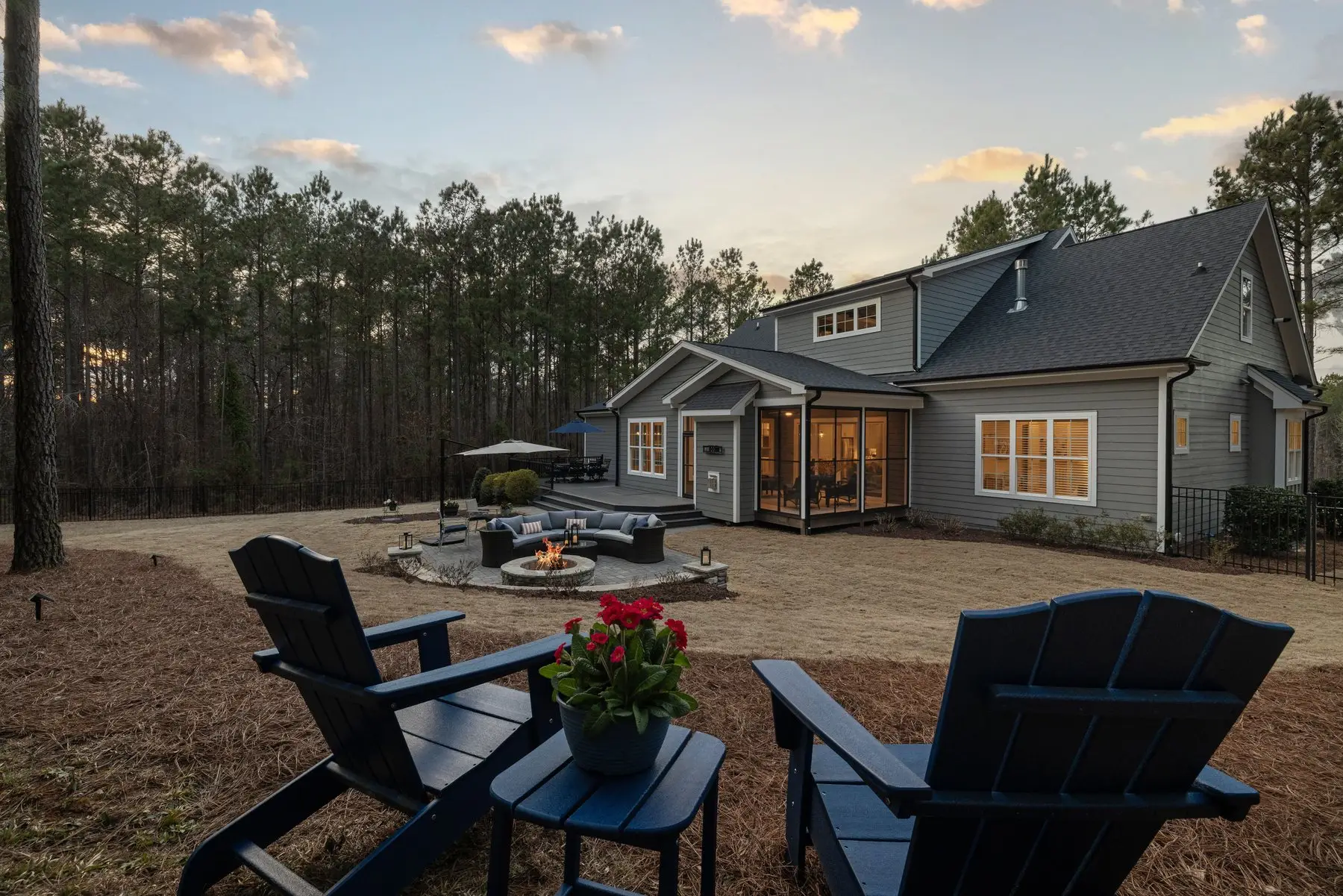
How Far Should a Fire Pit Be From a House? 10 to 25 Feet
Most codes set 10 to 25 feet from structures, but overhead clearance catches more people out. What to measure from, and why local rules decide it.
Cheap DIY Fire Pit: Four Builds and What Each Really Costs
A block fire pit costs under a hundred and lasts years if the base and the liner are right. Four builds compared, plus the clearances that keep it legal.