Backyard Table and Chairs: Sizing, Materials, and Wind
Most outdoor dining sets are bought too small and blow over. The clearances a table actually needs, what each material costs you in upkeep, and how to weight it.

On this page
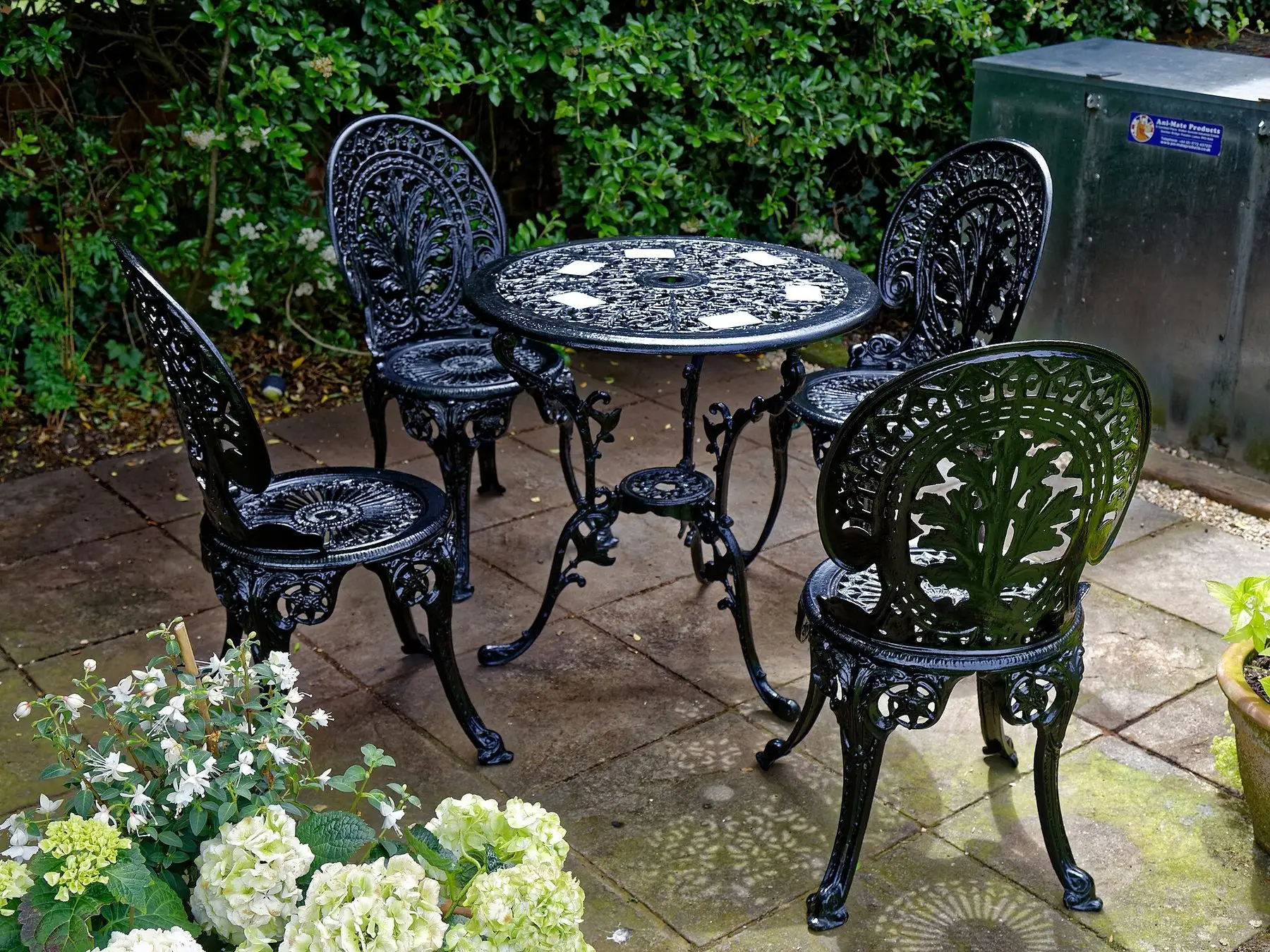
Two things go wrong with outdoor dining furniture, and neither is about the furniture itself. It is bought too small for the space around it, and it blows over.
Both are predictable before you order.
Size it to the space, not to the table
The table’s footprint is not the space it needs. Chairs pull out, and people walk behind them.
| Seats | Table size | Space needed with chairs out |
|---|---|---|
| 4 | 36–44 in round or square | 10 × 10 ft |
| 6 | 60 × 36 in rectangular | 12 × 10 ft |
| 6 | 48–54 in round | 12 × 12 ft |
| 8 | 72 × 40 in rectangular | 14 × 11 ft |
| 10 | 96 × 42 in rectangular | 16 × 11 ft |
The rules underneath those numbers:
- 24 to 30 inches of table edge per person. Below 24 and people bump elbows.
- 36 inches minimum clear behind each chair so someone can push back and stand. 48 inches if there is a walkway behind.
- Table height 28 to 30 inches for dining, with 10 to 12 inches between seat and tabletop.
Round tables seat awkward numbers more gracefully and have no bad seats, but waste corner space. Rectangular fits a narrow patio and extends more easily. Square suits four and looks deliberate in a square courtyard.
Mark it out with a hose before ordering
Lay a garden hose or chalk line on the patio in the full footprint from the table above — including the chair clearance — and live with it for a day. This takes ten minutes and prevents the single most common outdoor furniture regret, which is a set that technically fits and makes the space unusable.
Materials
| Material | Life | Maintenance | Weight | Notes |
|---|---|---|---|---|
| Teak | 25+ yrs | None required | Heavy | Silvers naturally; the benchmark |
| Powder-coated aluminium | 10–20 yrs | Wash occasionally | Light | Rustproof; the sensible default |
| Wrought iron / steel | 15+ yrs | Touch up chips | Very heavy | Stable in wind; rusts once chipped |
| Woven resin (over aluminium) | 7–15 yrs | Wash | Light | Check the frame, not the weave |
| Acacia, eucalyptus | 5–10 yrs | Annual oiling | Medium | Cheaper hardwoods; need care |
| Softwood, painted | 3–7 yrs | Annual treatment | Medium | Cheapest wood; shortest life |
| Plastic resin | 2–5 yrs | None | Very light | Blows away; becomes brittle in UV |
| Concrete, stone | Decades | None | Immovable | Permanent by definition |
Powder-coated aluminium is the default recommendation for most gardens: it does not rust, needs nothing done to it, and is light enough to rearrange without being so light it moves in wind.
Teak is the long answer. Untreated, its natural oils resist rot and insects for decades, and it weathers from honey to silver-grey — a cosmetic change, not decay. If you keep furniture for twenty years it is cheaper per year than anything else here.
Check the frame under woven furniture. The weave is what you see; an aluminium frame lasts, a steel one rusts from the inside where you cannot see it, and that is what actually fails.
Wind
Lightweight outdoor furniture in an exposed garden ends up somewhere else. Three things reduce it:
- Slatted or open chair backs. A solid back is a sail. This is the design detail that matters most and it is easy to check.
- Weight low down. Sand in hollow bases, heavier materials, or a table with a substantial pedestal rather than thin legs.
- Stack or store in the windy season. Stacking chairs is worth choosing for, not just tolerating.
The umbrella is what usually causes the damage
A parasol turns the whole set into a sail and levers the table over, often breaking a glass top on the way. Never leave an umbrella up unattended, weight the base properly for the canopy size, and close it whenever you leave the garden. See patio umbrellas for base weights.
The details that predict lifespan
Price is a weak signal. These are better:
- Hardware. Stainless steel or galvanised bolts. Plain steel fixings rust and stain the furniture around them, and they fail long before the frame does.
- Joints. Welded beats bolted on metal. Mortise-and-tenon beats screwed butt joints on wood.
- Coating. Powder coating outlasts paint substantially. Ask which it is.
- Feet. Plastic or rubber feet protect the furniture and the patio, and are replaceable.
- Glass tops. Must be tempered. They are also the most common breakage in wind.
- Cushion fabric. Solution-dyed acrylic holds colour for years; printed polyester fades in one season.
Care
Teak: nothing. Wash occasionally. Oil only if you want to preserve the honey colour, and be aware that once you start you are committed to doing it annually.
Aluminium: soapy water.
Steel and iron: touch up chips promptly. Rust starts where the coating breaks.
Wood other than teak: clean and re-treat annually.
Cushions: store them dry and indoors. They are the shortest-lived part of any set and the part most improved by simply bringing them in.
Covers: must breathe. A non-breathable cover traps condensation against the furniture and causes mould and rust — genuinely worse than leaving it uncovered.
Common questions
What size outdoor table do you need?
What is the best material for outdoor furniture?
How do you stop patio furniture blowing over?
Is teak furniture worth the money?
Do you need to cover outdoor furniture in winter?
How much should you spend on outdoor furniture?
Backyard Weekly
Know what to plant, week by week
Free planting calendar. Join the weekly email for seasonal jobs, fixes for what is going wrong, and gear worth buying.
Set MONETIZATION.email.endpoint in src/config/site.ts to enable this form.
By subscribing you agree to our privacy policy. Grow In Backyard will never sell your address.
Keep reading

Patio Umbrellas: Size It to the Table, Weight It to the Wind
Two numbers decide whether an outdoor umbrella works: the span against your table, and the base weight. Plus which fabrics actually survive a season.
How to Choose a Hammock Stand (Size It First)
Most hammock stand complaints are sizing mistakes. How to match stand length to your hammock, what each style suits, and the specs that actually matter.
Two-Zone Grilling: The Setup That Fixes Most Problems
Burnt outside, raw inside is a heat-layout problem, not a timing one. How to build a hot zone and a cool zone, and which foods belong on each.
How to Fill a Raised Garden Bed (Without Spending a Fortune)
What to put in the bottom, the soil mix that actually works, and why hugelkultur layering is a good idea in a deep bed and a bad one in a shallow bed.