
Why Do Chicken Coops Have Two Doors? The Practical Answer
One door is for the birds, one is for you — and the split solves cleaning, predator security and ventilation at once. What each door should actually be.
 By

On this page
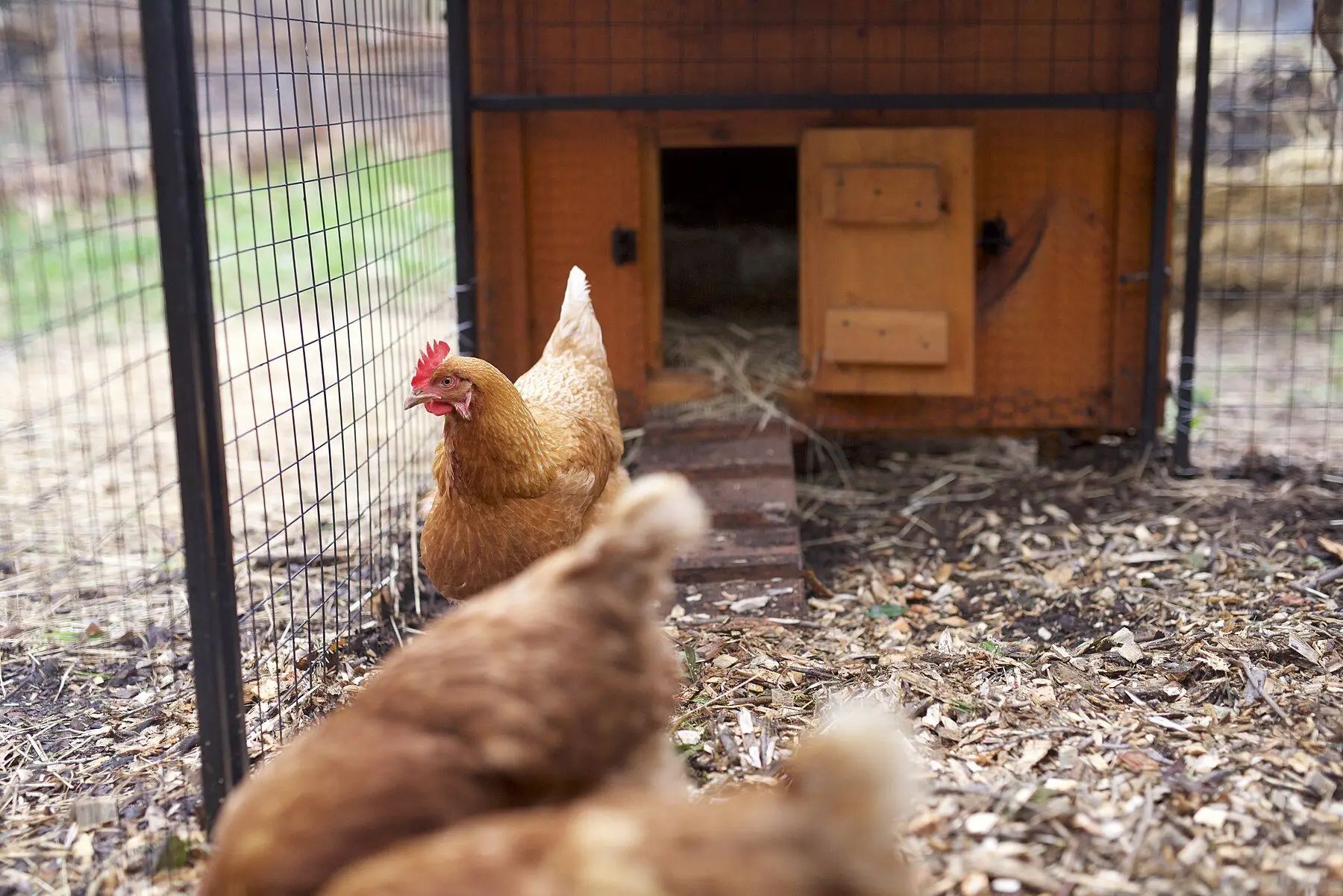
Because one door is for the hens and one is for you, and the two jobs have almost nothing in common. A hen needs an opening the size of a shoebox. You need one you can carry a bucket through.
What each door is for
| Pop door | Human door | |
|---|---|---|
| Used by | The birds | You |
| Size | ~10–12 in wide × 12–14 in tall | Full height, or a large hinged panel |
| Position | Low, a few inches above floor level | Whole side, end, or roof |
| Closed | Every night at dusk | Latched whenever you are not in it |
| Main risk it manages | Predators and heat loss | Being unable to clean or catch a bird |
| Common upgrade | Automatic opener | A door wide enough for a wheelbarrow |
Why the pop door is small on purpose
Every inch of opening is a cost:
- Predator access. A raccoon reaches through anything its arm fits in, and a weasel or a rat needs remarkably little. The smaller the hole, the easier it is to make a secure closure for it.
- Heat and draught. A chicken’s problem in winter is moving air over the roost, not cold air as such. A large low opening feeds a draught straight through the coop.
- Bedding. Set the sill a few inches above floor level and the birds hopping through stop kicking shavings out into the run.
- Rain. A small opening under an overhang stays dry. A big one takes weather.
The closure matters more than the door
A pop door that latches with a simple hook is a raccoon puzzle solved in under a minute — they have genuinely dexterous hands and will work at a latch for as long as it takes. Use a vertical sliding hatch that seats in a channel, or a two-step closure such as a barrel bolt plus a spring clip. Chicken wire anywhere on the coop is decoration, not security; use hardware cloth.
Why the human door is not optional
It is the door people skimp on, and it is the one that decides whether coop keeping stays pleasant.
- Cleaning. You need to reach every corner, including under the roost and inside the nest boxes. Anything you cannot reach is where mites live and where wet litter turns to ammonia.
- Catching a bird. Sooner or later you need one in your hands — a limp, a suspected mite infestation, a broody to move. Doing that through a hatch is miserable for you and for the hen.
- Feed and water. Daily, in all weather, with full hands.
- Inspection. Seeing the roost, the droppings board and the birds properly, up close, is how problems get caught early.
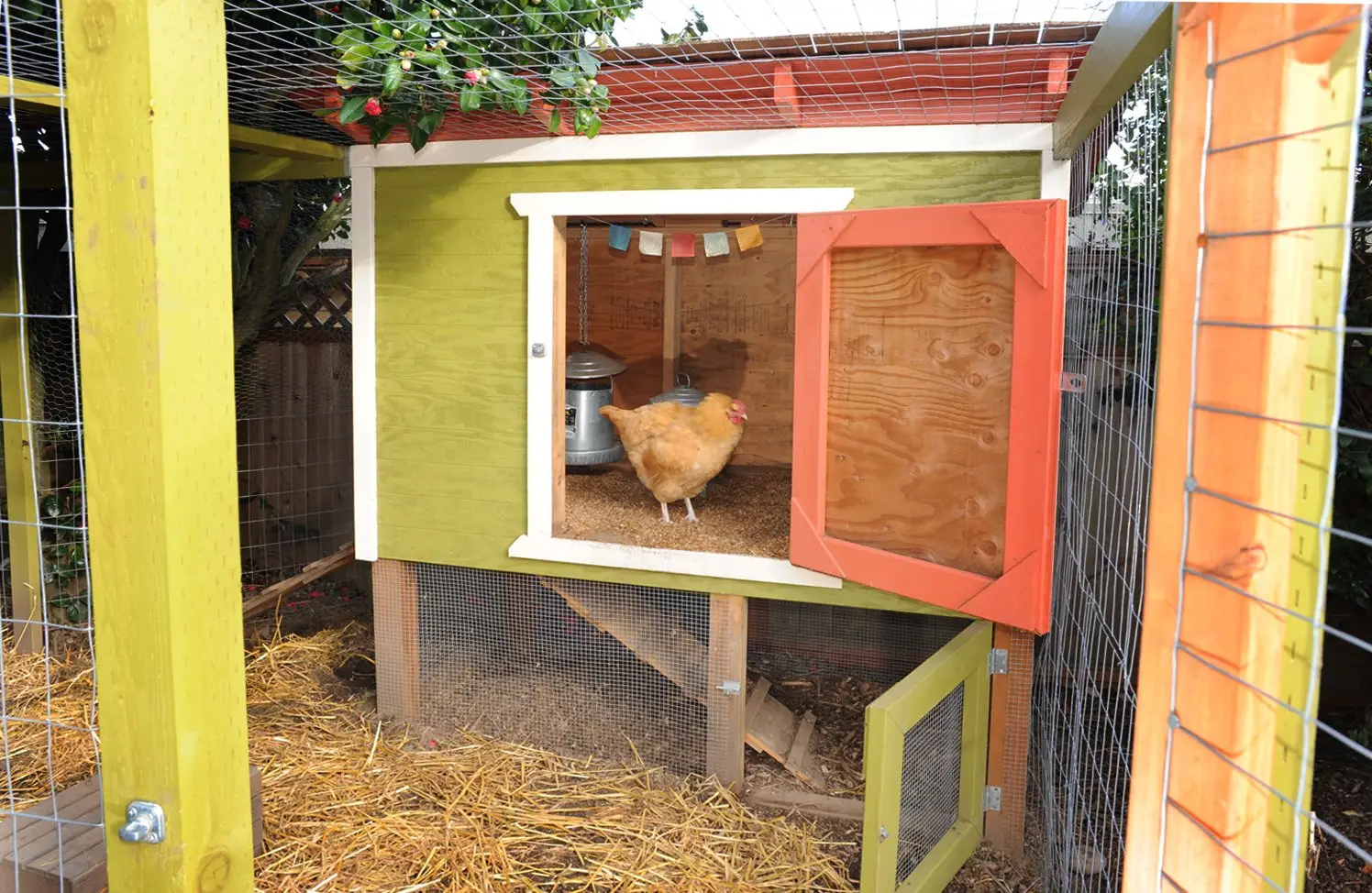
On a small coop this does not have to be a hinged door on a wall — a lift-off roof, a drop-down front or a large removable panel does the same job. The test is not the shape. The test is whether you can get a scraper into the far corner without kneeling in it.
Nest box access is often a third opening
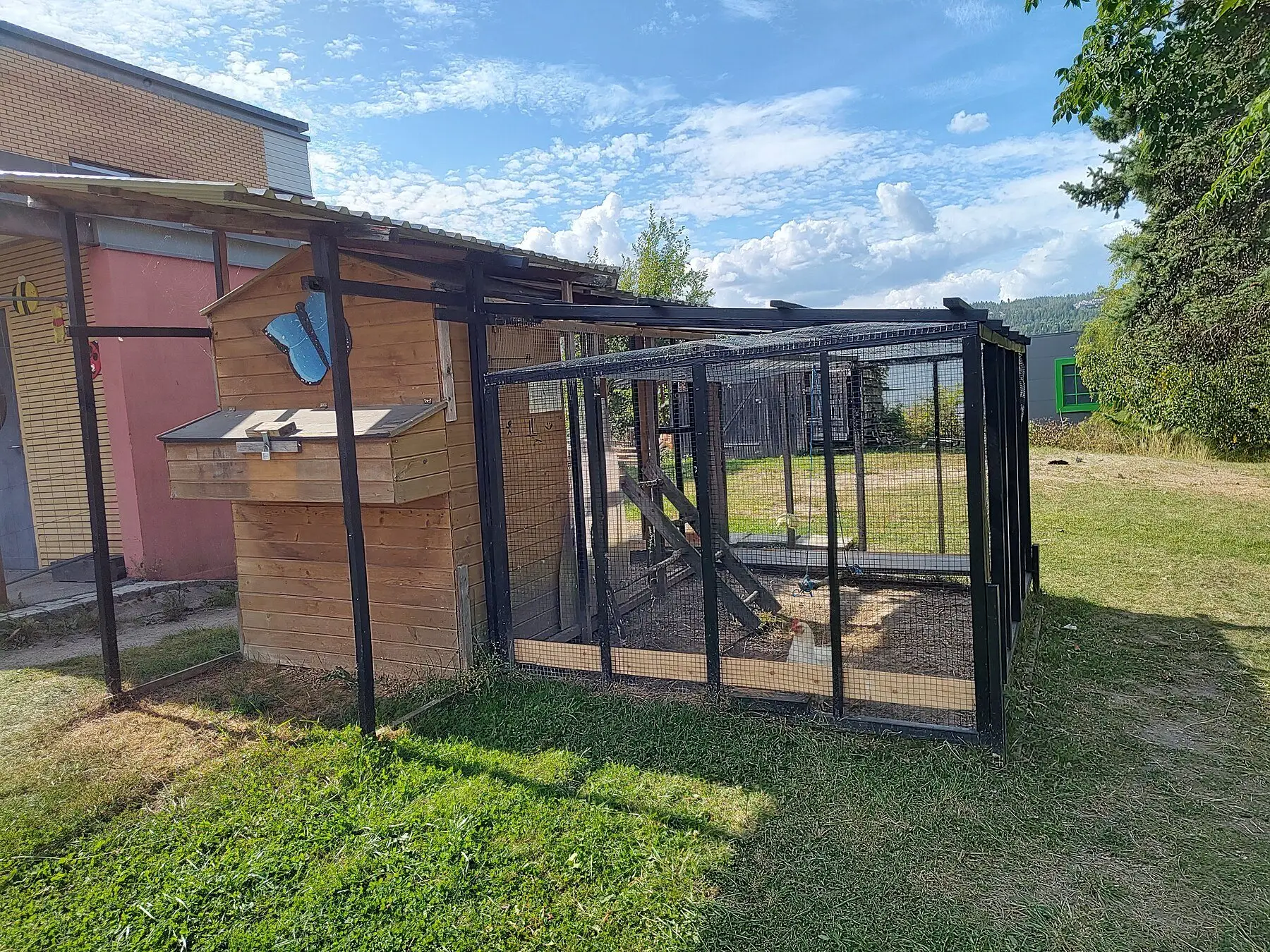
Most decent coops add a small external hinged lid over the nest boxes, so eggs can be collected from outside without opening the coop or disturbing the flock. It is a genuine convenience in winter and it keeps you out of the birds’ space.
That gives the common three-opening layout:
- Pop door — birds in and out
- Human door or panel — cleaning and handling
- Nest box lid — egg collection from outside
Siting the pop door
- Away from the prevailing wind and rain. South or south-east across most of the northern hemisphere.
- Toward morning sun, so the birds get light and warmth on the way out.
- Under an overhang, so rain does not run in.
- Not in line with the roost. A draught blowing across roosting birds is a common cause of frostbitten combs and wattles.
- With a ramp if the sill is more than 8 to 10 inches off the ground, cleated every few inches so feet get grip.
On automatic doors
The one piece of kit that changes the routine
Being home at dusk every single evening is the hardest ongoing commitment in keeping chickens, and an automatic pop door removes it. Look for a light sensor or timer, a battery backup, and an obstruction cutout so it cannot close on a bird. Two rules: check the flock is actually inside before it shuts — a hen left outside is a hen fed to a fox — and keep a manual override for when the power or the batteries fail.
Ventilation is not a door
A frequent confusion worth ending: a coop needs permanent ventilation high up, above the birds’ heads — ideally in the gable or under the eaves, protected by hardware cloth — and it needs that ventilation open all winter.
The pop door is not ventilation. Moisture from droppings and breath is what causes frostbite and respiratory disease, so it has to leave through vents above the roost, not through a draught blowing across the birds at floor level.
Common questions
Why do chicken coops have two doors?
What is a pop door on a chicken coop?
How big should a chicken pop door be?
Do chicken coops need two doors?
Should the pop door face a particular direction?
Does an automatic coop door actually help?
Backyard Weekly
Know what to plant, week by week
Join the weekly email for seasonal jobs, fixes for what is going wrong, and gear worth buying.
Not ready to subscribe? The planting calendar is free and needs no email.
By subscribing you agree to our privacy policy. Grow In Backyard will never sell your address.
Keep reading
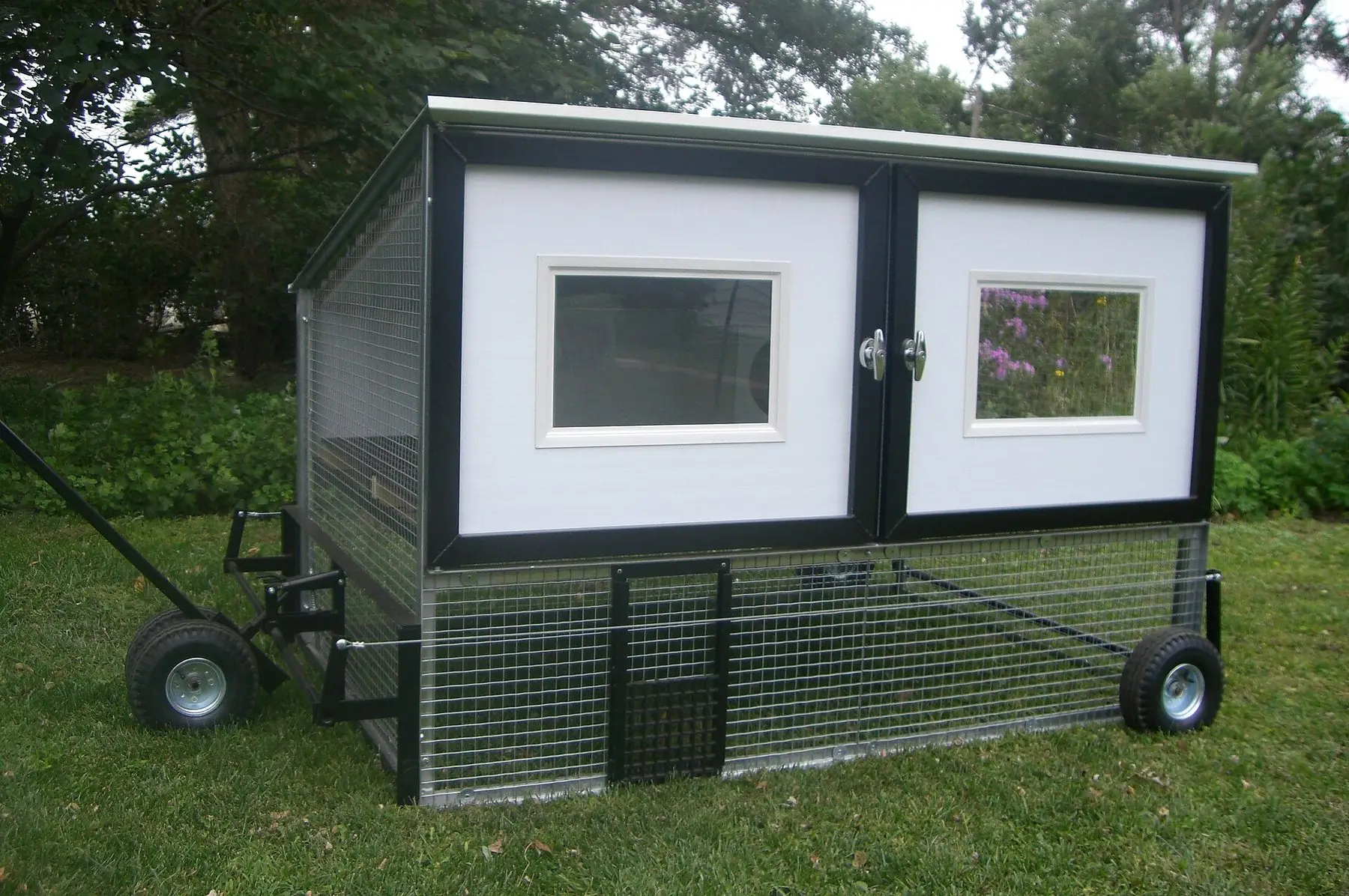
Types of Chicken Coops: Which One Actually Fits Your Yard
Fixed, tractor, walk-in, A-frame — each solves a different problem. What each style is actually for, before you commit to building or buying one.
Chicken Coop Plans: Sizing It Right Before You Build
Most coop plans get ventilation and predator-proofing wrong. The dimensions that actually matter, what to build from, and a step-by-step order of work.
Best Chicken Coops to Buy — 4 Fixes Before You Order
Knowing the best chicken coops to buy starts with what prefabs get wrong. 4 fixes compared, plus when building costs less. See which your flock needs.
Backyard Chickens: What It Actually Takes
Space, cost, time, and the rules nobody mentions. An honest account of keeping backyard chickens before you buy the coop — including why the eggs are not free.