
Why Aren't Fish Biting? Six Causes, in Order of Likelihood
Water temperature, barometric pressure, light and feeding windows explain most blank sessions. What to change, and what is outside your control.
 By
On this page
Most blank sessions are explained by water temperature, time of day, and what the weather did yesterday — not by the bait on the hook.
The six causes, ranked
| cause | how to tell |
|---|---|
| Water temperature outside the range | thermometer; species range |
| Wrong time of day | flat bright midday, no surface activity |
| Post-cold-front high pressure | clear bright sky, sharp drop yesterday |
| Fishing the wrong depth | no contact at any speed |
| Spawning | fish visible but ignoring everything |
| Fishing pressure | busy bank, water worked that morning |
Temperature ranges worth knowing
| species | feeds best | shuts down |
|---|---|---|
| Trout | 10–16°C | above ~20°C |
| Bass | 18–27°C | below ~10°C |
| Carp | 18–24°C | below ~8°C |
| Pike | 10–18°C | above ~22°C |
| Panfish | 15–24°C | below ~8°C |
Air temperature is a poor proxy. Shallow water warms and cools several times faster than deep water, so the same lake can be in range at one end and out of it at the other.
Change depth before you change anything else
Far more blanks are caused by presenting above the fish than by the wrong lure. In cold, bright or post-front conditions they sit deeper than most people fish, and they will not come up for it.
What to do with a shut-down day
- Fish the approach of weather rather than the clear day behind it
- Go at first light or last light and accept that the middle of the day is poor
- Slow everything down in cold water — a cold fish will not chase
- Downsize before you change colour
- Move, rather than persisting; a blank spot stays a blank spot
- Come back at dusk if the day has been bright and still
An algal bloom crashes the oxygen at night
In warm still weather, a heavy bloom photosynthesises by day and respires by night, and dissolved oxygen bottoms out before dawn. Fish are lethargic and feeding stops. It is one of the conditions where nothing in the tackle box is the answer.
Common questions
Why are the fish not biting?
Does barometric pressure really matter?
What water temperature stops fish feeding?
When is the best time of day?
What should I change first?
When is it not your fault?
Backyard Weekly
Know what to plant, week by week
Join the weekly email for seasonal jobs, fixes for what is going wrong, and gear worth buying.
Not ready to subscribe? The planting calendar is free and needs no email.
By subscribing you agree to our privacy policy. Grow In Backyard will never sell your address.
Keep reading
Best Fish for a Small Pond (And How Many It Holds)
Goldfish and shubunkins suit small ponds; koi do not. Stocking limits by volume, which species survive a frozen winter, and what actually eats algae.
What Fish Will Keep a Pond Clean? None of Them, Really
No fish cleans a pond — they add waste. What algae eaters actually do, which species help at the margins, and the filtration that does the real work.
How Big a Pond Do You Need for Bass?
Half an acre and eight feet deep is the practical floor for a self-sustaining bass pond. What smaller ponds can and cannot support.
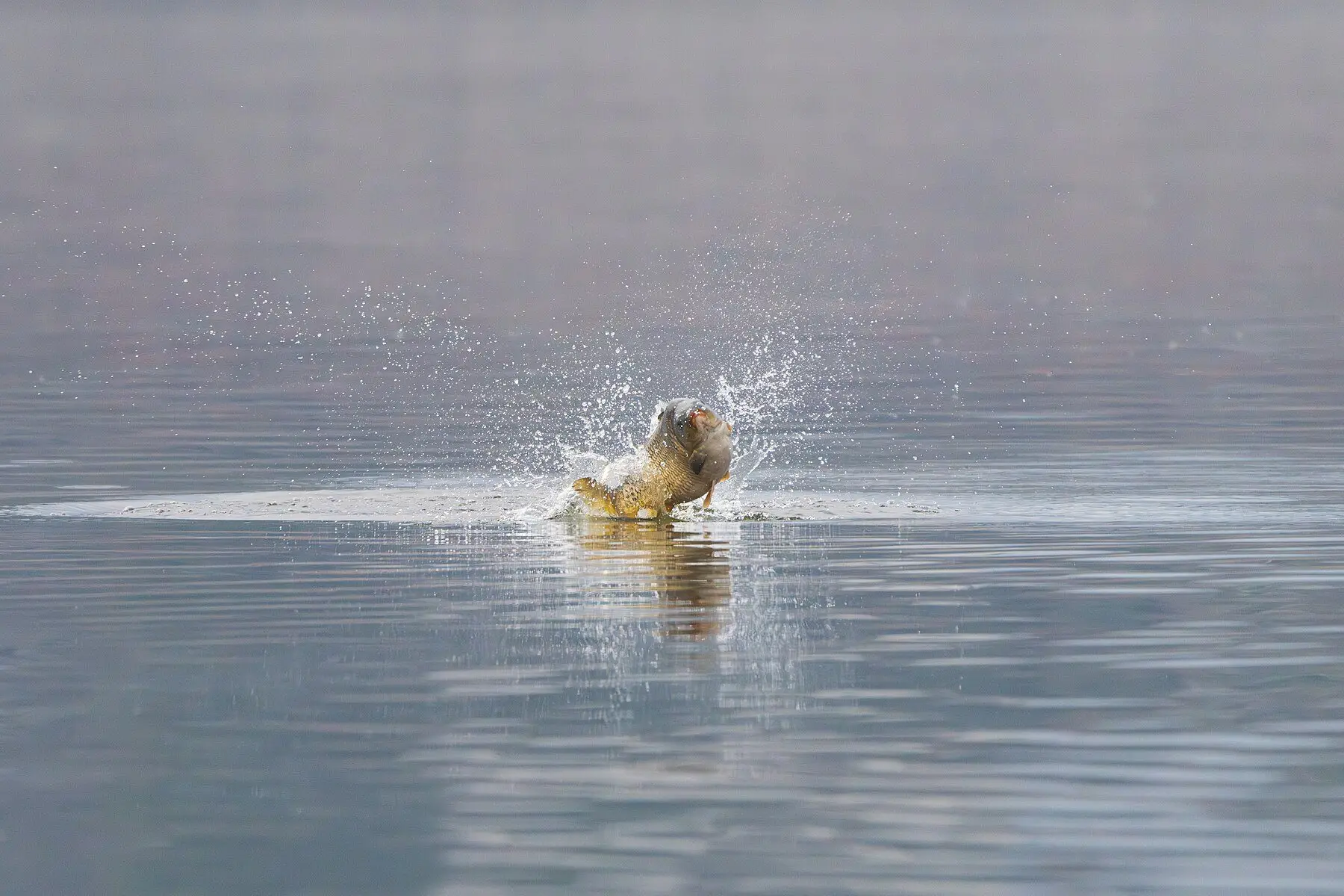
Why Do Fish Jump Out of the Water?
Feeding, escaping predators, shedding parasites, and clearing obstacles — plus the one reason that matters if it is your pond fish doing it.