
Shortest Aquarium Carpet Plant? Monte Carlo and HC
Dwarf baby tears stays under 3 cm, Monte Carlo under 5 cm. Which low carpets need CO2, which don't, and what height each settles at.
 By
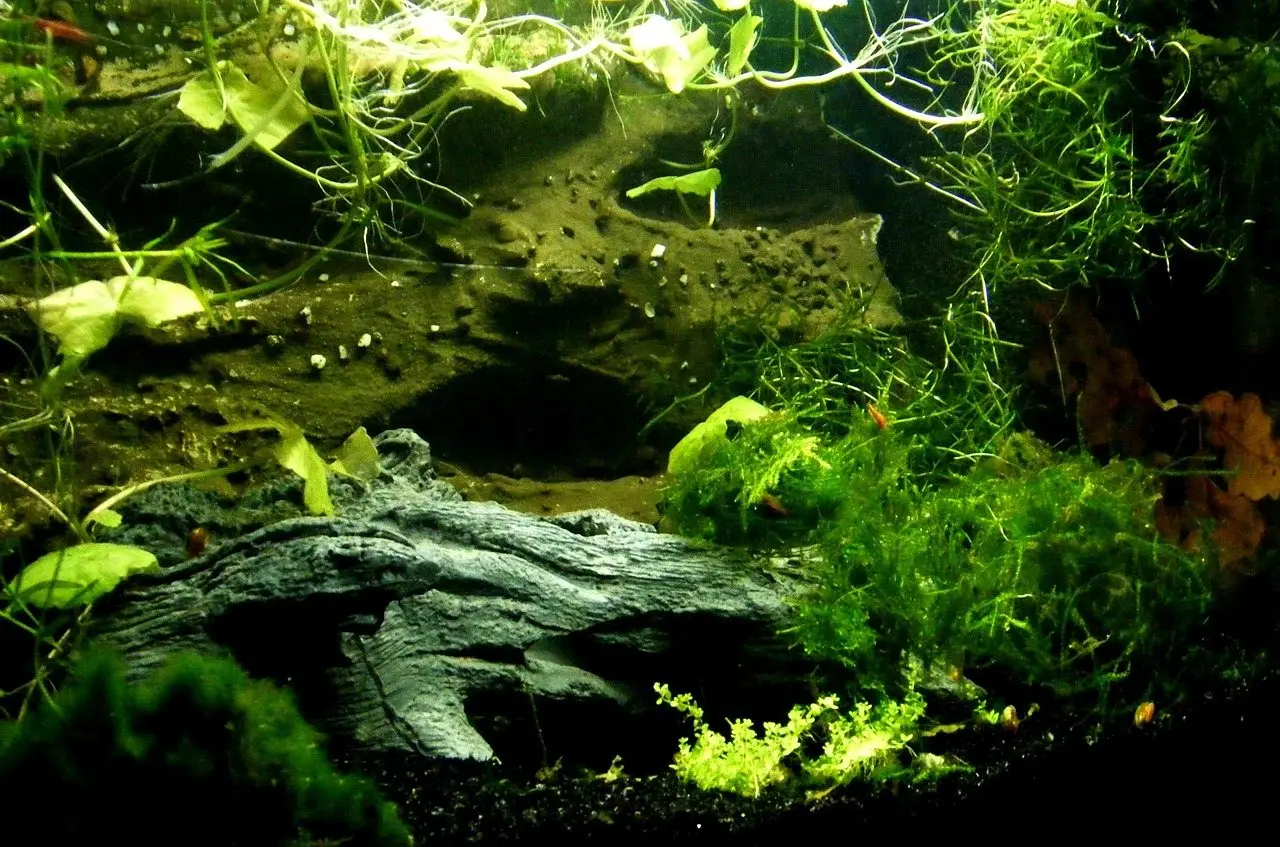
On this page
Dwarf baby tears is the shortest carpet there is, and the hardest to keep. Monte Carlo gives up about two centimetres of height and takes most of the difficulty with it.
Height and difficulty
| plant | height | CO2 needed | light |
|---|---|---|---|
| Dwarf baby tears (HC) | 1–3 cm | effectively yes | high |
| Monte Carlo | 3–5 cm | no, better with | medium |
| Glossostigma elatinoides | 2–4 cm | yes | high |
| Dwarf hairgrass | 5–10 cm | no | medium |
| Marsilea hirsuta | 3–8 cm | no | low–medium |
| Staurogyne repens | 5–10 cm | no | medium |
Glossostigma is nearly as short as HC and just as demanding, with a strong tendency to grow vertically the moment light drops.
Planting so it carpets rather than clumps
- Split the pot into clumps of three or four stems
- Plant 2–3 cm apart across the whole footprint
- Push the roots in, leave the crown above substrate
- Trim early and often — cutting forces runners sideways
- Keep the glass clean; a film of algae costs real light at the substrate
Dry start if you want HC to work
Plant into damp substrate, cover the tank with cling film, keep it humid and lit for four to six weeks, then flood. The carpet establishes emersed with unlimited CO2 from the air, and arrives at flooding already rooted.
A carpet that lifts in sheets has root failure underneath
Usually compacted substrate, insufficient nutrients at root level, or gas building beneath a dense mat. Thin it, trim it hard, and check the substrate depth before replanting.
Common questions
What is the shortest aquarium carpet plant?
Does dwarf baby tears need CO2?
What is the easiest short carpet plant?
Can you grow a carpet without CO2 at all?
How do you plant a carpet so it actually spreads?
Why is my carpet growing upward instead of sideways?
Backyard Weekly
Know what to plant, week by week
Join the weekly email for seasonal jobs, fixes for what is going wrong, and gear worth buying.
Not ready to subscribe? The planting calendar is free and needs no email.
By subscribing you agree to our privacy policy. Grow In Backyard will never sell your address.
Keep reading
Can You Put Outdoor Plants in an Aquarium? Mostly No
Garden plants rot underwater and foul the tank. The few that work, why pond plants are different, and what pesticide residue does to fish.
Best Fish for a Small Pond (And How Many It Holds)
Goldfish and shubunkins suit small ponds; koi do not. Stocking limits by volume, which species survive a frozen winter, and what actually eats algae.
Are Lily Pads Good for a Pond? Cover, Shade and the Limit
Water lilies shade out algae and shelter fish, but past about half the surface they starve a pond of oxygen. The right coverage and how to hold it.
What Size Pump Do I Need for My Pond? Sizing by Volume
Pond pumps are sized by turnover, head height and waterfall width. The three calculations, the flow-rate table, and the mistake that burns pumps out.