
What Is the Best Type of Rabbit Hutch — 3 Sizes Up
What is the best type of rabbit hutch comes down to floor area. 3 options compared, plus the cheap size fix. See which suits your rabbit.
 By
We may earn a commission when you buy through links on this page, at no extra cost to you.
On this page
Bigger than anything sold as a hutch. A converted shed or walk-in aviary with a permanently attached run beats a traditional hutch on every count. Welfare guidance asks for 3 m² with constant access — most commercial hutches are not adequate for one rabbit, let alone two.
The three-test sanity check
A rabbit should be able to:
- Take three consecutive hops without hitting a wall
- Stand fully upright on its hind legs without its ears touching the roof
- Stretch out flat on its side
Any enclosure failing those is too small, whatever the label says
A hutch marketed as suitable for two rabbits frequently is not adequate for one. The label is marketing; the three tests are the animal.
Options compared
| Traditional hutch | Hutch + attached run | Shed or walk-in aviary | |
|---|---|---|---|
| Meets 3 m² guidance | Rarely | Sometimes | Yes |
| Free access to exercise | No | Yes | Yes |
| Standing height | Usually not | Partly | Yes |
| Cleaning | Awkward, on knees | Awkward | Walk in |
| Weather and heat control | Poor | Moderate | Good — shade, ventilation, insulation |
| Predator security | Variable | Variable | Best |
| Space for a bonded pair | No | Tight | Yes |
Why the attached run matters so much
A rabbit let out for an hour a day is confined for the other twenty-three. That is where most hutch-related health problems begin:
- Obesity
- Sore hocks
- Muscle weakness
- Poor gut motility — which in rabbits escalates to GI stasis, an emergency
- Boredom-driven behaviour — bar chewing, over-grooming
A permanent tunnel or doorway means the rabbit moves when it wants to, which is at dawn and dusk — not when it suits you to open a door.
Whatever hutch you land on, what goes inside it decides whether it smells: see rabbit bedding for odour control.
Build and materials
- Solid floor, never wire mesh
- Sloped felted or shingled roof with an overhang
- Pressure-treated timber, non-toxic finishes on anything reachable
- Enclosed sleeping compartment separate from the open area
- Predator-proof fastenings — foxes open simple turn-buttons
- Raised on legs for dryness, and so cleaning does not mean kneeling in wet grass
Heat is the greater danger, not cold
Rabbits tolerate cold well with good bedding and shelter. They suffer heatstroke above roughly 25°C, and a hutch in direct sun exceeds that easily. Site it in summer shade and ensure through-ventilation. A sudden move from indoors to outdoors in winter is also dangerous — move them in autumn so they acclimatise.
Two rabbits, not one
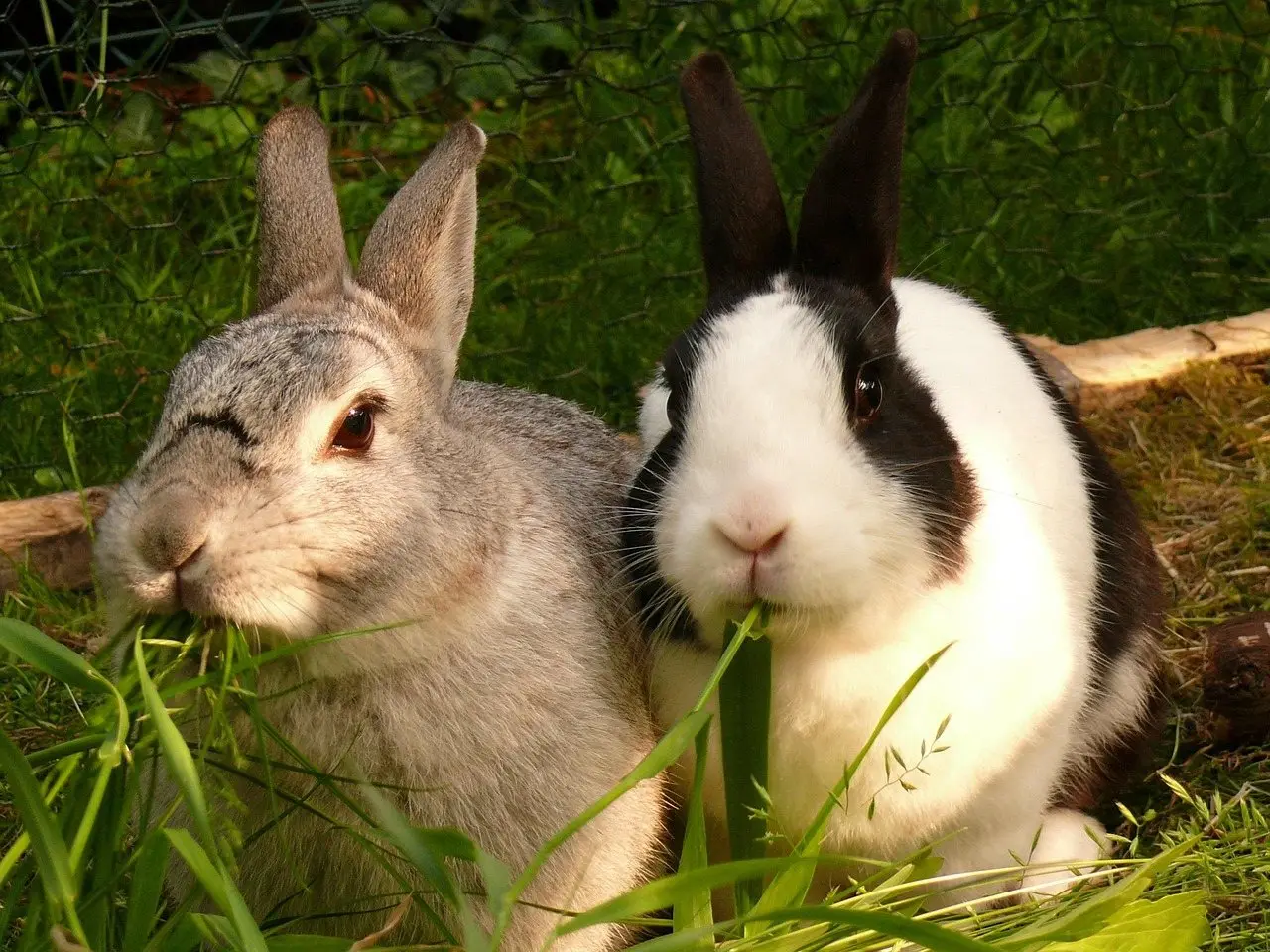
Rabbits are highly social, and keeping one alone is now widely regarded as a welfare problem. A neutered bonded pair is the standard recommendation — which means every space figure above applies to two animals, and the enclosure needs room for them to move away from each other.
Bonding takes time and should be done gradually on neutral ground.
Our picks
| # | Pick | Best for | Where to buy |
|---|---|---|---|
| 1 | Hutch with an attached run | Best overall | Check price for Hutch with an attached run → |
| 2 | Rain and wind cover | Best cheap upgrade | Check price for Rain and wind cover → |
| 3 | Resting mat or solid floor panel | Best for the feet | Check price for Resting mat or solid floor panel → |
Best overall
Hutch with an attached run
The attached run is the specification that matters. A hutch without one is a cage you intend to supplement and then do not.
- Why
- A hutch alone is too small for a rabbit's daily movement
- Access
- Walk-in or large hinged panels for cleaning
- Floor
- Solid or covered — wire floors cause sore hocks
- Siting
- Sheltered, out of direct afternoon sun
What we liked
- Permanent access to space, rather than supervised time out
- Large openings make weekly cleaning realistic
- Attached run removes the daily carry in and out
Worth knowing
- Takes real garden space
- Flat-pack timber quality varies widely
Best cheap upgrade
Rain and wind cover
Worth it in any wet climate. Never close it up completely: ammonia at nose height is worse than cold.
- Type
- Fitted waterproof cover with roll-up front
- Protects
- Driving rain, wind, winter cold
- Keep
- Ventilation at one end
- Season
- Autumn through spring
What we liked
- Driving rain into a hutch is what makes it cold and damp
- Cheap relative to a replacement hutch
- Rolls back on dry days
Worth knowing
- A fully sealed hutch traps ammonia — leave a vent
- Covers perish in UV after a few seasons
Best for the feet
Resting mat or solid floor panel
Buy one with any hutch that has a wire floor. Sore hocks are common, painful and entirely preventable.
- For
- Covering wire floors and hard bases
- Prevents
- Sore hocks (pododermatitis)
- Material
- Seagrass, wood or thick mat
- Also
- Somewhere dry to sit above bedding
What we liked
- Wire and bare hard floors cause painful sore hocks
- Gives a dry place to sit above absorbent bedding
- Cheap, and chewable types are safe
Worth knowing
- Needs replacing as it is chewed
- Another thing to lift when cleaning
Common questions
What is the best type of rabbit hutch?
How big should a rabbit hutch be?
Should the run be attached or separate?
Can rabbits live outdoors all year?
What materials and features matter?
Do rabbits need company?
Backyard Weekly
Know what to plant, week by week
Join the weekly email for seasonal jobs, fixes for what is going wrong, and gear worth buying.
Not ready to subscribe? The planting calendar is free and needs no email.
By subscribing you agree to our privacy policy. Grow In Backyard will never sell your address.
Keep reading
Best Rabbit Bedding for Odor Control — 5 on Absorbency
The best rabbit bedding for odor control wins on absorbency alone. 5 materials compared, including the unsafe ones. See which suits your hutch.

Can a Chipmunk Be a Pet? The Legal and Practical Answer
Taking a wild chipmunk is illegal in most states and a poor idea everywhere. What the law says, what captive Siberian chipmunks need, and the honest verdict.
Best Ducks for Eggs: Five Breeds, and What Each Costs You
A Khaki Campbell out-lays almost any chicken. Five laying breeds compared on eggs per year, noise, temperament and how long the output actually holds up.

What Do Chipmunks Eat? Seeds, Nuts, and a Lot Else
Chipmunks are omnivores hoarding seeds and nuts in cheek pouches — plus insects, eggs and fungi. What to feed them, what harms them, and why they dig your pots.