
What Do Backyard Rabbits Like to Eat? Hay First, Always
Unlimited grass hay is 80% of the diet. The greens that are safe daily, the ones that are weekly, and the foods that genuinely kill rabbits.
 By
On this page
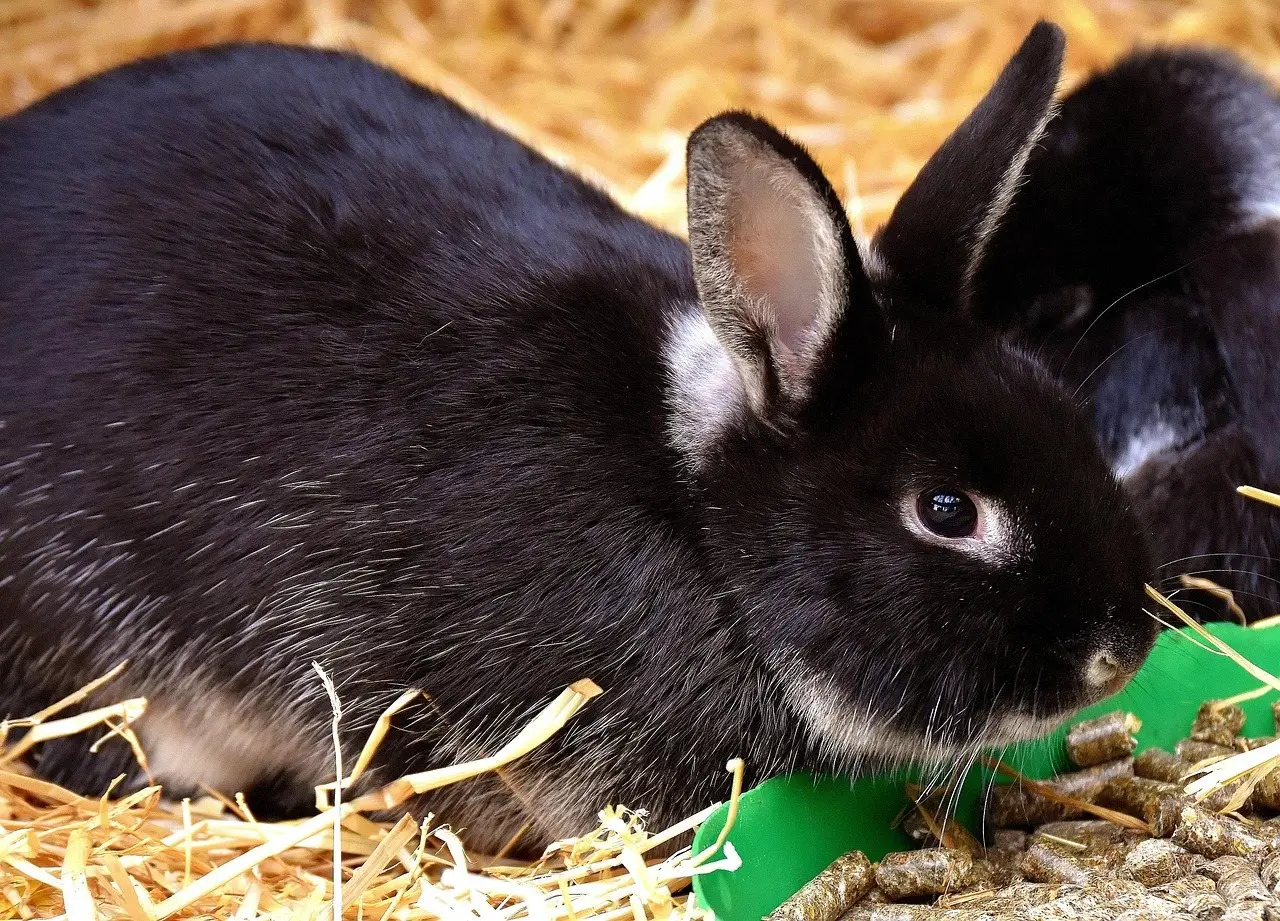
Hay is the diet, not the bedding. Nearly every serious health problem in a pet rabbit traces back to a bowl of pellets eaten in preference to it.
The proportions, by volume
| food | share | notes |
|---|---|---|
| Grass hay | ~80% | unlimited, always available |
| Leafy greens | ~10–15% | 3+ varieties daily |
| Pellets | ~5% | measured, plain timothy-based |
| Treats (fruit, carrot) | trace | once or twice weekly |
Daily, weekly, never
| daily | small amounts | never |
|---|---|---|
| Romaine, dark leaf lettuce | Kale, broccoli, cabbage | Avocado |
| Coriander, basil, mint, dill | Carrot root | Chocolate, any human sweets |
| Rocket, watercress | Apple, berries | Onion, garlic, leek |
| Bok choy, celery leaves | Pepper, cucumber | Rhubarb leaves |
| Carrot tops, dandelion | Parsley | Potato and tomato foliage |
| Grass (untreated) | Grass clippings, iceberg in quantity |
Muesli mixes cause the problems they claim to prevent
Given a mix, a rabbit eats the sweetened flakes and peas and leaves the fibre pellets. The result is a low-fibre, high-sugar diet — dental disease and obesity — in an animal that appears to be eating well. Plain uniform pellets remove the choice.
The signs that matter
A rabbit that stops eating is an emergency, not a wait-and-see. Gut stasis can become fatal within 24 to 48 hours.
- No droppings for 12 hours — call a vet
- Refusing hay but eating pellets — usually dental pain
- Soft or sticky caecotrophs — too much sugar or starch, usually pellets or fruit
- Grinding teeth loudly, hunched posture — pain
- Wet chin or dropping food — dental disease
Check the garden before the rabbit gets it
Foxglove, bluebell, daffodil and other bulbs, ivy, rhododendron, azalea, yew and buttercup are all present in ordinary gardens and all are dangerous. A run moved onto unchecked planting is the usual way a rabbit meets one.
Common questions
What should a backyard rabbit eat?
How much pellet food should they get?
Which greens are safe every day?
What should be occasional or avoided?
Which foods are genuinely dangerous?
Can they just graze the lawn?
Backyard Weekly
Know what to plant, week by week
Join the weekly email for seasonal jobs, fixes for what is going wrong, and gear worth buying.
Not ready to subscribe? The planting calendar is free and needs no email.
By subscribing you agree to our privacy policy. Grow In Backyard will never sell your address.
Keep reading
Can I Raise Rabbits in My Backyard? Check the Zoning First
Most places allow pet rabbits and restrict meat production. The ordinance questions to ask, hutch requirements, and the heat limit that kills rabbits.
Which Garden Plants Will Rabbits Not Eat? The Reliable List
Aromatic herbs, alliums, ferns and tough-leaved shrubs get left alone. Why no plant is truly rabbit-proof, and what a hungry February rabbit will take.
Do Rabbits Like to Burrow? It Is a Hard-Wired Need
Domestic rabbits keep the full digging instinct. What happens without an outlet, and the digging boxes and run bases that satisfy it.
What Is the Best Type of Rabbit Hutch — 3 Sizes Up
What is the best type of rabbit hutch comes down to floor area. 3 options compared, plus the cheap size fix. See which suits your rabbit.