
How to Tell if a Deer Is Going to Attack: The Warning Signs
Ears back, hair raised, head low, a hard stare and a stiff-legged approach. The body language that precedes a charge, and what to do when you see it.
 By
On this page
Ears flat back, hackles raised, head low and level, a hard stare, and a stiff-legged approach. The single most reliable combination is ears back plus closing the distance — an alarmed deer does the opposite.
Aggressive against alarmed
These are easy to tell apart once you know they are opposites.
| Going to attack | Just alarmed | |
|---|---|---|
| Ears | Flat back along the neck | Pricked forward |
| Head | Low, held level | High |
| Hair | Raised on back and rump | Flat |
| Tail | Down or flicking | Raised, flagging white |
| Eyes | Hard, unbroken stare | Looking, then looking away |
| Movement | Stiff-legged, toward you | Stomping, snorting, then away |
| Sound | Buck: snort-wheeze | Single explosive snort |
Ears forward means it is still deciding. Ears back means it has decided.
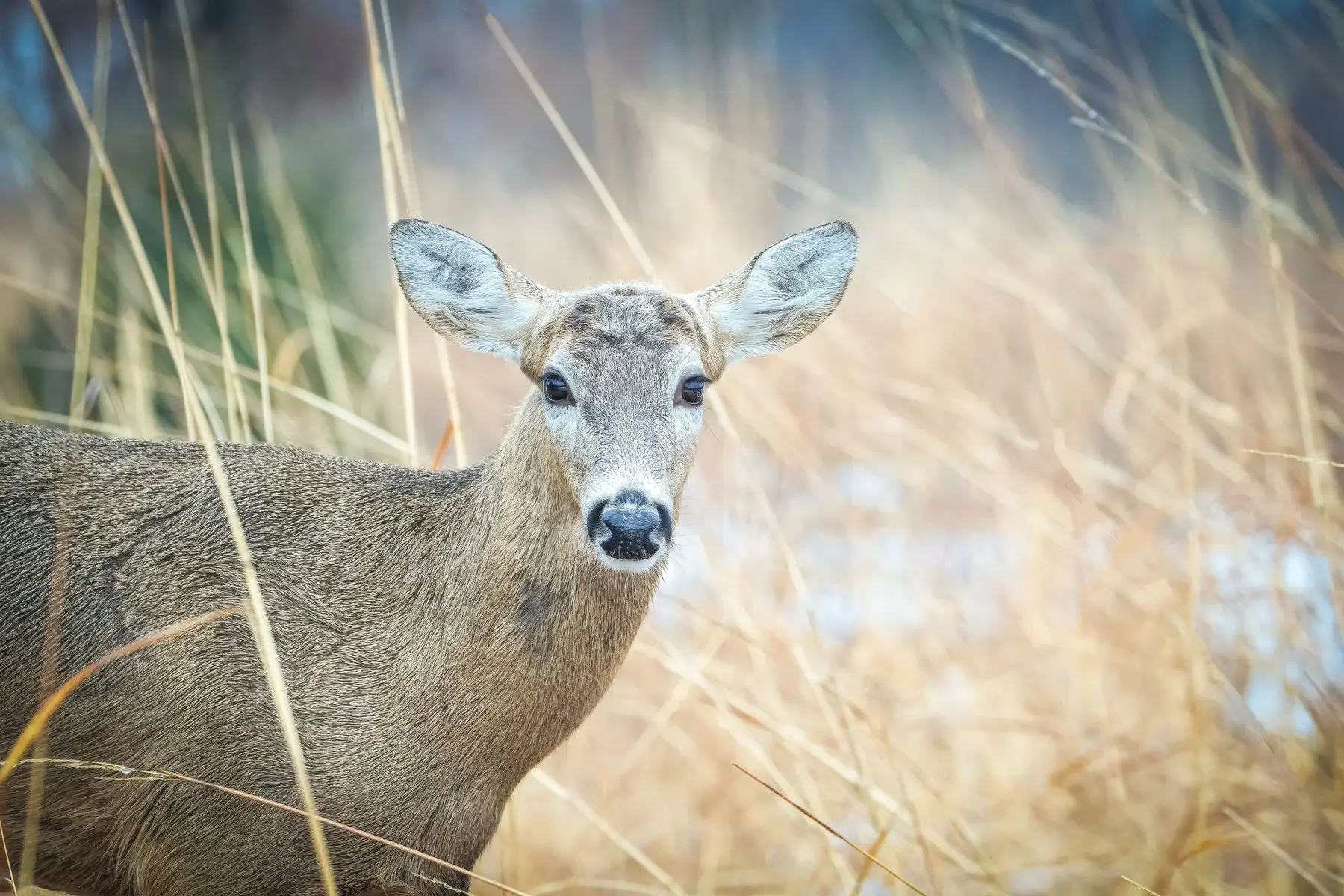
A deer with its ears up and head high is gathering information about whether to run. That animal is no threat and will almost always leave.
A deer that flattens its ears and lowers its head while closing the distance has stopped assessing. That is the transition worth recognising, and it is usually the last clear warning.
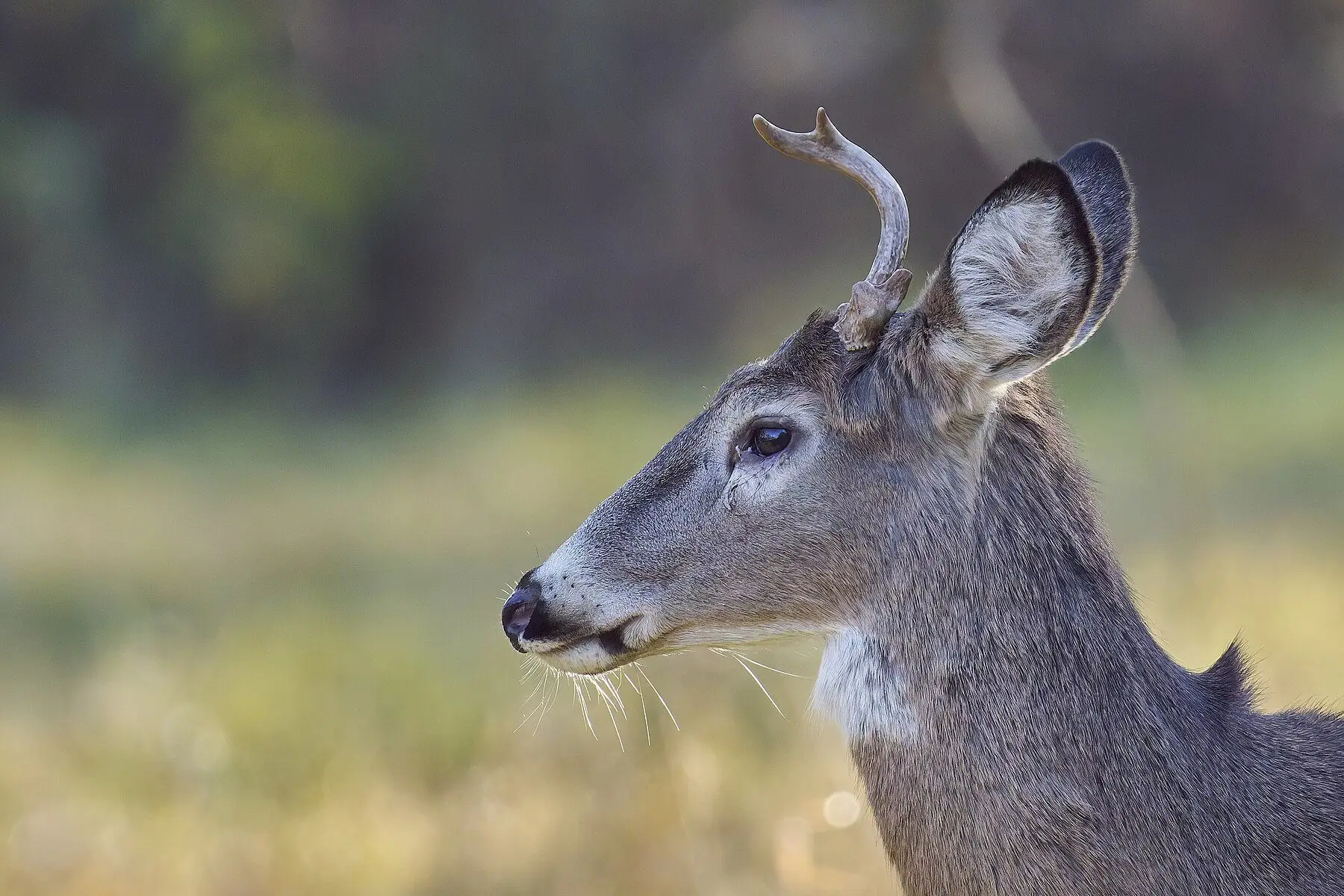
Bucks add two signals of their own: rocking the antlers side to side, and thrashing vegetation with them.
When it happens
| Who | When | Why | |
|---|---|---|---|
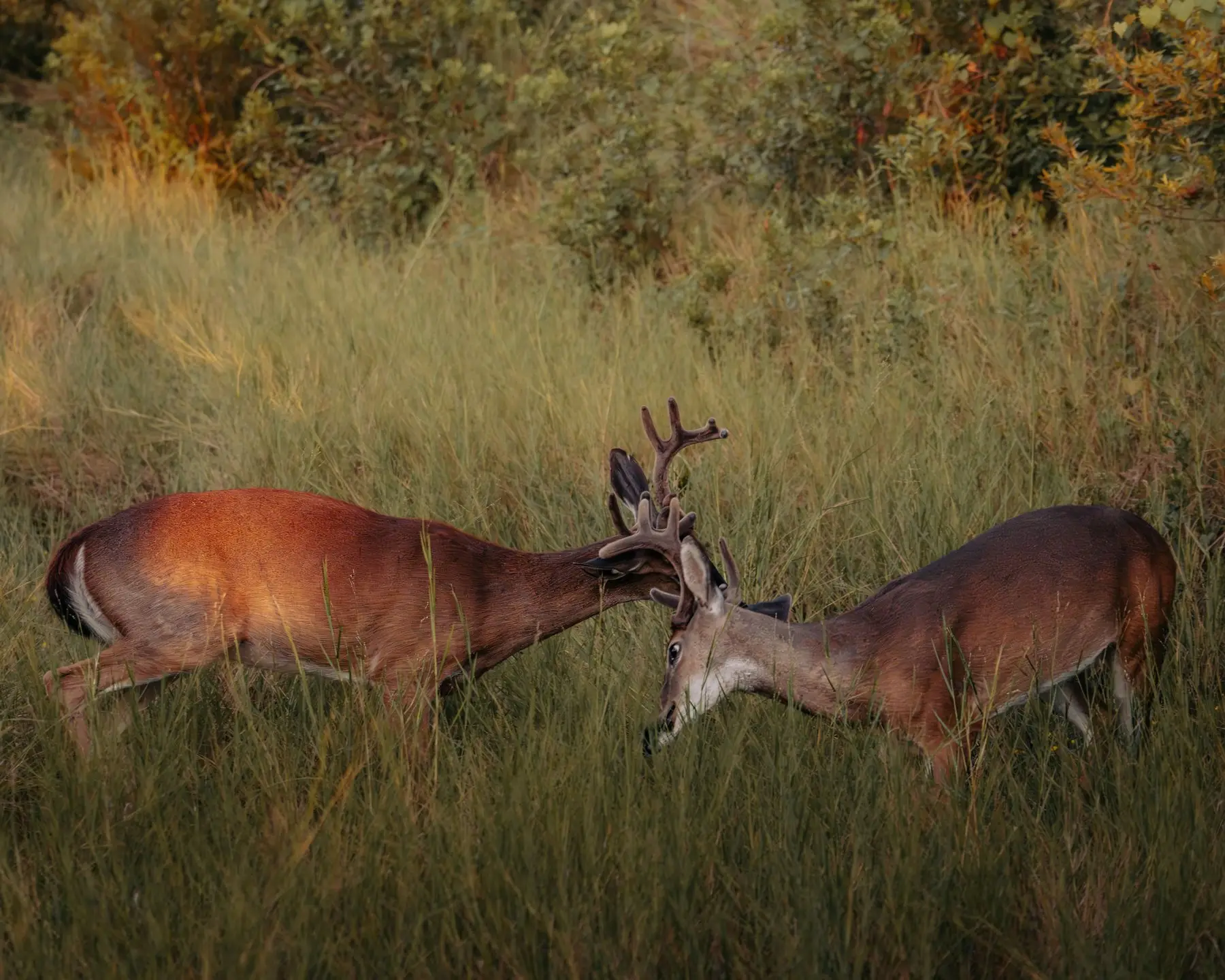
| Rut | Bucks | Autumn | Testosterone, dominance contests, hardened antlers |
| Fawning | Does | Late spring, early summer | A hidden fawn nearby |
The doe is the commoner cause of backyard incidents. Fawns are left concealed and motionless for hours, and people walk past one without ever knowing it is there — which is exactly the situation the doe is responding to.
What to do
Do not run, and do not turn your back
- Back away slowly, facing the animal
- Put something solid between you — a car, a tree, a fence
- Get indoors if that is available
- Shouting and arm-waving work early, before commitment, and not after
- If it charges, a vehicle or a closed door is the only reliable stop
Running triggers pursuit and turning your back removes your only warning of what happens next.
They can genuinely hurt you
Worth stating plainly, because deer look harmless and are not.
- Bucks use hardened antlers. Those are penetrating injuries
- Does rear and strike downward with the front hooves, which breaks bones
- The animal weighs 100 to 300 pounds
Deer are not predators and want no part of a fight. But a defensive or cornered animal of that size is not something to stand your ground against on principle.
The fed deer problem
The most dangerous deer is the tamest one
A deer that has been hand-fed loses its flight distance. It approaches people expecting food — and when none appears, it may strike.
Most serious incidents involve animals that had been fed. That is the strongest practical reason not to feed deer in a garden, well ahead of the damage they do to the planting.
Common questions
What are the signs a deer is about to attack?
How is that different from a deer that is just startled?
When are deer most likely to be aggressive?
What should I do if a deer approaches aggressively?
Can a deer actually hurt you?
Does a habituated deer behave differently?
Backyard Weekly
Know what to plant, week by week
Join the weekly email for seasonal jobs, fixes for what is going wrong, and gear worth buying.
Not ready to subscribe? The planting calendar is free and needs no email.
By subscribing you agree to our privacy policy. Grow In Backyard will never sell your address.
Keep reading
Do Deer Attack Humans? Rarely, But Not Never
Deer injure more people than most wild animals in North America — almost all of it in autumn rut or from a doe with a fawn. What provokes it and what to do.
Can a Deer Kill You? The Honest Risk, and When to Worry
Deer kill more people than bears and snakes combined — almost all in car collisions. Direct attacks are rare but real. When a deer is genuinely dangerous.
Why Do Deer Snort Wheeze? It Is a Buck Threatening a Rival
The snort-wheeze is an aggressive buck call, not an alarm. How to tell it from the alarm blow, when you hear each, and what the deer does next.
Is Chocolate Poisonous to Squirrels? Yes, and Measurably So
Theobromine affects squirrels as it does dogs. Dark chocolate is the dangerous kind, and a small animal needs very little of it to be in trouble.