
How to Keep Birds Out of a Barn or Open Outbuilding
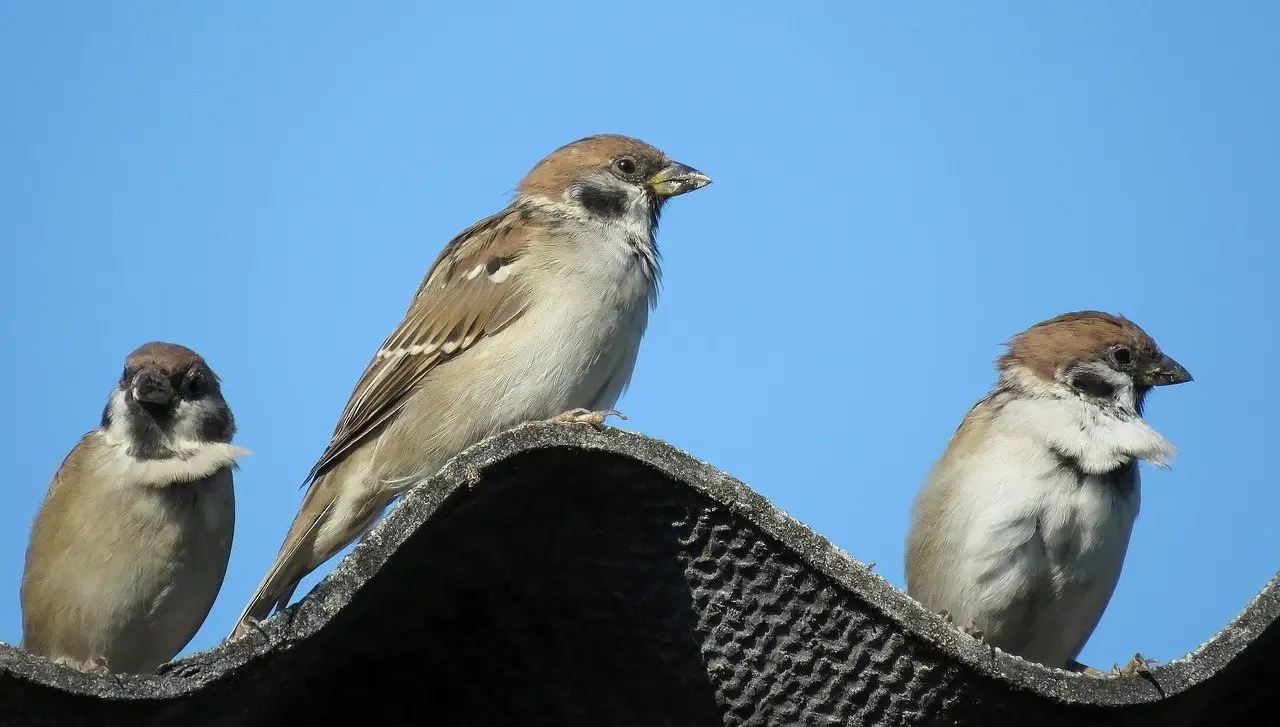
Sparrows and starlings in a barn mean fouled feed, blocked vents and fire risk. Exclusion at the openings, timing around nesting, and what to do about feed.
 By
On this page
A barn is shelter, warmth and spilled grain under one roof. That is why scarers fail inside one and why the whole job is exclusion plus feed discipline.
Why it is worth doing
- Fouled feed and water — droppings in a trough spread salmonella and campylobacter through a herd or flock
- Blocked ventilation. Nests packed into ridge vents and ducts are a common cause of a barn that will not clear its own humidity
- Fire risk. Nest material built against wiring and into light fittings is dry, loose and sitting on a heat source
- Respiratory risk from years of dry droppings in a closed loft
- Structural mess — droppings corrode galvanised sheet and rot timber over time
Timing, and the law
- Active nests are protected in the UK, the EU and most of the world
- In the United States, the Migratory Bird Treaty Act covers most species — but house sparrows, European starlings and feral pigeons are introduced and are not protected under it. Those three are the usual barn problem
- Barn swallows are protected in North America and Europe both. Do not exclude them
Do the work in late autumn or winter. Even where removal is legal, exclusion during nesting seals chicks inside the building, which is both inhumane and a smell problem for months.
Clear the loft before you close it
A barn loft with years of accumulated dry droppings is the one genuine health hazard in this job. Disturbed dry droppings release fungal spores, including Histoplasma.
Dampen first with a mist, bag rather than sweep, ventilate, and wear an N95 respirator. For a large accumulation in an enclosed space, this is a contractor’s job.
Close the building, opening by opening
| Opening | Fix | Mesh |
|---|---|---|
| Large doorway or bay | Knotted netting on tensioned cable | Under 3/4 in |
| Ridge and soffit vents | Hardware cloth, screwed to battens | 1/2 in |
| Gable gap | Hardware cloth or sheet infill | 1/2 in |
| Eaves and roof-to-wall gap | Foam-filler strip or mesh | 1/2 in |
| Broken window | Glaze or board, not net | — |
| Light fittings and voids | Cap or cone them off | — |
- Walk the building at dusk and watch where birds enter. Mark every point. There will be more than you expect, and the small ones matter most
- Screen the vents and gable gaps first. Half-inch hardware cloth, screwed to battens, not stapled on. Sparrows will peck at stapled window screen until it gives
- Close the eaves line. The roof-to-wall junction on a steel building is the single most common sparrow entry, and the profile filler strips made for it solve it
- Net the big openings. Knotted netting hung on a stainless cable with turnbuckles, drawn taut, hog-ringed along the edges. Not draped — slack netting tangles birds and tears
- Leave the working doors workable. A net on a curtain track or a weighted strip curtain on the main bay beats a net you cut a hole in within a week
- Walk the inside at dusk again a week later and find what you missed
Remove the reason they came in
Exclusion holds far better when the building is not worth the effort of breaking into.
- Feed in lidded bins. Metal, with a latching lid. This is the single biggest change
- Sweep spills daily. A concrete apron and a broom are cheaper than netting
- Cover troughs or site them where droppings cannot land in them
- Clear nest material from the rafters, lights and ducts once the season is over, and cap the voids so it is not rebuilt in the same slots
- Clean up around the grain bins outside too — an outdoor feeding ground keeps a flock on site waiting for a gap
Perch strips on the rafters, where netting cannot reach
Some barns have an open roof structure that cannot practically be netted. Anti-perch strips bonded along the top of the main rafter runs take away the roosting surface in the places that collect the most droppings.
It is a partial fix, and partial is sometimes all a working building allows. Target the runs directly above feed, water and stalls.
What does not work in a barn
- Ultrasonic repellers. Birds do not hear in that range
- Reflective tape and spinners indoors. Habituated in days, because the shelter is worth it
- Decoy owls and hawks. Perches, within a week
- Poison and lethal control. Illegal for protected species, and it leaves dead birds in the structure. It also does nothing about the opening that let them in
- A net with a hole in it. One gap and the flock finds it the same evening
Common questions
How do I keep birds out of my barn?
What size mesh keeps sparrows out?
When can I remove birds from a barn?
Are birds in a barn actually a problem?
Should I keep barn swallows out?
Do ultrasonic bird repellers work in barns?
Backyard Weekly
Know what to plant, week by week
Join the weekly email for seasonal jobs, fixes for what is going wrong, and gear worth buying.
Not ready to subscribe? The planting calendar is free and needs no email.
By subscribing you agree to our privacy policy. Grow In Backyard will never sell your address.
Keep reading
How to Keep Birds From Nesting on a Porch, Deck or Ledge
Deter birds before they build, because once eggs are laid the nest is protected by law. Physical blocking, timing, and what deterrents fail at.
Backyard Chickens: What It Actually Takes
Space, cost, time, and the rules nobody mentions. An honest account of keeping backyard chickens before you buy the coop — including why the eggs are not free.
Do Birds Return to the Same Nest? Usually the Site, Not the Nest
Most songbirds build fresh each time, but return to the same territory year after year. Which species reuse nests, and what that means for your boxes.
How to Keep Birds Out of Trees Without Harming Them
Roosting flocks, fruit stripped before ripening, and droppings on the drive below. Which deterrents actually move a flock, and which are illegal or useless.