
How to Keep Backyard Chickens Quiet
Hens are quiet except for the egg song and the complaint calls. What each noise means, what fixes it, and why no cockerel is ever quiet.
 By
On this page
Hens are quiet most of the time, loud in short bursts, and persistently loud only when something is wrong. Cockerels are a different question with a shorter answer.
What each noise means
| sound | meaning | fix |
|---|---|---|
| Low murmuring, clucking | Content | None needed |
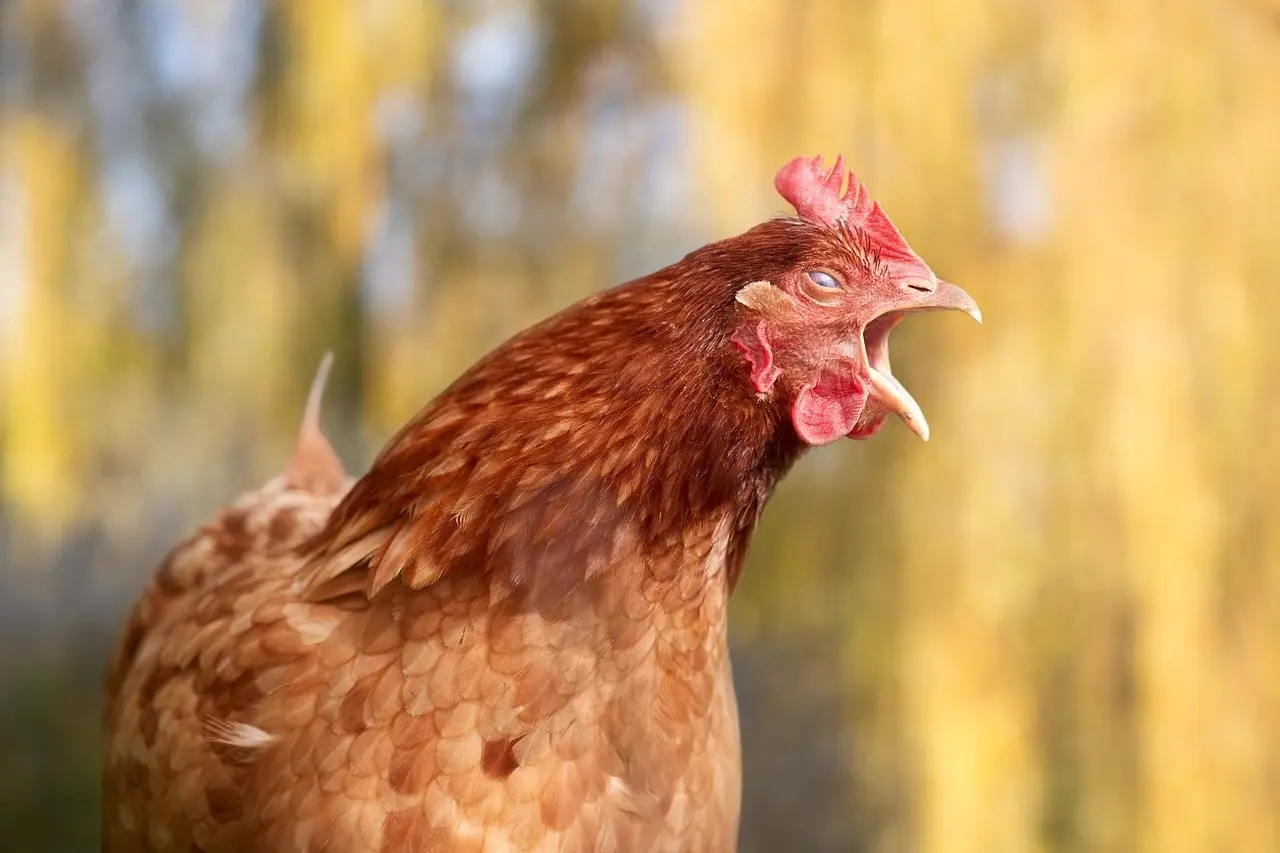
| Loud repeated cackle | Egg song | Contain, do not try to stop |
| Insistent repeated squawking | A need unmet | Work the checklist below |
| Sharp single alarm | Predator spotted | Check the run and the sky |
| Growling, hissing from a box | Broody hen | Normal; break her or let her sit |
| Screaming | Genuine distress | Check immediately |
The complaint checklist
- Feeder and waterer — empty, frozen, or guarded by one bird
- Nest boxes — too few, or one occupied and another hen waiting
- Crowding — in the coop or, more often, the run
- A predator or cat sitting where the flock can see it
- Boredom — a bare run with nothing to scratch at
- Broodiness
- Illness or injury in one bird
Hens are quiet when their needs are met. Sustained noise is information.
Shut in until mid-morning
Most hens lay in the morning, so the egg song happens inside a solid coop with bedding absorbing it rather than out in the open next to a boundary. It is the single most effective noise measure available and it costs nothing.
Siting for quiet
- As far from boundaries as the plot allows
- Solid wall towards the neighbour, vents and run away from them
- A hedge or fence between coop and boundary breaks the sound line
- Run surface they can scratch — a bored flock is a loud flock
The cockerel question
| Crows per day | 15–30, starting before dawn |
| Trigger | Territory announcement, not light |
| Blackout boxes | Delay the first crow; do not reduce the day’s total |
| Crow collars | Restrict airflow; welfare-controversial, restricted in places |
| Honest answer | Do not keep one where noise is the constraint |
Hens lay perfectly well without a cockerel. He is needed only for fertile eggs and, as a secondary benefit, for predator vigilance.
The neighbour is the real variable
Nearly every chicken-noise complaint is a relationship problem wearing a noise costume. Tell them before the birds arrive, keep no cockerel, hand eggs over the fence, and deal with any specific complaint the same week. That does more than any amount of acoustic planning.
Common questions
How loud are backyard hens really?
What is the egg song and can it be stopped?
Why are my hens suddenly noisy?
Which chicken breeds are quietest?
Can you keep a rooster quiet?
What reduces noise reaching the neighbours?
Backyard Weekly
Know what to plant, week by week
Join the weekly email for seasonal jobs, fixes for what is going wrong, and gear worth buying.
Not ready to subscribe? The planting calendar is free and needs no email.
By subscribing you agree to our privacy policy. Grow In Backyard will never sell your address.
Keep reading
How to Keep Backyard Chickens Healthy: The Routine
Most flock illness is prevented by dry bedding, clean water, parasite checks and quarantine. The weekly routine and the signs that need acting on.
How Many Chickens Fit in a 12x12 Coop?
A 12x12 coop holds 36 standard hens on floor space alone — but roost length, ventilation and run access cut the real figure to nearer 20.
Why Do Chicken Coops Have Two Doors? The Practical Answer
One door is for the birds, one is for you — and the split solves cleaning, predator security and ventilation at once. What each door should actually be.

How to Make Money With Backyard Chickens, Honestly
Eggs rarely clear a profit at small scale. Where the money actually is — point-of-lay pullets, hatching eggs, manure — and the legal limits.