
How to Get Rid of Cattails in a Pond, and Keep Them Out
Cattails spread by rhizome, so cutting alone makes them denser. Cutting below the waterline, timing, and why leaving a third of them is sensible.
 By
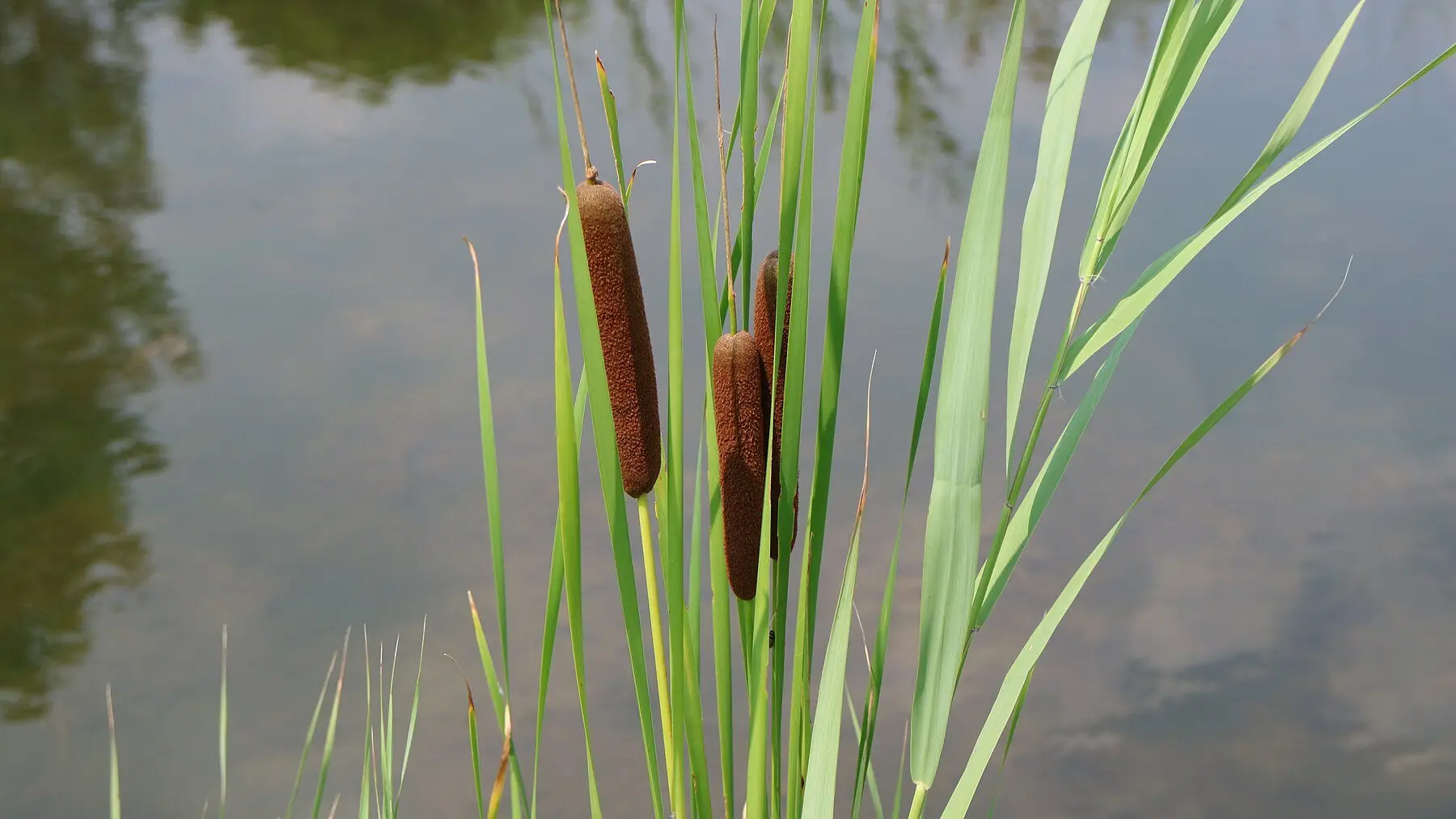

On this page
Cutting the tops off cattails makes the stand thicker. The plant lives in the rhizome, and the only cut that reaches it is one made below the waterline.
Why cutting normally fails
A cattail stand is frequently one connected rhizome mass under the sediment, not a collection of individual plants. Cut the visible growth and the rhizome responds by pushing up more shoots from stored reserves.
That is why casual strimming thickens a stand — you have pruned it.
The below-water cut is the whole trick
A cattail stalk is hollow. Cut several inches below the surface and water floods down the stem into the rhizome, which drowns it.
Cut above the surface and you have given the plant a haircut. Same tool, same afternoon, completely different outcome.
The method
- Mid to late summer, after flowering
- Cut every stem at least three to four inches below the waterline — long-handled loppers, a marsh rake, or a sickle, working in waders
- Remove the cut material from the pond. Left in, it decays, uses oxygen and feeds algae
- Check in two or three weeks and cut any regrowth the same way
- Repeat the following summer, and probably the one after
- Dig rhizomes out where the water is shallow enough to work — a spade or mattock, taking the mat rather than chopping through it, since fragments resprout
| When | Effect |
|---|---|
| Spring | Little. The rhizome is full and simply regrows |
| Early summer | Moderate |
| Mid to late summer, after flowering | Best. Most energy is above the sediment |
| Autumn, after die-back | Almost nothing |
| Winter, through ice | Nothing |
Other approaches
- Shading. Heavy landscape fabric or liner offcuts pinned over a cut area for a full season starves the rhizome of light. Effective, ugly, and only practical on small patches
- Deepening the margin. The permanent answer — see below
- Aquatic herbicide. Effective and heavily regulated. Generally requires a licensed applicator, and a large die-off at once drops dissolved oxygen enough to kill fish, so it is done in sections. This is a professional decision, not a hardware store one
- Grass carp. Not useful — they mostly ignore cattails
- Pulling by hand. Works on a handful of new shoots, hopeless on an established stand
The permanent answer is depth
Cattails root in roughly the top eighteen inches to two feet of water. They cannot establish deeper than that.
- A gently shelving margin is ideal cattail habitat
- Steep sides dropping quickly past two feet give them almost nowhere to grow
- Deepening the margin during construction or a dredging operation is the only fix that does not need repeating
Everything else on this page is maintenance you do again in three years.
Keep some of them
Clearing the whole shoreline usually backfires
Cattails take up nutrients that would otherwise feed algae, hold the bank together against erosion, and filter runoff before it reaches open water.
Strip the lot and the common results are a green pond and a crumbling edge.
A quarter to a third of the shoreline is the usual target — controlling where they grow rather than whether they grow. Keep them:
- Where runoff enters the pond, so they filter it
- On the windward bank, where wave erosion is worst
- In one or two blocks rather than a continuous fringe
And clear them:
- At the access point and any dock or fishing spot
- Where they block the view you built the pond for
- Where they are advancing into open water
Before you start
Check the regulations. Many states, provinces and countries regulate work in wetlands and along shorelines, and a pond connected to a stream or wetland may fall under rules covering vegetation removal, dredging and herbicide use.
Aquatic herbicides are separately regulated and generally need a licensed applicator. Contact your state environmental or natural resources agency first — the penalties for getting this wrong are real, and a phone call is free.
Common questions
How do I get rid of cattails in a pond?
Why do cattails keep coming back after I cut them?
When is the best time to cut cattails?
Should I get rid of all the cattails?
Do I need a permit to remove cattails?
How do I stop cattails coming back for good?
Backyard Weekly
Know what to plant, week by week
Join the weekly email for seasonal jobs, fixes for what is going wrong, and gear worth buying.
Not ready to subscribe? The planting calendar is free and needs no email.
By subscribing you agree to our privacy policy. Grow In Backyard will never sell your address.
Keep reading
How to Dredge a Pond: Muck, Methods and Permits
Silt builds an inch or two a year until a pond is shallow and green. The four dredging methods, what each costs, and the permits that catch people out.
Are Lily Pads Good for a Pond? Cover, Shade and the Limit
Water lilies shade out algae and shelter fish, but past about half the surface they starve a pond of oxygen. The right coverage and how to hold it.
What Eats Algae in a Pond? Fish, Snails and What Actually Works
Algae eaters help at the margins, but nutrients cause algae and only nutrient control fixes it. What each species really does, and the order to tackle it in.
How to Get Rid of Geese in Your Pond, and Keep Them Out
Geese pick a pond for open water, mown grass and a clear sightline. Change those three things and they leave — plus why feeding and fencing timing matter.