
How Big Are Squirrels? Weights and Sizes by Species
A grey squirrel weighs about a pound; a flying squirrel weighs two ounces. Sizes across the common species, and why the tail is half the length.
 By
On this page
A grey squirrel is about a pound. A flying squirrel in the same wood weighs two ounces — a tenth of a fox squirrel, and the reason most people never notice it is there.
By species
| Species | Weight | Body | Total with tail |
|---|---|---|---|
| Fox squirrel | 17–35 oz | 10–15 in | 20–28 in |
| Eastern grey | 14–21 oz | 9–12 in | 16–22 in |
| Western grey | 12–33 oz | 10–12 in | 18–24 in |
| Douglas squirrel | 5–11 oz | 6–8 in | 11–14 in |
| Red squirrel | 5–9 oz | 7–8 in | 11–14 in |
| Northern flying | 4–6 oz | 5–7 in | 10–12 in |
| Southern flying | 2–3 oz | 4–5 in | 8–10 in |
| Chipmunk | 1–5 oz | 4–6 in | 7–10 in |
| Ground squirrel | 9–18 oz | 9–11 in | 15–20 in |
The range within a species is real. A fox squirrel in good autumn condition in the Midwest is a substantially bigger animal than one in a poor mast year further south.
Grey or fox, at a distance
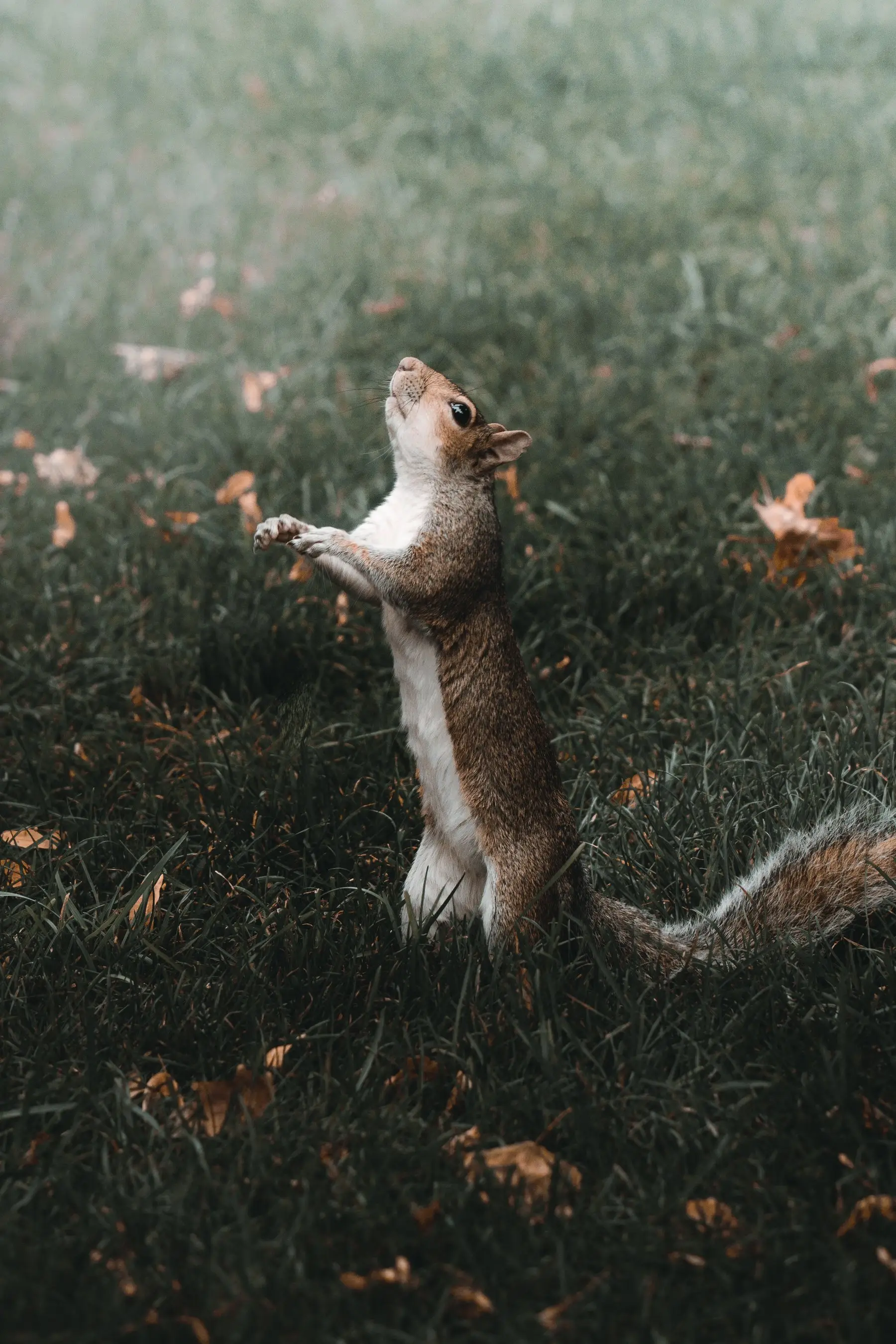
They overlap in size, and people mix them up constantly.
Fox squirrels are heavier, rustier and more orange underneath, and spend more time on the ground and in open woodland. Greys are smaller and greyer with a white belly, and stick closer to cover.
Where both occur, the fox squirrel is usually the one crossing open lawn without hurrying.
Why the tail is half of it
Not decorative. In a tree squirrel the tail is roughly 40 to 50 per cent of total length, and it does at least five jobs:
- Counterbalance on a branch and during a leap
- Rudder and parachute in a fall — squirrels survive falls that should kill them
- Sunshade, held over the back in heat
- Blanket, wrapped around the body in cold
- Signal flag — the flick that warns other squirrels and tells a ground predator it has been seen
A squirrel that has lost part of its tail to a predator or a fall manages, but climbs and jumps noticeably less confidently.
Through the year
- Autumn: feeding hard, laying down fat. Up to 20% heavier by early winter
- Winter: living on reserves and cached food. No hibernation in tree squirrels
- Late winter and spring: weight drops, and breeding takes more out of females
- Summer: lightest, and moulted into a thinner coat, which makes them look smaller than they are
A plump squirrel in November is a healthy squirrel. A thin one in March is normal too.
From birth to full size
| Age | Size |
|---|---|
| Birth | ~1 in, ¼–½ oz. Blind, deaf, hairless |
| 4 weeks | Eyes open, furred |
| 6–7 weeks | First trips out of the nest |
| 10–12 weeks | Weaned |
| ~6 months | Close to adult size |
| 1 year | Full adult weight |
That table is genuinely useful if you find a young squirrel on the ground: hairless or eyes-closed means it needs help, while a furred, alert animal roughly hand-sized is at the stage where it should be out exploring.
Males and females
Close to the same size, with no reliable difference visible at a distance — unusual among mammals, and a consequence of a social system where males do not hold territories or defend harems.
Sexing a squirrel by eye is not realistic outside the breeding season, when a male’s anatomy becomes obvious.
For scale
- Southern flying squirrel: about the weight of a AA battery times two
- Red squirrel: a large apple
- Grey squirrel: a tin of beans
- Fox squirrel: up to two tins
- Indian giant squirrel, the world’s largest: three feet including tail, four pounds plus
Common questions
How much does a squirrel weigh?
How long is a squirrel including its tail?
Which is the biggest squirrel in North America?
Do squirrels get heavier in winter?
How big are baby squirrels?
Are male and female squirrels different sizes?
Backyard Weekly
Know what to plant, week by week
Join the weekly email for seasonal jobs, fixes for what is going wrong, and gear worth buying.
Not ready to subscribe? The planting calendar is free and needs no email.
By subscribing you agree to our privacy policy. Grow In Backyard will never sell your address.
Keep reading
How Long Do Squirrels Live? Wild vs. What You'd Expect
Wild squirrels rarely see old age — most die in their first year. The realistic lifespan by species, and why the number is so much lower than people assume.
Where Do Flying Squirrels Live? Range, Nests and Your Attic
Flying squirrels are common across most of North America and almost never seen, because they are strictly nocturnal. Habitat, nest sites and attic signs.
How Big Is a Chipmunk? Size, Weight and Burrow Depth
An eastern chipmunk is 8–11 inches including tail and weighs about 3 ounces — but its burrow runs 10 to 30 feet. Sizes, and when they reappear in spring.
How Far to Relocate a Squirrel? Distance Is Not the Fix
Relocated squirrels mostly die, and moving one is illegal in many places. The distances people quote, why they fail, and what to do instead.