
Frog Holes in the Yard? They Are Almost Certainly Not Frogs
Frogs do not dig burrows in most of the world. What the holes in your lawn actually are, how to read them, and which ones need dealing with.
 By
On this page
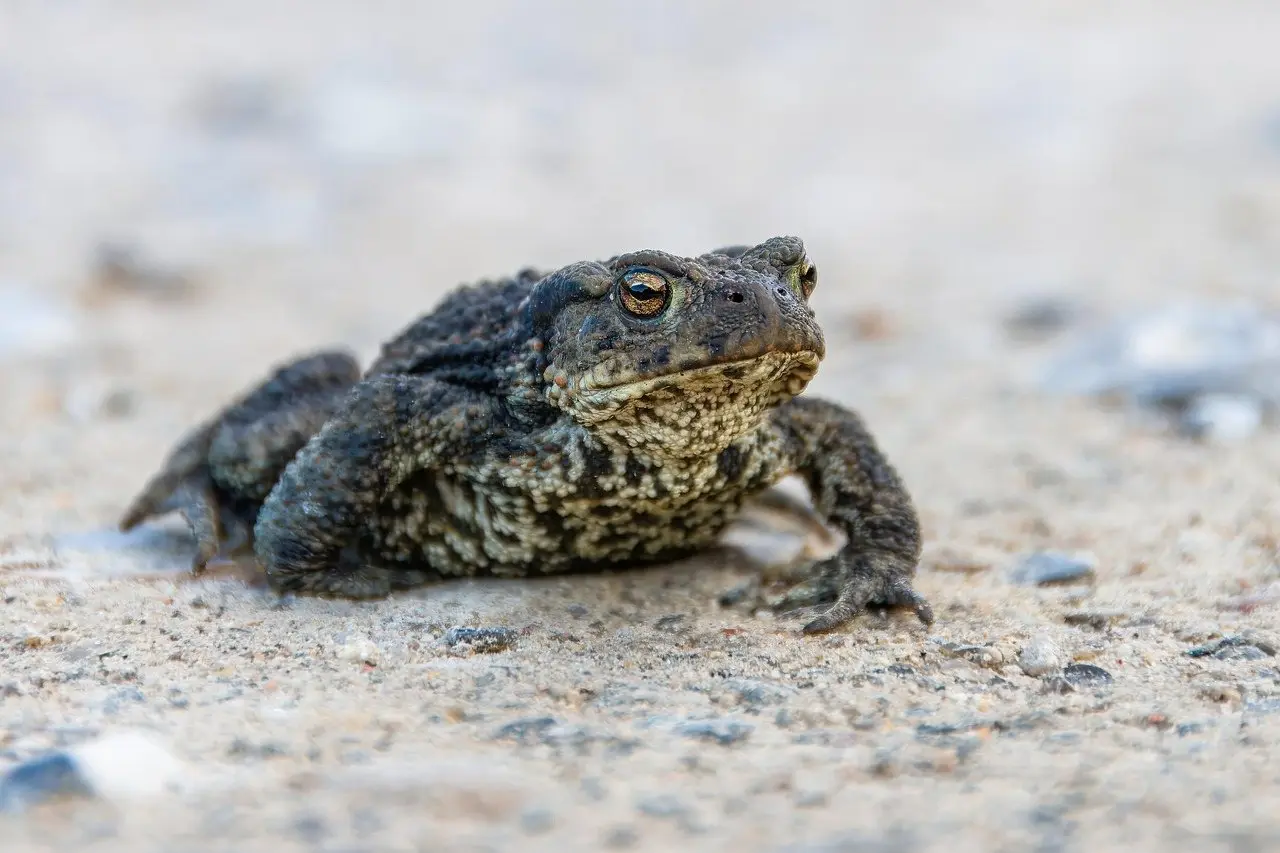
Frogs are poor diggers. They shelter under things rather than excavating, so neat holes in a lawn were made by something else — and the shape of the hole tells you what.
What frogs and toads actually do
- Frogs shelter in existing damp cover: under logs, flat stones, leaf litter, pots, the gap behind a step. They do not excavate
- Toads back into loose soil, mulch or compost and shuffle down until the head shows. That leaves a saucer-shaped depression the size of the toad, with no spoil beside it
- Spadefoot toads, in drier regions, genuinely burrow — with hardened spades on the hind feet, and they go straight down and stay down
- In winter, frogs overwinter in pond silt, under log piles or in existing cavities rather than in holes they dug
So “frog holes” is almost always a misread, and it matters because the real maker may need dealing with and the frog does not.
Reading the hole
| What you see | Almost certainly |
|---|---|
| Shallow saucer, toad-sized, no spoil | A toad. Leave it |
| Cone divot 2–3 in, turf rolled back | Skunk, raccoon or armadillo after grubs |
| Pencil-width, no soil around it | Earthworms or cicada emergence |
| 2 in hole, fan of soil to one side | Chipmunk or ground squirrel |
| 1–2 in hole, no spoil, in a run | Vole |
| Mound of loose soil, no visible hole | Mole |
| 3–4 in hole at a wall or slab edge | Rat. Worth acting on |
| Many small holes, bare patches, after rain | Grub damage, and whatever is eating them |
| Neat 1 in holes in soil beds, spring | Solitary bees. Harmless, leave them |
No spoil beside the hole is the most useful single clue
A mammal digging a burrow has to put the soil somewhere, so there is a fan or a mound.
A clean hole with no excavated soil was made by something emerging from below — a worm, a cicada, a solitary bee — or by something using a cavity that already existed. That immediately rules out most of the animals people worry about.
The one that usually turns out to be the answer
If the holes appeared overnight, in a lawn, with the turf rolled back, the cause is grubs — and the holes are the animal that eats them.
- Lift a square foot of turf at the edge of the damage
- Count the larvae. More than five or six under a square foot is an infestation
- Treat the grubs — beneficial nematodes for a slow biological route, or a registered product for a heavy infestation
- The digging stops when the food does. Chasing the skunk or the armadillo without treating the grubs just moves the problem a week
Before you fill anything
- Confirm it is empty. Crumpled newspaper in the mouth, or a dusting of flour across it, read at first light for two or three nights
- Backfill with tamped gravel, not soil, which is reopened within the week
- Hardware cloth pinned flat and buried an inch down stops a fresh dig at the same spot
- Do not fill a hole you have not identified. Sealing an animal in is both cruel and a smell problem for months
- Worm and cicada holes need nothing. They close on their own and they are a sign the soil is alive
And leave the frogs alone
- Slugs, snails, beetles, mosquitoes and flies, in quantity, nightly
- No damage to lawn, beds, structure or anything else
- Protected in much of the world, along with their breeding sites
- If you want them out of one spot, take away the damp cover there — do not take away the frogs
A garden with frogs in it usually has a slug problem it is not aware of having solved.
Common questions
Do frogs dig holes in the yard?
What is making small holes in my lawn overnight?
Do toads dig holes in the ground?
Should I fill in the holes?
Are frogs in the yard a problem?
What attracts frogs to a yard?
Backyard Weekly
Know what to plant, week by week
Join the weekly email for seasonal jobs, fixes for what is going wrong, and gear worth buying.
Not ready to subscribe? The planting calendar is free and needs no email.
By subscribing you agree to our privacy policy. Grow In Backyard will never sell your address.
Keep reading
Frogs in the Backyard: Why They Are There, and the Holes
Frogs in a yard mean damp cover, insects and water nearby. What they eat, what those holes in the lawn really are, and whether to keep them around.
How to Fill Chipmunk Holes (and Why Filling Rarely Works)
A chipmunk reopens a filled hole in a day. What actually stops the tunnelling, how to tell a chipmunk hole from a vole or rat hole, and when to worry.
How to Get Rid of Moles — 3 Fixes, Vinegar Not Included
How to get rid of moles: find the active run first, then trap it. 3 measures compared, and why vinegar and soap fail. See which fits your lawn.
How Long Can a Snake Live in a Garage? Weeks to Months
A snake in a garage survives as long as the mice do. How long it can realistically stay, how to tell if it has gone, and the gap it came through.