
Frog Eggs in Your Pool: What to Do With Them
Frog spawn in a swimming pool will not survive the chlorine. How to move it to water that works, and how to stop frogs laying there next spring.
 By
On this page
A pool looks like still water to a frog, and it is a trap. Nothing laid in a treated pool survives, and even in an untreated one the smooth sides give the froglets no way out.
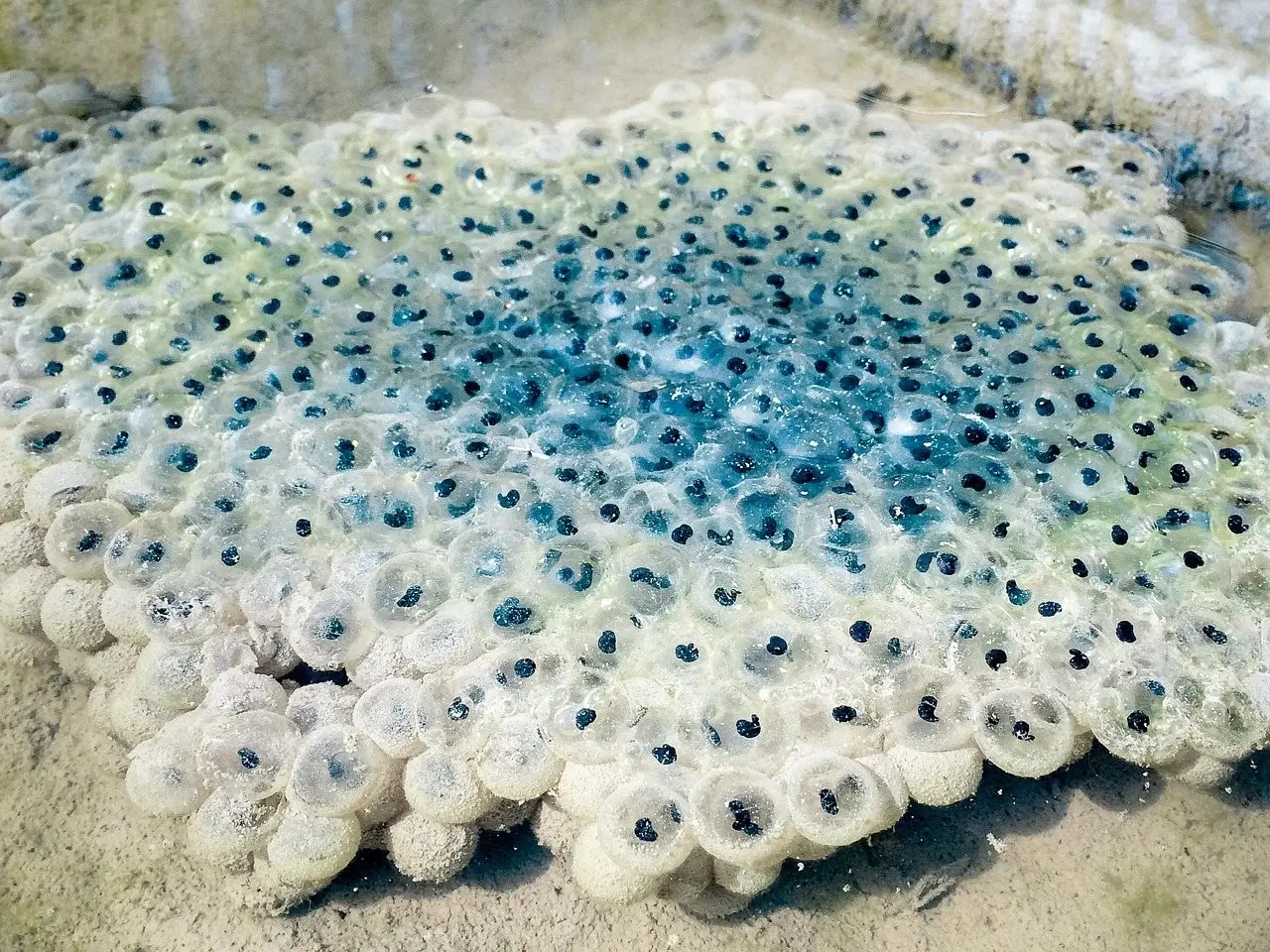
First, is it frog spawn
| What you see | What it is |
|---|---|
| Clumped jelly, black dot in each sphere | Frog spawn |
| Long double strings wound around something | Toad spawn |
| Single fine strand, tiny eggs | Insect or snail eggs |
| Opaque white, cloudy, dissolving | Dead spawn — chlorine got to it |
| Clear jelly, no dots | Algae or a fungal mass |
Opaque white means it is already gone. Scoop it out with the net and bin it; there is nothing to rescue and it will foul the filter as it breaks down.
Moving live spawn
- Fill a bucket from the pool — the same water the eggs are already sitting in. A sudden change of temperature or chemistry kills spawn as surely as the chlorine does
- Lift under the mass with a fine mesh net or a sieve. Frog spawn is a loose cloud and it tears if you drag the net sideways through it
- Float it in the bucket, not stacked or squeezed
- Walk it to the nearest standing water — a garden pond, a ditch, a water butt, a neighbour’s pond with permission. A few hundred yards at most
- Lower the bucket in and let the spawn slide out, rather than tipping it from height
- Rinse the net and bucket with plain water before they go near any other pond
Keep the move short, for the frogs' sake
Moving spawn between water bodies is how chytrid fungus and ranavirus travel, and both are major drivers of amphibian decline. In the UK moving spawn between ponds is specifically discouraged.
The nearest water wins, even if a better pond exists two miles away. If there is nothing within a few hundred yards, scoop the spawn out anyway — leaving it in the pool is certain death, and at least the adults stay in the area.
If there is nowhere to put it
- A water butt or a bucket of rainwater in shade will carry tadpoles through, if you top it up and add a few strands of pondweed and a sloping stick for the froglets to climb out on
- A washing-up bowl sunk in a border, same idea, is a one-season pond
- Do not put it in a chlorinated hot tub, a fountain or a chlorinated water feature, which are the same trap in a smaller box
- Do not flush it or bin it alive. If none of the above is possible, say so honestly and take it to a local wildlife group — many will take spawn
Clearing the rest of the pool
- Net out every visible mass, including the ones against the steps and in the skimmer
- Check the skimmer basket for tadpoles, which is where they end up once the pump runs
- Hold off shocking the pool until the netting is done, if you intend to save any of it
- Then rebalance normally. Spawn does not harm the water chemistry; it just decomposes
Stopping it next spring
| Method | Effect |
|---|---|
| Pool cover, on before breeding season | Ends it |
| Pump running at night in spring | Large — frogs want still water |
| Empty every other standing container | Large, for the garden overall |
| Warm amber outdoor bulbs | Moderate — fewer insects, fewer frogs |
| A real pond at the far end of the garden | Moderate, and they prefer it |
| Fence or low barrier at the pool edge | Moderate, mainly for toads |
| Chemicals in the water | None. They lay anyway, then die |
Timing is the whole game. Spawning is a short window in early spring, triggered by temperature, and a cover on before it starts saves the entire argument. A cover going on in May is too late.
A pond is the fix that works with the frogs rather than against them
Frogs breeding in a garden pond at the far end are frogs not breeding in the pool, and a pond takes care of mosquito larvae while it is at it.
Shallow sloping edge, some planting, no fish if you want tadpoles to survive. It solves the pool problem more reliably than anything you can buy for the pool.
Common questions
Will frog eggs survive in a swimming pool?
How do I remove frog eggs from a pool?
Is it legal to move frog spawn?
Does chlorine kill tadpoles?
How do I stop frogs laying eggs in my pool next year?
What does frog spawn look like in a pool?
Backyard Weekly
Know what to plant, week by week
Join the weekly email for seasonal jobs, fixes for what is going wrong, and gear worth buying.
Not ready to subscribe? The planting calendar is free and needs no email.
By subscribing you agree to our privacy policy. Grow In Backyard will never sell your address.
Keep reading
How to Keep Frogs Away From a Pool (and Out of It)
Frogs come to a pool for light, insects and water to breed in. Remove those three draws, give them a way out, and the nightly cleanup stops.
How to Get Rid of Frogs — 3 Fixes That Cut the Draw
How to get rid of frogs starts with the water and light drawing them in. 3 fixes compared for yards and pools. See which matches your problem.
What Eats Frogs in a Pond? The Predators, Stage by Stage
Frogs are eaten by something at every life stage, and the main predators change completely between spawn, tadpole and adult. What is taking yours.
Frog Holes in the Yard? They Are Almost Certainly Not Frogs
Frogs do not dig burrows in most of the world. What the holes in your lawn actually are, how to read them, and which ones need dealing with.