
Do Wind Chimes Scare Birds Away? Briefly, Then No
Wind chimes startle birds at first and stop working within days as they habituate. What actually deters birds, and what it costs you at the feeder.
 By

On this page
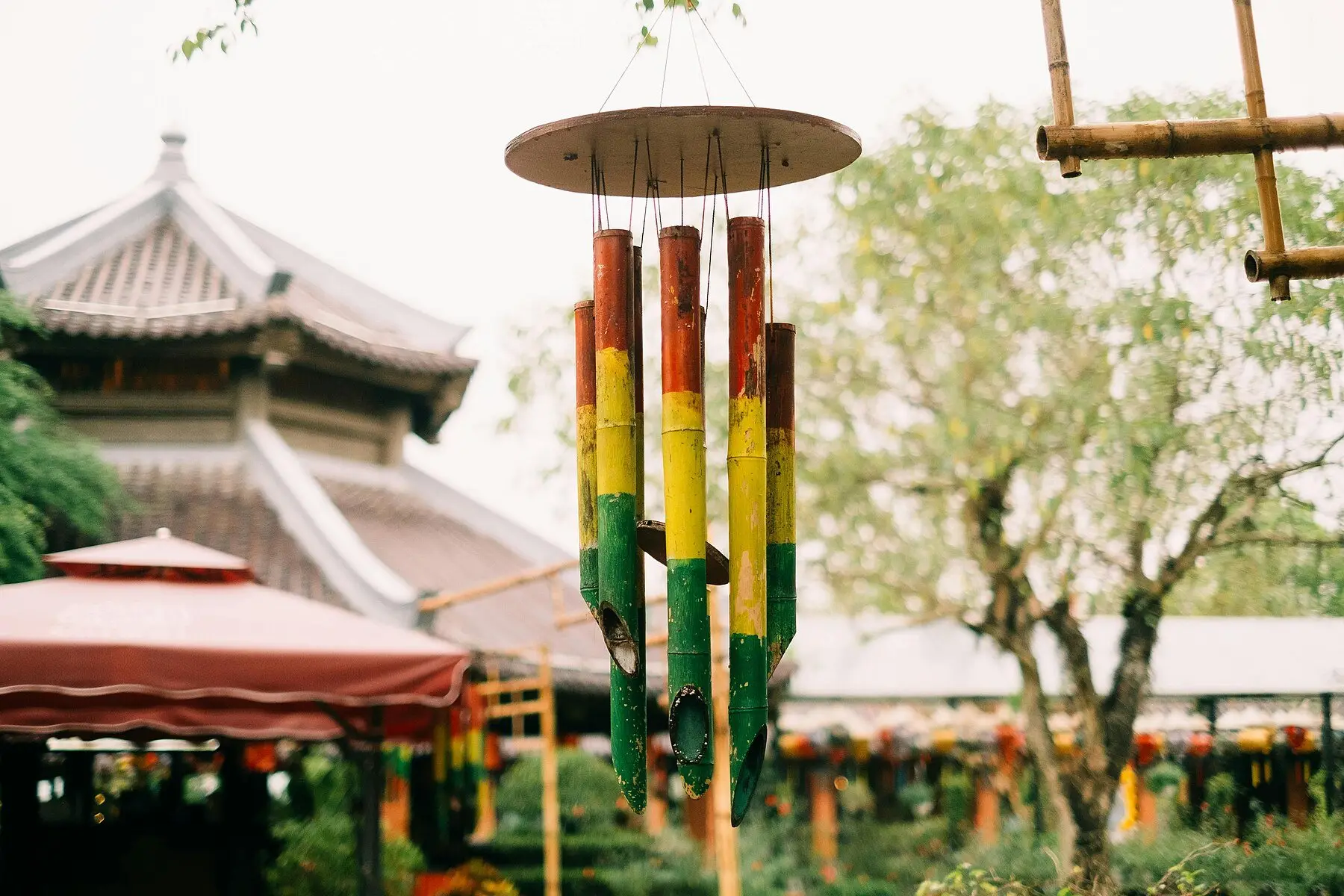
For a few days, yes. After that, no. Wind chimes work on novelty, and birds are good at working out that a sound which never precedes anything bad can be ignored. Within a week or two many will be perching on the chime.
Why the effect fades
Birds respond to novelty and unpredictability, not to noise as such. A new object making an unfamiliar sound is worth avoiding until proven safe — that is good survival logic, and it is why a chime works at first.
Then habituation does its job. The chime sounds a hundred times a day and nothing bad ever follows, so the bird stops treating it as information. This is the same mechanism that defeats every static deterrent ever sold.
| Deterrent | Typical useful life |
|---|---|
| Wind chimes | A few days |
| Plastic owl or hawk, left in one place | About a week — often less |
| Rubber snakes | Days |
| Reflective tape, left static | 1–2 weeks |
| Reflective tape, moved weekly | Considerably longer |
| Scarecrow, unmoved | Days |
| Ultrasonic devices | No demonstrated effect — birds hear much as we do |
| Motion-activated sprinkler | Long, because it is unpredictable and consequential |
| Netting, mesh, spikes | Indefinite — it is not a deterrent, it is a barrier |
The pattern is clear enough to be a rule: anything that is permanent, stationary and constant will be ignored. Anything that moves, changes, or only happens when a bird arrives keeps working.
The species difference
Not all birds habituate at the same rate, which is why results seem inconsistent.
- Bold and urban-adapted — house sparrows, starlings, pigeons, grackles: adjust almost immediately, sometimes within a day.
- Shy and woodland — thrushes, woodpeckers, warblers: stay away noticeably longer, sometimes weeks.
That has an awkward consequence if you are trying to protect fruit: the species you most want to deter are usually the ones that habituate fastest, while the ones you would happily keep are the ones driven off.
If you want birds, this cuts the other way
Hanging a new chime near a feeder often quiets it for a week or two, hitting the shy species hardest. If your feeder went quiet recently and you have changed something nearby, give it a fortnight before concluding the birds have left for another reason.
What works instead
Remove the reason.
- Spilled birdseed, pet food, fallen fruit, accessible trash
- Standing water where it is not wanted
- Clean off droppings that mark a ledge as an established roost — the scent and residue advertise it
Exclude them physically.
- Netting over fruit bushes and vegetable beds, held clear of the plants on a frame so birds cannot reach through and cannot become entangled
- Mesh under eaves and across porch openings
- Spikes or a sloped cover on ledges used for perching
- Fine mesh over vents and gaps
If you must use a deterrent, make it unpredictable:
- Reflective tape moved to a new position every week
- A motion-activated sprinkler, which only acts when a bird is there
- A plastic predator that is moved every few days — the movement is the active ingredient, not the shape
Check the law before touching a nest
In the US the Migratory Bird Treaty Act protects the active nests, eggs and young of most native species, and the UK and EU have equivalents. Block a ledge or remove a nesting site outside the nesting season, not during it.
So should you hang a wind chime?
Hang one because you like the sound. It will not hold birds off a fruit bush, a porch or a ledge beyond the first few days, and it will quiet your own feeder for about the same period.
If the goal is genuinely fewer birds in one specific place, the honest answer is netting, mesh or spikes, plus taking away whatever they are coming for — which is less charming, and works.
Common questions
Do wind chimes scare birds away?
Why do wind chimes stop working on birds?
What actually keeps birds away?
Do wind chimes bother birds or harm them?
Will a wind chime scare birds away from my feeder?
How do I keep birds off my porch or out of a specific spot?
Backyard Weekly
Know what to plant, week by week
Join the weekly email for seasonal jobs, fixes for what is going wrong, and gear worth buying.
Not ready to subscribe? The planting calendar is free and needs no email.
By subscribing you agree to our privacy policy. Grow In Backyard will never sell your address.
Keep reading
Bird Repellent for Trees — 5 Options Ranked on Fruit
Bird repellent for trees works by movement, not smell. 5 options compared on fruit crops, plus the ones that fail. See which suits your tree.
Best Bird Food to Attract Colorful Birds — 6 by Species
The best bird food to attract colorful birds changes by species. 6 foods matched to cardinals, orioles, bluebirds and more. See which to put out first.
Squirrel-Proof Bird Feeders — 5 Measures That Stop Them
Squirrel-proof bird feeders work on distance and mechanism, not claims. 5 measures compared on cost and success. See which suits your yard.
Do Birds Eat Tomatoes? They Are Usually After the Water
Birds peck tomatoes for moisture more than food, which is why you find one hole in six fruits. A birdbath fixes more of it than netting does.