
Do Squirrels Need a Lot of Water? More Than You'd Think
They get much of it from food, but need open water in heat and drought. Why a shallow dish matters in a heatwave, and the risks of a deep one.
 By
On this page
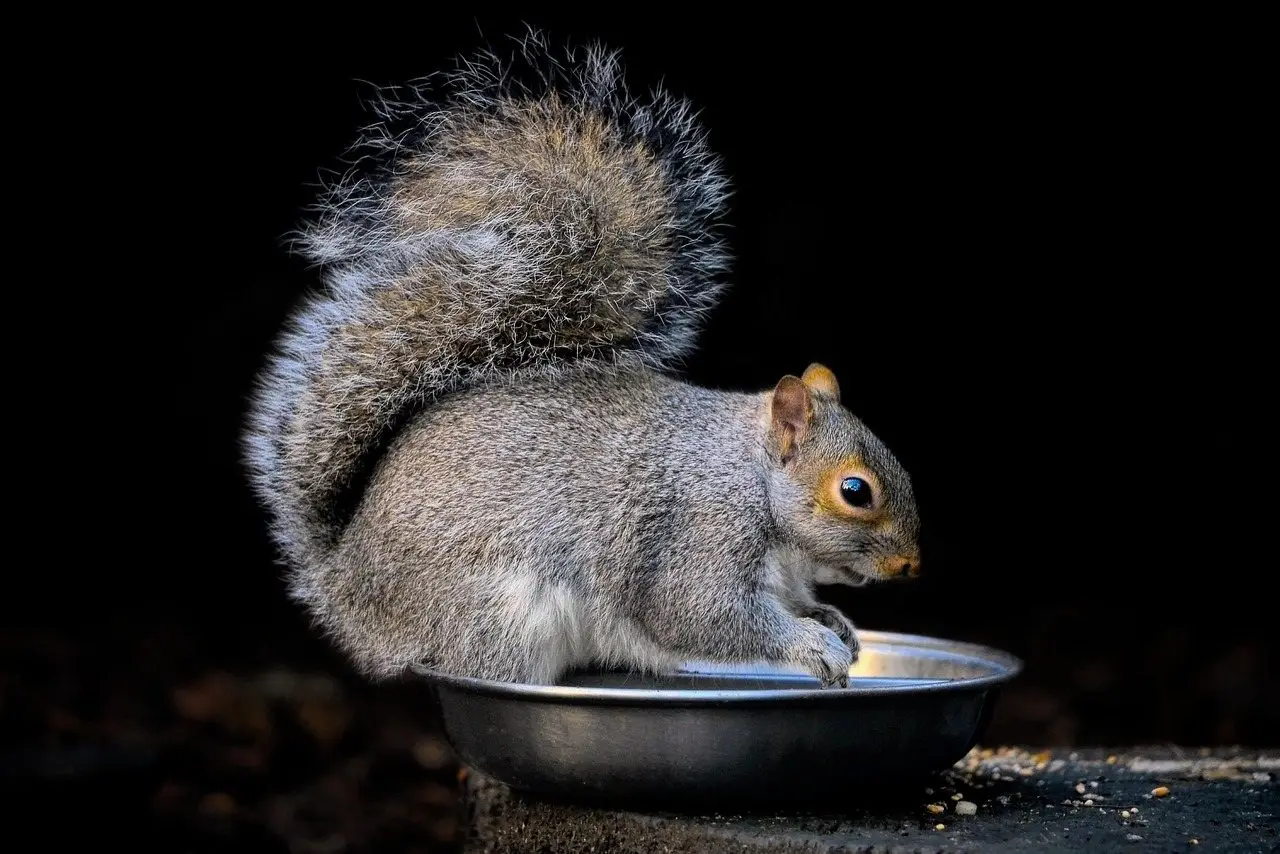
They need less than a mammal their size might suggest, because most of it comes from food — but in a heatwave or a drought that changes, and open water does more good than any feeding.
Where the water comes from
| source | when |
|---|---|
| Moisture in food — buds, shoots, fruit, fungi, green vegetation | most of the year |
| Dew and rain on leaves | regularly |
| Ponds, streams, puddles | as available |
| Bird baths and dishes | gardens |
| Snow and icicles | winter |
This is why squirrel drinking is so much more visible in late summer. A spring diet of buds and new growth is wet; an August diet of nuts and dry seed is not, and the animal has to make up the difference.
The heat problem
Squirrels cannot sweat and pant poorly. Their heat management is behavioural:
- Splooting — lying flat on cool shaded concrete, stone or a branch, belly down
- Shade seeking and a near-total stop to activity through midday
- Tail as a parasol, held arched over the back
- Increased blood flow to the tail to shed heat
All of that fails if there is no shade and no water. Heat stress is a recognised cause of summer wildlife mortality, and a garden that offers both gets animals through a heatwave that a bare one does not.
Shade is as valuable as the water dish
The cheapest thing most gardens can do in a heatwave is keep the shade they already have. A dish of water in full afternoon sun is close to useless; the same dish under a shrub is used all day.
A container that is safe
| spec | |
|---|---|
| Depth | 1–2 in |
| Sides | shallow slope, or a stone or stick in the middle as a ramp |
| Surface | rough enough to grip when wet |
| Position | shade, within a short dash of cover |
| Maintenance | empty, scrub and refill every day or two |
The depth rule is not cosmetic. Deep, steep-sided containers are drowning traps. A water butt, an uncovered pool, a bucket left out — a young squirrel that falls in swims the perimeter looking for an exit that does not exist, and tires within minutes.
A stick standing in a water butt, and a floating ramp or a plank in a pool, solve it permanently and cost nothing.
The argument against putting water out routinely
Outside heat and drought, wildlife finds water without help, and anything that concentrates animals in one place carries a cost:
- Disease transmission rises with density — squirrel pox and mange both spread at feeding and watering stations
- Parasites move between animals at shared sites
- Fouled water is worse than no water, and squirrels foul it faster than birds
- Predators learn the spot, which turns a dish into an ambush point
So: a shallow dish in shade during a heatwave or a hard freeze, scrubbed daily, is a genuinely good thing. A permanent feeding-and-watering station that gathers squirrels year round is a different proposition.
Winter
Less of a constraint than people assume — squirrels take water from snow, icicles and melt.
The exception is a long hard freeze with everything locked up. A heated bird bath, or simply breaking the ice and refilling a dish each morning, helps every species in the garden at the point when it matters most.
Common questions
How much water does a squirrel need?
Should I put water out for squirrels?
What kind of water container is safe?
Do squirrels die of thirst in hot weather?
Can squirrels drink from a bird bath?
Do squirrels get water from snow?
Backyard Weekly
Know what to plant, week by week
Join the weekly email for seasonal jobs, fixes for what is going wrong, and gear worth buying.
Not ready to subscribe? The planting calendar is free and needs no email.
By subscribing you agree to our privacy policy. Grow In Backyard will never sell your address.
Keep reading
What Do Squirrels Like to Eat the Most? Ranked by Preference
Given a choice, squirrels take fat-rich nuts first — walnuts, hazelnuts and sunflower hearts. What they prefer, what they cache, and what to keep away.
Why Do Squirrels Lay Flat? Splooting Explained, and When to Worry
Splooting is usually heat management, but the same posture can mean something is badly wrong. How to tell the two apart at a glance.
How Much Do Squirrels Eat Per Day? About 1 to 1.5 Ounces
A gray squirrel eats roughly a pound of food a week — around 10% of body weight daily. The seasonal swing, and why autumn intake looks much higher.
Do Squirrels Need Salt Licks? Why They Seek Sodium
Squirrels crave sodium because a nut and seed diet is short of it, and will gnaw salt-treated timber to get it. Why a garden salt lick is still a bad idea.