
How Much Do Squirrels Eat Per Day? About 1 to 1.5 Ounces
A gray squirrel eats roughly a pound of food a week — around 10% of body weight daily. The seasonal swing, and why autumn intake looks much higher.
 By
On this page
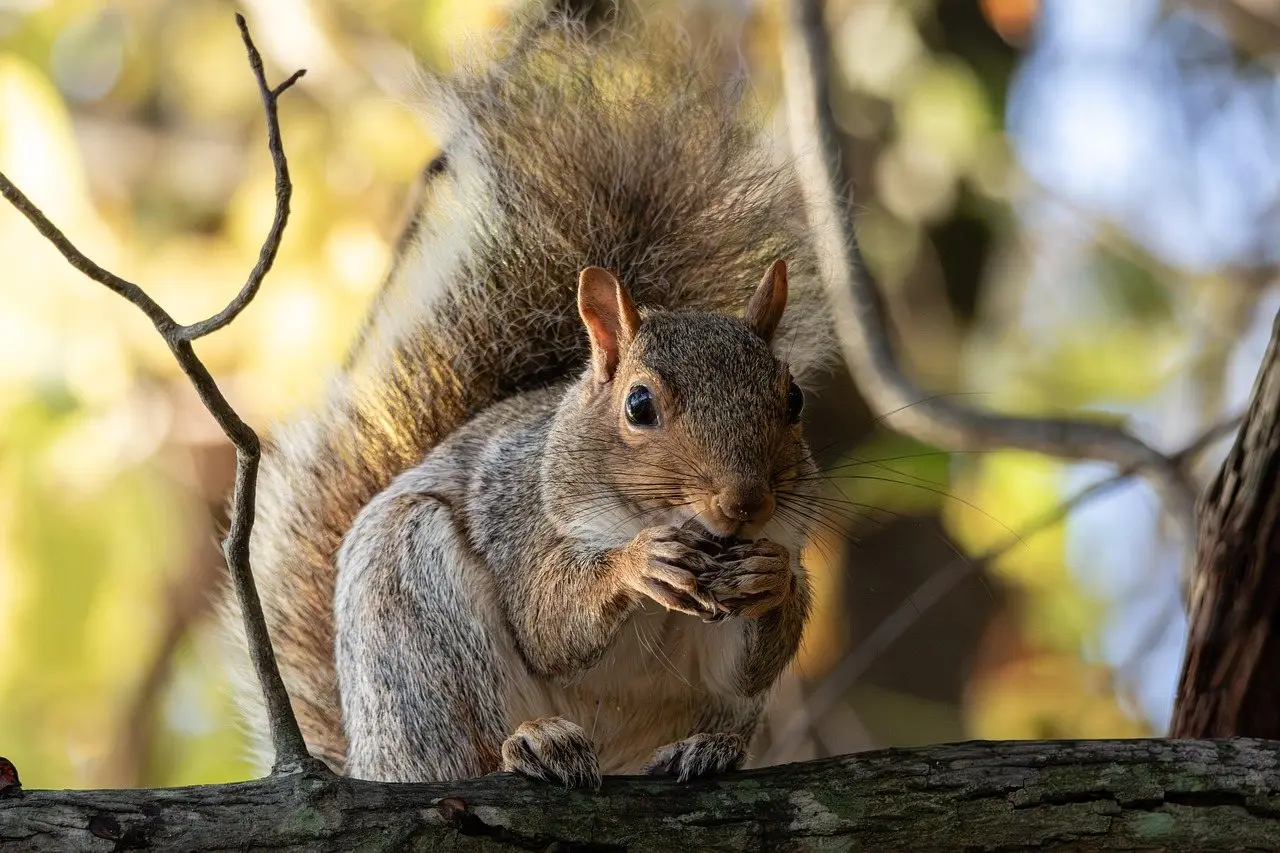
An adult gray squirrel eats about one to one and a half ounces a day — 30 to 45 grams, roughly 10% of its body weight. Over a week that is close to a pound of food.
The figures
| species | adult weight | daily intake |
|---|---|---|
| Eastern gray squirrel | 14–21 oz (400–600 g) | 1–1.5 oz (30–45 g) |
| Fox squirrel | 17–35 oz (500–1,000 g) | 1.5–2.5 oz |
| American red squirrel | 7–9 oz (200–250 g) | 0.7–1 oz |
| Southern flying squirrel | 2–3 oz (55–85 g) | 0.2–0.4 oz |
Proportionally, smaller squirrels eat more relative to body weight — a red squirrel can be closer to 15% — because small bodies lose heat faster.
What that looks like in food
Around 30 to 45 grams a day is approximately:
- 8–12 shelled acorns, depending on species and size
- 25–40 sunflower seed kernels
- 2–3 walnut halves
- A small handful of mixed nuts, buds, fruit and fungi
In practice a wild squirrel’s day is mixed: nuts and seeds, tree buds and flowers in spring, fruit and fungi in summer, plus insects, eggs and occasional carrion opportunistically.
Why autumn looks so different
A squirrel in October appears to eat constantly. Most of that is scatter-hoarding — carrying individual nuts away and burying them one at a time across its territory.
| season | handled | eaten |
|---|---|---|
| Spring | moderate | normal, plus heavy demand on nursing females |
| Summer | moderate | normal |
| Autumn | very high | somewhat above normal |
| Winter | low | normal, drawn from caches |
Estimates of a single gray squirrel’s autumn caching run into the low thousands of nuts. A good share are never recovered, which is one of the main ways oaks and hickories get planted.
They do not hibernate
Tree squirrels stay active all winter. They put on a modest layer of autumn fat and a denser coat, but there is no long dormancy to carry them — which is why the caching is not a hobby, it is the entire winter strategy.
When intake rises for real
- Nursing females — energy demand roughly doubles while feeding a litter
- Cold snaps — more calories burned maintaining temperature, and more time in the drey
- Pre-winter conditioning in late autumn, adding genuine body weight
- Juveniles in their first autumn, growing and caching at once
If you insist on feeding them
The case against is covered in detail elsewhere on the site, and it is strong: fed squirrels concentrate in unnatural densities, approach people, cache less, and become a bite and disease risk.
If you are going to anyway:
- Nuts in the shell, raw and unsalted — walnuts, hazelnuts, almonds, acorns
- Hard vegetables in small amounts
- A small, measured amount — an ounce or so per squirrel, not a dish left out
- Never: bread, crackers, salted or roasted nuts, chocolate, cooked or processed food, cow’s milk
- Peanuts are a poor staple. A legume rather than a nut, short on some nutrients, and prone to aflatoxin mould when damp
The amount matters because a squirrel that gets an easy ounce a day from a porch does not spend its autumn caching, and the porch is not there in February.
Common questions
How much does a squirrel eat in a day?
How many nuts does a squirrel eat a day?
Do squirrels eat more in autumn?
What should I feed a squirrel, if anything?
How much do baby squirrels eat?
Do squirrels store fat for winter?
Backyard Weekly
Know what to plant, week by week
Join the weekly email for seasonal jobs, fixes for what is going wrong, and gear worth buying.
Not ready to subscribe? The planting calendar is free and needs no email.
By subscribing you agree to our privacy policy. Grow In Backyard will never sell your address.
Keep reading
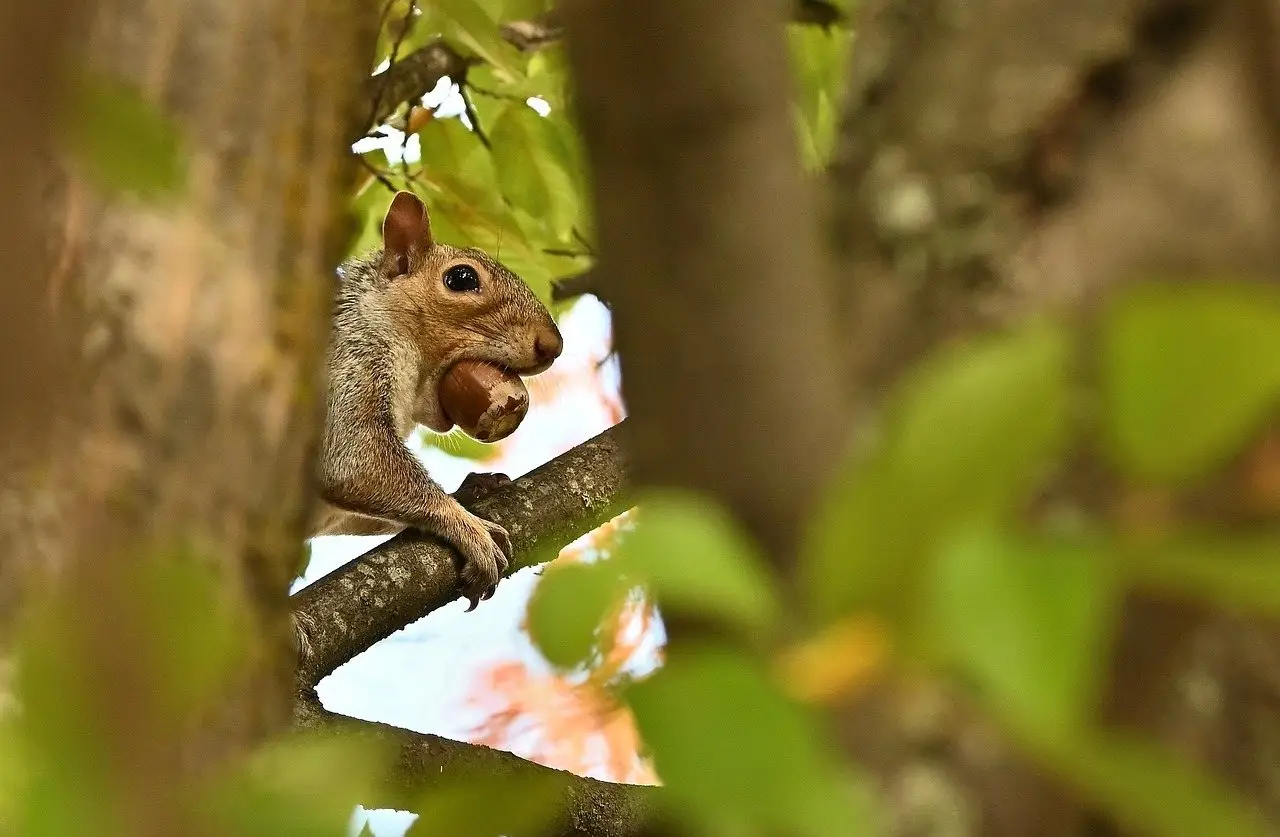
What Do Squirrels Like to Eat the Most? Ranked by Preference
Given a choice, squirrels take fat-rich nuts first — walnuts, hazelnuts and sunflower hearts. What they prefer, what they cache, and what to keep away.
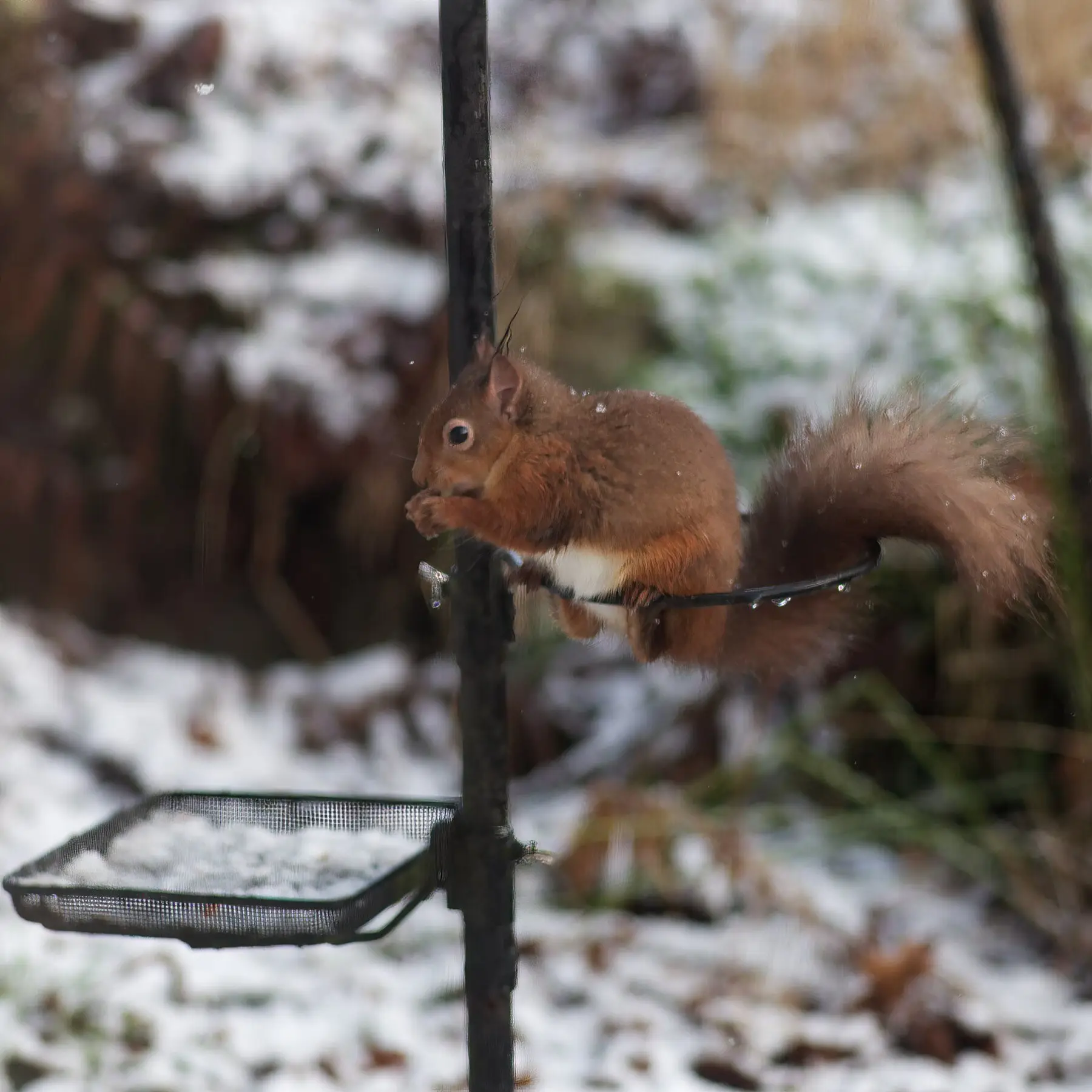
What Not to Feed Squirrels (And Whether to Feed Them at All)
Peanuts, bread, chocolate and salted nuts all cause real harm. The safe list, why corn is worse than it looks, and the case against feeding squirrels.
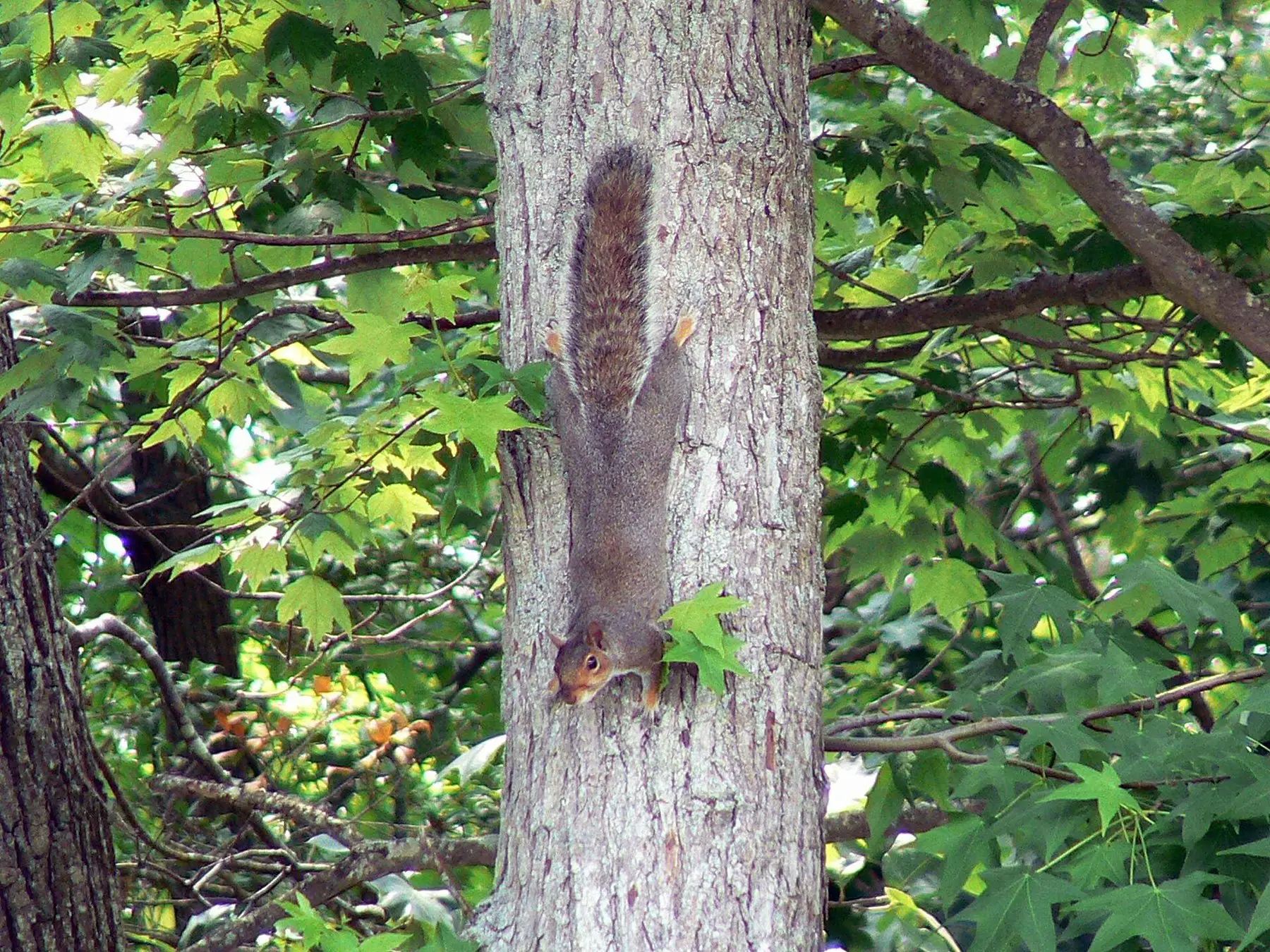
Why Do Squirrels Bury Nuts? And How They Find Them Again
Squirrels cache thousands of nuts a year, in separate holes, and relocate them by memory and smell — while faking burials for any squirrel watching.
How Much Does It Cost to Buy a Squirrel? And Can You?
Flying squirrels are the only ones commonly sold, and legality varies by state. What the permits involve, the real lifetime cost, and why most people should not.