
Do Electric Fences Work for Squirrels? Rarely Worth It
Squirrels jump over, climb past and are poorly earthed on a wire. Where a hot wire does work, and the cheaper barriers that work better.
 By
On this page
An electric fence needs the animal earthed. A squirrel arrives along a rail or a branch, crosses on something insulated, and is over the top before the circuit ever closes.
Why the usual setups fail
| setup | why it fails |
|---|---|
| Single hot wire on a fence top | animal not earthed; wire becomes a perch |
| Electric poultry netting | mesh sized for poultry, passed through |
| Low wire around a bed | jumped, or crossed from a branch |
| Alternating live/earth, close-spaced | works — but needs a dedicated run |
What works instead
| barrier | effect |
|---|---|
| Welded mesh cage, 12 mm | reliable; stops birds too |
| Mesh laid flat on newly sown soil | stops caching damage |
| Netted frame, mesh clear of foliage | reliable for fruit |
| Smooth baffle, 3 m clearance | reliable on feeders |
| Capsaicin on bulbs and seed | moderate |
| Planting daffodils instead of tulips | permanent, free |
A wire low enough for a squirrel is at hedgehog height
Small mammals and birds have been injured on badly configured garden setups, and many places require warning signage on electric fencing the public can reach. A non-electric barrier avoids the question entirely.
The two numbers every barrier must respect
- 3 metres horizontal jump from any fence, bin, wall or branch
- 1.2–1.5 metres vertical from standing
Most failed squirrel-proofing is a sound barrier with something inside that radius. The clearance is doing the work; the barrier only finishes it.
Most garden damage is digging, not eating
Freshly worked bed soil is the best caching medium in the garden, and uprooted seedlings are a by-product of burying and retrieving nuts. Mesh laid flat over new sowings for a few weeks solves more than any fence does.
Common questions
Do electric fences keep squirrels out?
Is there any configuration that does work?
What about electric netting or a single hot wire on an existing fence?
What actually keeps squirrels out of a vegetable garden?
Are there safety or legal issues?
What is the cheapest thing that actually works?
Backyard Weekly
Know what to plant, week by week
Join the weekly email for seasonal jobs, fixes for what is going wrong, and gear worth buying.
Not ready to subscribe? The planting calendar is free and needs no email.
By subscribing you agree to our privacy policy. Grow In Backyard will never sell your address.
Keep reading
Do Squirrels Ruin Vegetable Gardens? They Dig More Than Eat
Most squirrel damage in a vegetable bed is caching and sampling, not grazing. What they actually take, and the exclusion that works.
Does Aluminum Foil Deter Squirrels? Briefly, Then No
Foil startles on first contact and is ignored within days. Where a smooth metal surface genuinely works, and where it is wasted.
Non-Lethal Squirrel Deterrents: What Works and What Doesn't
Baffles and hardware cloth work. Ultrasonic devices, predator urine and most repellent sprays do not. Here is the evidence, sorted.
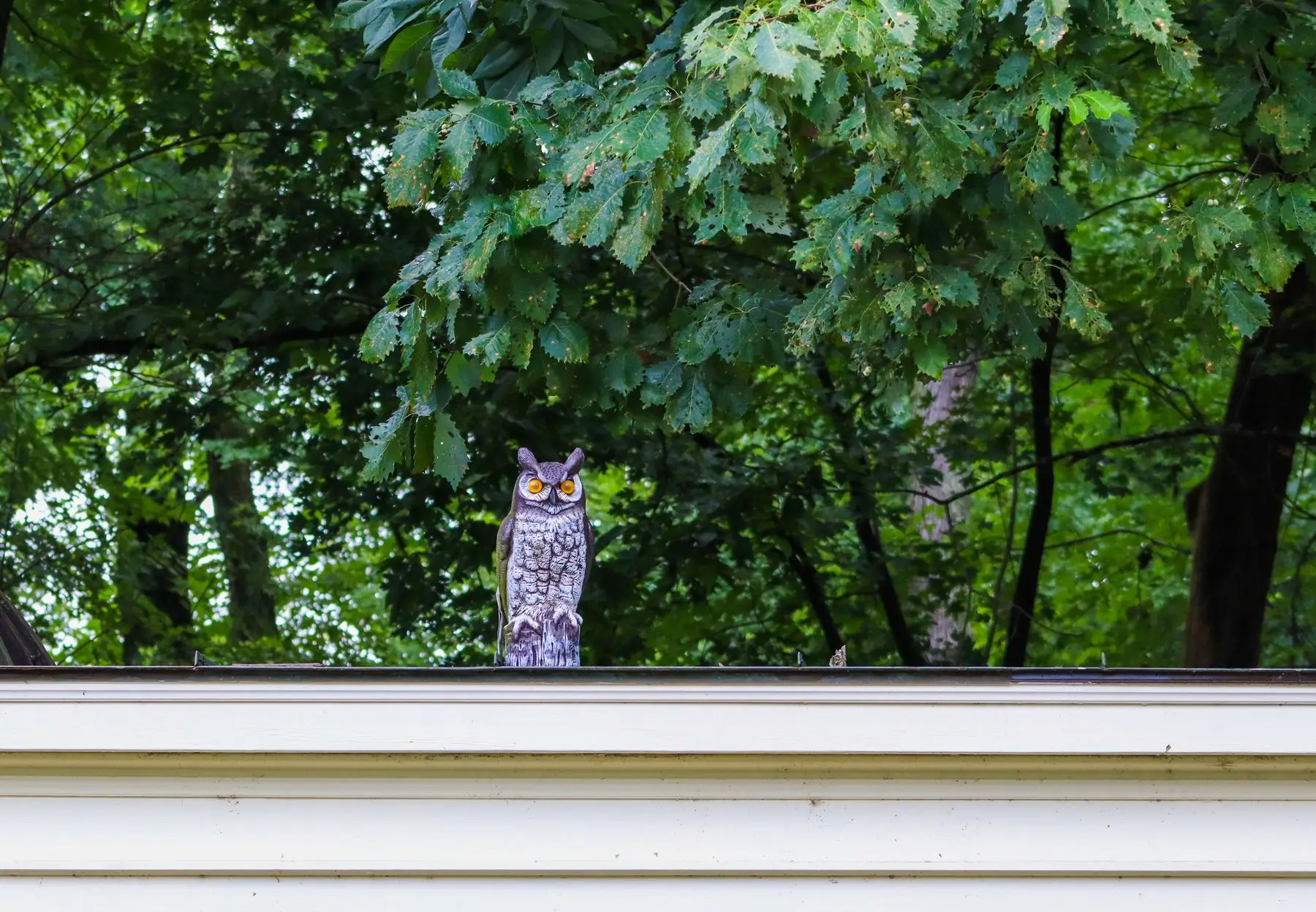
Do Fake Owls Work for Squirrels? For About a Week
Plastic owls deter squirrels briefly, then get ignored or perched on. Why habituation beats the decoy, and what to do if you want to keep using one.